Get Full Government Meeting Transcripts, Videos, & Alerts Forever!
Get email alerts on the Airport Fees topic
No spam. Unsubscribe anytime.
Montana hearing examines bill to bar short-term parking fees for small private aircraft
Summary
Supporters of House Bill 7‑31 told a Senate committee that fixed-base operators are imposing steep, inconsistent short-term parking fees on light private aircraft; airport managers and federal funding officials warned the bill would conflict with FAA grant assurances and harm airport finances.
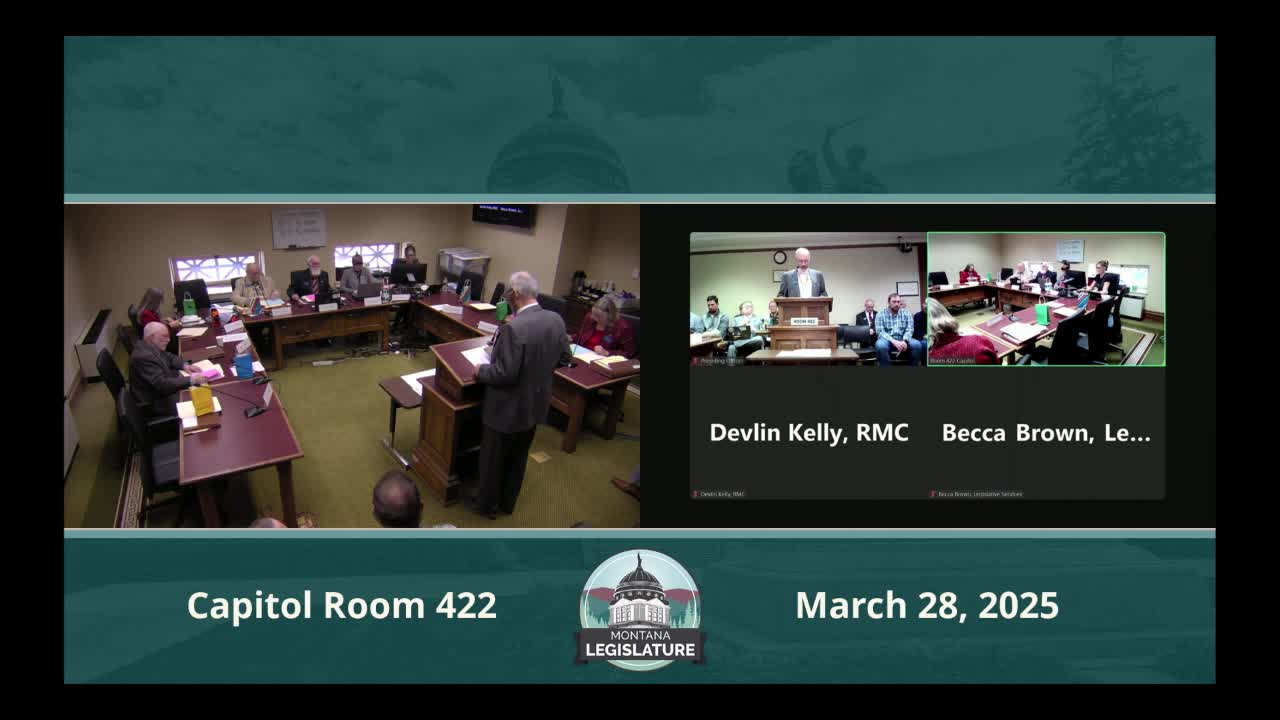
HELENA — Lawmakers heard competing views Tuesday on House Bill 7‑31, a measure from Representative Shane Clacken that would prohibit specified short-term parking fees at publicly funded Montana airports for “light” private aircraft.
The bill, as presented by Rep. Shane Clacken, would exempt aircraft with a maximum gross weight of 9,000 pounds or less and operating under Federal Aviation Regulation part 91 from parking charges for up to one hour. Clacken told the Senate committee the measure was intended to let pilots make brief, unscheduled stops — for example to use a restroom or drop off a passenger — without being charged what proponents called “predatory” fees.
Supporters said fixed-base operators, or FBOs, are increasingly charging high, inconsistent ramp or transient parking fees that fall most heavily on small, noncommercial pilots. Jack Galt, a proponent, described being billed $325 after a stop in Bozeman he said lasted less than 30 minutes. "We were charged on the ramp in Bozeman $325 for the use of that time for very little time," Galt said.
"This bill is about making sure local Montanans, the ones that fly, the little Cessnas and Piper Pipers are not subject to monopolistic fees that are creeping in here in Montana," Tim Robertson, president of the Montana Pilots Association, told the committee. He said the group supported the bill’s one‑hour limit as a compromise from an earlier three‑day proposal.
Airport managers, airport authority leaders and the state aeronautics administrator opposed the bill. Ross Marty, assistant director of the Helena Airport and president of the Montana Airport Managers Association, said the bill would contradict FAA grant assurances and undermine airports’ ability to remain self‑sustaining. "By accepting FAA funds, airports agree to a set of grant assurances," Marty said, citing the economic nondiscrimination obligation that requires fair access and pricing to all users.
Daniel Reimer, representing the Flathead Municipal Airport Authority and Glacier Park International Airport, said the aviation system is funded differently from other infrastructure and relies on user fees for operations and to meet federal grant match requirements. Reimer told lawmakers that in recent years FAA Airport Improvement Program grants to Montana airports totaled more than $259 million; he said limiting fees for one group of users would shift costs to other users and to communities.
Committee members pressed witnesses on how fees are set and disclosed. Tim Conway, aeronautics administrator for the Montana Department of Transportation, said ramp and facility fees vary by airport and FBO and that pilots can look up some rates on third‑party sites such as Airnav and ForeFlight. Senators also discussed the state aviation fuel tax and a recent change that increased fuel tax to 5 cents, with 4.5 cents going to the aeronautics grant fund, according to Conway’s testimony.
Proponents argued the measure would preserve access to publicly funded airports for small, privately operated aircraft, and that it was not intended to exempt users from legitimate fees for services such as overnight parking, fuel, handling or towing. "This is not an attempt to get away from legitimate charges," Clacken said in his opening.
The committee closed the hearing on House Bill 7‑31 without taking final action. No committee vote on the bill was recorded during the session.
The bill drew detailed operational and legal questions from senators, including whether the bill’s language would unintentionally limit free access where airports currently allow longer free stays and how the exemption would interact with existing landing fees and FAA grant requirements.
Proponents and airport officials agreed Montana airports vary widely by size and ownership; witnesses described a mix of city, county, airport authority and state ownership and noted that many small airports rely heavily on revenue from FBOs. Testimony also included several concrete examples of charges and suggested the committee seek additional documentation — including invoices — to verify specific fee incidents.
If the committee pursues changes, senators indicated they would seek additional information from airports and from the state aeronautics division about which airports the bill would effectively regulate and the magnitude of potential revenue impacts.
Rep. Clacken said he would be open to amending the one‑hour limit if the committee prefers a different interval, but he urged members to protect transient small aircraft from what he described as opportunistic fees.
Votes at a glance: None recorded for House Bill 7‑31 during this hearing.