Get Full Government Meeting Transcripts, Videos, & Alerts Forever!
Get email alerts on the Construction Workplace Safety topic
No spam. Unsubscribe anytime.
Senate concurs in bill limiting who may enter job sites to request electrician licenses, supporters cite safety and productivity
Summary
The Senate concurred in House Bill 206, which narrows who may enter electrical job sites to request licenses or verify credentials; proponents framed the bill as workplace-safety and private-property protection while some members said it could reduce compliance checks.
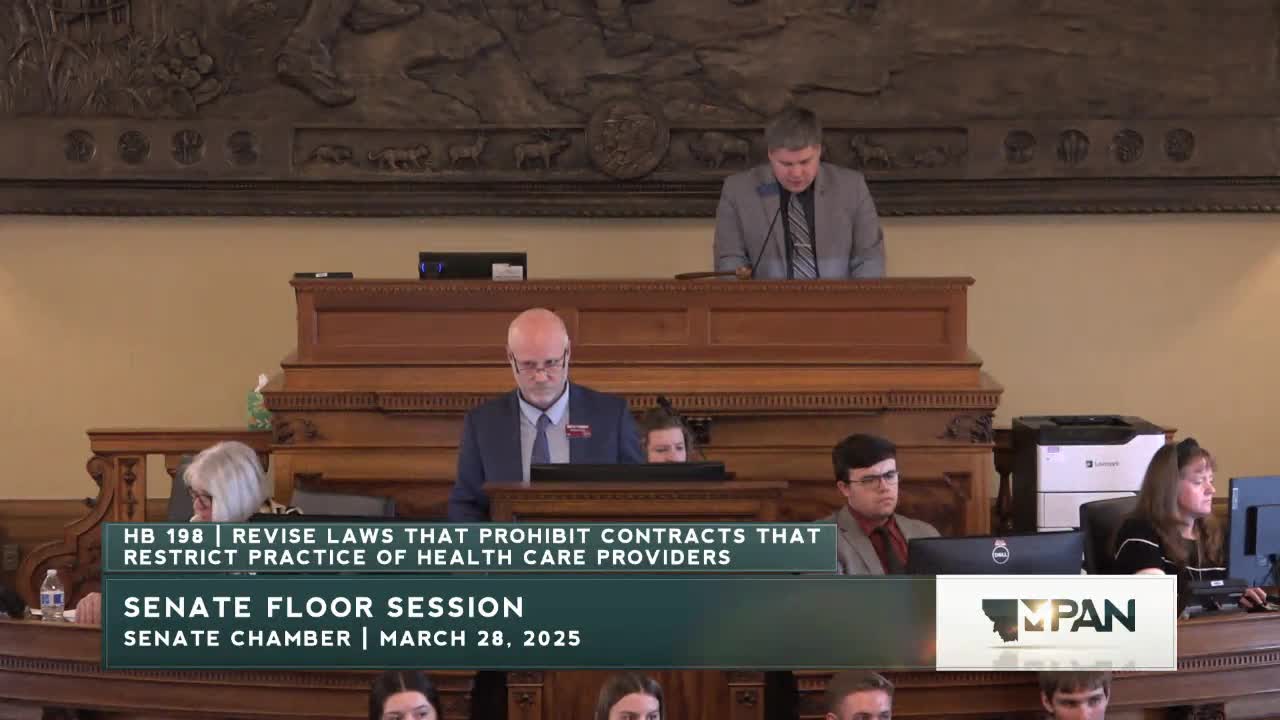
The Montana Senate on March 28 concurred in House Bill 206, a measure that limits who may enter a job site to request to see electricians’ licenses and clarifies that such checks should be done by authorized inspectors or contractors with an employment-related interest.
Senator Tzczak, the bill’s carrier, told senators the change responds to incidents where unauthorized individuals entered private job sites, distracted workers and created liability and safety concerns. "You can imagine if you're having a job and anybody can walk onto that job," said Senator Logie during debate, calling the bill "workplace protection."
Opponents, including Senator Morgeau, argued the change could reduce compliance and make it harder to catch unlicensed work. Supporters said the state maintains public records of licenses on the Department of Labor website and that certified inspectors remain able to enforce compliance.
On the vote the clerk recorded 32 senators voting aye and 18 voting nay; the Senate concurred in House Bill 206 on second reading.
Why it matters: The bill affects how license verification is performed on private and public job sites, balancing safety and property rights against proactive compliance checks intended to prevent unlicensed work.
Next steps: With Senate concurrence complete the bill returns to the House for consideration of the Senate amendments or proceeds toward final enactment if both chambers agree.