Get Full Government Meeting Transcripts, Videos, & Alerts Forever!
Get email alerts on the Property Tax Deferral Seniors topic
No spam. Unsubscribe anytime.
House advances Rosenzweig property tax‑deferral loan concept to appropriations after committee support
Summary
Representative Rosenzweig’s bill to create a state‑backed loan program to finance property tax increases for some seniors passed second reading in committee and was sent to appropriations for funding review.
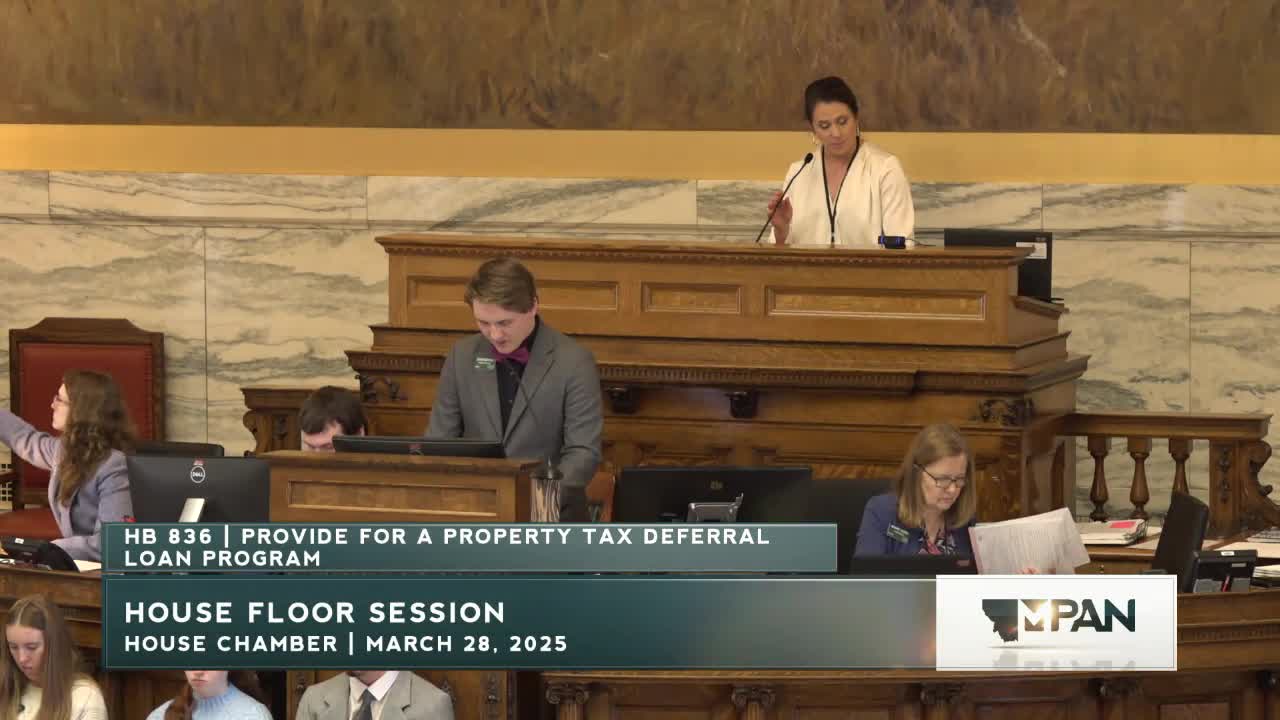
Representative Rosenzweig presented House Bill 836 to the House Taxation/Committee of the Whole, proposing a state‑administered loan program to let eligible senior homeowners defer property tax increases that exceed 2022 base amounts. The sponsor said borrowers would be at least 62, own at least 20% equity, have lived in the home at least five years and would repay when they sell or through the estate; spouses could remain under the loan terms.
Rosenzweig told colleagues the program would be structured as loans secured by liens, not as grants, and ‘‘creates no tax shift between taxpayers, no loss in state revenue, and no loss of local or school revenues.’’ She said the Board of Housing and the Board of Investments and other agencies had reviewed the proposal and were ready to implement. The sponsor acknowledged the fiscal note language was imprecise but said operating costs were modest: she cited an operating cost estimate of about $250,000 per year to support the program and said the Appropriations Committee could adjust the request.
Members asked technical questions about the program’s example calculations and whether home appreciation would accrue to owners; Rosenzweig said appreciation would increase owner equity. Representative Close and other members asked for clarification on the fiscal note lines and take‑up assumptions; the sponsor said the intent was to return to appropriations to set a final appropriation amount and include review steps.
In committee action, the clerk recorded 60 votes in favor and 40 opposed on second reading in the Committee of the Whole; House Bill 836 passed second reading in committee. On the House floor later, Majority Leader Fitzpatrick moved to reaffirm House Bill 836 to the Appropriations Committee for funding review; the motion was adopted without objection. The committee and sponsor emphasized the program’s eligibility limits and that assistance would be loans secured by liens and administered by the Board of Housing.