Get Full Government Meeting Transcripts, Videos, & Alerts Forever!
Get email alerts on the Community Health Workers topic
No spam. Unsubscribe anytime.
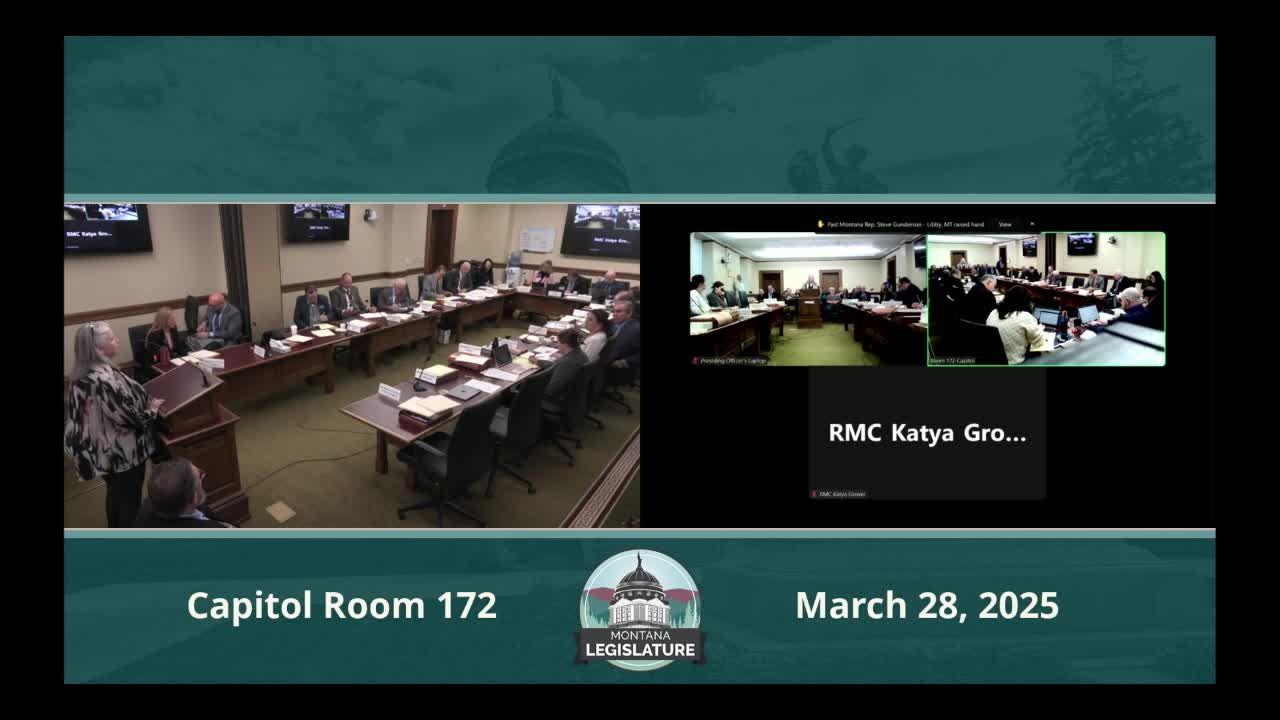
Committee hears bill to license community health workers; proponents cite workforce, opponents seek implementation details
Summary
Representative Buttrey asked the House Business and Labor Committee to establish state licensure for community health workers to standardize training, increase recognition and enable potential Medicaid reimbursement.
Representative Buttrey introduced House Bill 850 to the House Business and Labor Committee, proposing a professional license for community health workers (CHWs). The bill would create statutory definitions, vest licensing authority in the Department of Labor and Industry, authorize rulemaking, and include optional language allowing the Department of Public Health and Human Services to consider CHW services for Medicaid reimbursement.
Proponents said CHWs already operate across Montana in hospitals, community clinics, tribal programs and public-health settings; they testified that certification or licensure would standardize training, recognize CHWs as part of the care team, and help employers identify qualified candidates. Kayla Morris of St. Peter's Health described CHWs as "trusted members of their community" who help patients manage chronic conditions and connect to food, housing and transportation. Mark Nay, a CHW, described preventing repeated emergency department visits by helping patients follow care plans.
Health providers and associations — including the Montana Hospital Association, Montana Medical Association, Montana Primary Care Association and urban Indian health centers — supported the bill, saying licensure would encourage employers to hire CHWs and could enable reimbursement mechanisms. The Montana Office of Rural Health and MSU/UM training programs said they have trained several hundred CHWs through federal grants: University of Montana and Montana State University have trained more than 500 combined, and the MSU program has trained 266 to date. Training is currently grant-funded and free for participants, but the UM witness said the federal grant for UM's training runs through September 2025 and that other funding or credentialing pathways are being explored.
Questions from committee members focused on current training availability, funding, how experience would count in lieu of formal coursework, and whether the license would require in-person components. Makenzie Peterson (University of Montana) and Kaylin Mock (Montana Office of Rural Health) said existing programs offer online, 10-week courses with telecoaching and that universities are coordinating certification standards with the emerging Montana CHW Association.
Informational witnesses from DPHHS, the Department of Labor and Industry and university training programs answered technical questions; no formal committee action was recorded during the hearing. The sponsor closed by urging support and noting that licensure would give the CHW workforce statewide recognition and assist Medicaid, employers and health systems seeking workforce solutions.