Get Full Government Meeting Transcripts, Videos, & Alerts Forever!
Get email alerts on the Judiciary Elections topic
No spam. Unsubscribe anytime.
Montana House Judiciary advances bill allowing party labels, top-two for Supreme Court races after contested hearing
Summary
House Judiciary advanced House Bill 8-38 to the full House after a hearing in which dozens of opponents warned the change would politicize the state Supreme Court. The bill would let candidates list party affiliation (including a voluntary "nonpartisan" option) and send the top two primary finishers to the general election.
Representative Brad Barker opened the hearing on House Bill 8-38, saying the bill would let Supreme Court candidates identify with any party or run nonpartisan and would advance the top two primary finishers to the general election.
Opponents — including the Montana Trial Lawyers Association, the State Bar of Montana, legal scholars and multiple citizens — urged the committee to reject the proposal, arguing it would inject partisan pressure into the judiciary and erode public confidence. Al Smith of the Montana Trial Lawyers Association said judges "should be free from political pressure," and asked the committee to table the bill.
Bruce Spencer of the State Bar of Montana testified that the bar opposes the bill and that allowing party labels would not reduce campaign spending or improve voter information. "Partisan elections will significantly erode our notions of a fair and independent judiciary," said a spokesperson for a constitutional convention delegation who testified in opposition. David Wilson, an Helena attorney with nearly 40 years’ practice, told the committee he opposes the bill because party labels would undercut the appearance and reality of impartiality.
Supporters and the bill sponsor told committee members the measure is voluntary and framed it as providing voters more information. Representative Barker said the bill "is a may, not a shall," and that candidates would still be able to run without party labels.
During the hearing, witnesses cited the Judicial Code of Conduct and Montana's constitutional history. Opponents pointed to Canon 4.1 and to long-standing nonpartisan practice; several referenced the convention debates and the decision after the 1930s to keep judicial elections nonpartisan.
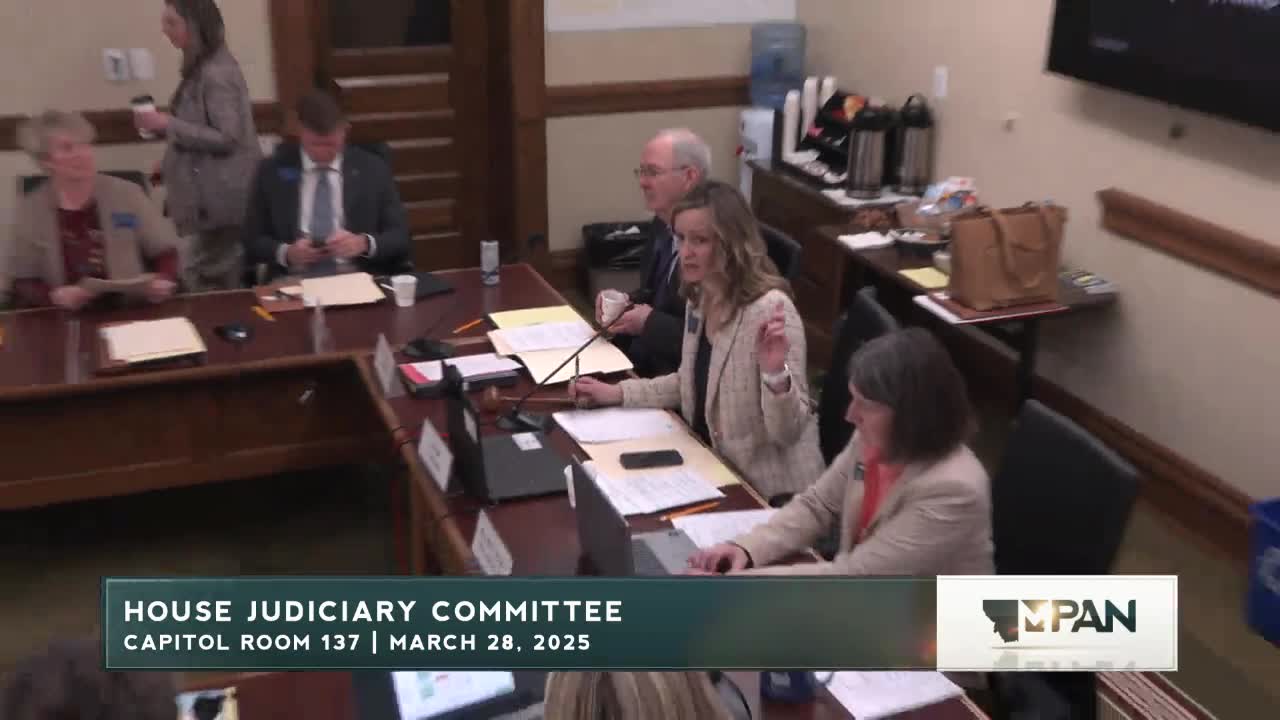
In executive action, the committee recorded a roll-call vote on House Bill 8-38. The committee vote was 12 in favor and 8 opposed; the bill passed House Judiciary and will move on in the legislative process.
The hearing record shows extensive public opposition and questions about how voluntary party identification would interact with judicial ethics rules and election mechanics. The bill sponsor and some committee members said they view the bill as one of several reforms to address concerns about the courts.
House Bill 8-38 now proceeds from committee to the next stage of House consideration.