Get Full Government Meeting Transcripts, Videos, & Alerts Forever!
Get email alerts on the Budget Workshop Roundup topic
No spam. Unsubscribe anytime.
Madison County supervisors review department budgets, schedule tax-rate discussions and consider outside-agency funding
Summary
The board reviewed multiple department budgets, set an April schedule to consider tax rates and administrative fees, and discussed outside-agency appropriations (many to be flat-funded); the board approved the meeting agenda and later adjourned by voice vote.
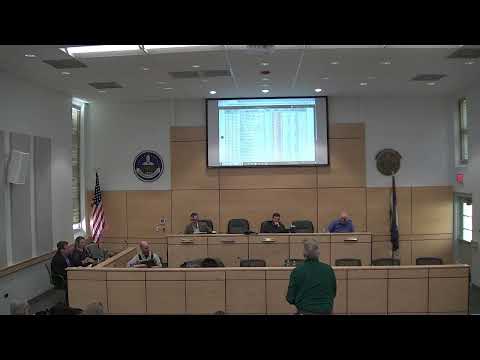
Madison County supervisors reviewed budget presentations from multiple departments and outside agencies, set a schedule for upcoming budget actions and heard several funding requests.
Jonathan, a county staff member, asked the board to plan to discuss tax rates and administrative fees at the April 3 meeting and said a broader budget presentation would be ready April 10. He explained the state-mandated advertisement language for equalization and that the county must decide on rates for public hearing advertising. Staff noted one cent on the real-estate tax (the advertised equalized rate) was estimated to raise about $280,000 under the new reassessment figure; a one-cent change on personal property was estimated at about $150,000.
The board reviewed outside-agency requests. Members agreed to flat-fund most agencies at last year’s levels but signaled zero funding for two new requests (Legal Aid Works and Mad Catz) and left Madison Free Clinic’s request pending pending further review and potential later funding depending on revenue. Supervisors asked staff to confirm statutory obligations for library funding.
Formal recorded board actions in the transcript were limited to procedural votes: the board adopted the meeting agenda by voice vote early in the session and later approved adjournment by voice vote. No formal appropriations or tax-rate decisions were made; staff will bring refined revenue and expenditure projections for upcoming meetings.
The board also heard operational budget summaries from departments including building and zoning, DSS (flat funding), emergency communications (chair replacements and equipment lifespan concerns), facilities (telecommunications and bottled-water line-item moves), and the treasurer (small increase primarily from state salary guidance). Emergency communications noted the need to replace dispatch chairs and specialized call-handling equipment; the communications director has applied for grants to offset equipment costs.