Get Full Government Meeting Transcripts, Videos, & Alerts Forever!
Get email alerts on the Firearms Policy topic
No spam. Unsubscribe anytime.
Senate Judiciary Committee Hears Hours of Testimony on SB 243, a Broad Gun‑safety Package
Summary
On March 27 the Oregon Senate Committee on Judiciary heard public testimony on Senate Bill 243 (dash‑1), a package that would impose a 72‑hour waiting period for many firearm transfers, raise the purchase age to 21 for certain semiautomatic rifles, and criminalize or ban rapid‑fire ‘‘activator’’ devices such as bump stocks and auto sears.
SALEM, Ore. — On March 27 the Oregon Senate Committee on Judiciary held a public hearing on Senate Bill 243 (dash‑1), a broad gun‑safety package that would require gun dealers to wait 72 hours after requesting a criminal background check before transferring certain firearms, raise the minimum purchase age for some semiautomatic rifles to 21, and ban or create new penalties for so‑called rapid‑fire activators such as bump stocks, auto sears and forced‑reset triggers.
The dash‑1 amendment, described in an overview by legislative staffer Jillian, would: require a 72‑hour wait between a dealer’s request for a criminal background check and transfer; create felony and misdemeanor offenses related to the transport, manufacture, sale or possession of rapid‑fire devices; raise the minimum age for certain firearm purchases in provisions named the Russell Paul Evans Act; and give local governments the option to restrict concealed‑handgun license (CHL) affirmative defenses on public buildings and adjacent grounds, with required signage and a reduced affirmative defense that would be a class A misdemeanor where adopted.
Why it matters: Proponents said the package would reduce firearm suicide, limit access to devices that increase lethality in mass shootings, and help protect staff in government buildings. Opponents said parts of the bill are unconstitutional, would burden lawful owners and small businesses, and would harm youth hunting and sporting programs. The committee did not take a vote during the hearing; committee leaders said members had until 3 p.m. Saturday, March 29, to submit supplemental testimony.
What supporters said
State Sen. Lisa Reynolds, a pediatrician, said the bill “is a bill that will save lives” and urged raising the purchase age for some long guns to 21, citing adolescent brain development and higher homicide rates among 18‑ to 20‑year‑olds. Dr. Joel Burnett, an internal‑medicine physician testifying for the Oregon Medical Association and the Oregon chapter of the American College of Physicians, described suicide prevention evidence and said waiting periods “by design put time and distance between a suicidal person and their firearm” and cited research linking waiting periods to reductions in firearm suicide.
Multnomah County District Attorney Nathan Vasquez said prosecutions and recoveries of rapid‑fire devices in his jurisdiction have risen, calling the devices “reckless, dangerous, and just horrible.” Representative April Dobson and others recounted high‑profile mass shootings and argued that bump stocks, auto sears and forced reset triggers increase lethality; Dobson noted the Las Vegas attacker used bump stocks and described the devices’ capacity to increase a weapon’s rate of fire.
Advocates for local control — including state Sen. Anthony Bridal and representatives of Metro, the League of Oregon Cities and the city of Eugene — urged that sections allowing governing bodies to adopt rules limiting CHL affirmative defenses for grounds adjacent to public buildings would let cities and counties protect employees and visitors at courthouses, convention centers and other public venues.
Students and survivors also testified. Joshua Friedline, a survivor of the 2015 Umpqua Community College shooting, described repeated suicidal crises after that trauma and said a 72‑hour waiting period “will address that risk.” Several student speakers and school principals described repeated incidents of weapons and shootings affecting K‑12 and college communities.
What opponents said
Speakers opposing the bill included the state director of the NRA, who argued the package would infringe on rights and warned of litigation, and multiple gun‑industry and pro‑ownership witnesses who said the 72‑hour delay and other requirements would hamper lawful purchasers and small businesses, particularly in rural areas. The National Shooting Sports Foundation warned the waiting period and recordkeeping requirements could create burdens for small, family‑owned dealers and rural customers.
The Oregon Hunters Association’s policy director, Amy Patrick, and others objected to age restrictions and some definitions as written, saying they could prevent hunting programs and sport‑shooting teams from loaning shotguns used in training and could exclude college‑age hunters who live away from parents. Several witnesses also argued that devices such as auto sears were already prohibited under federal law and questioned how some state definitions would be enforced.
Legal and technical concerns
Multiple witnesses raised constitutional and implementation questions. Testimony referenced existing Oregon law on permits (ORS 166.505), Measure 114 and the interaction with state permitting systems. Senators and public witnesses noted the bill is an omnibus package combining widely varying provisions and urged separating items for standalone consideration; a number of opponents said litigation over state and federal limits is likely.
Key numbers and penalties in the bill (as described in committee testimony)
- 72‑hour minimum wait between the dealer’s background‑check request and transfer of a firearm or unfinished frame/receiver; a unique approval number from the Oregon State Police is required before transfer. - New class B felony for knowingly transporting, manufacturing, or transferring a rapid‑fire activator into the state or selling/transferring one; a class A misdemeanor for unlawful possession of a rapid‑fire activator. - Where local governing bodies adopt restrictions on grounds adjacent to public buildings, a concealed‑handgun license affirmative defense would not be complete and could result in a class A misdemeanor punishable by up to 364 days imprisonment, a fine (described in testimony as up to $6,250), or both; governing bodies would be required to post clearly visible signs at normal points of entry.
Committee procedure and next steps
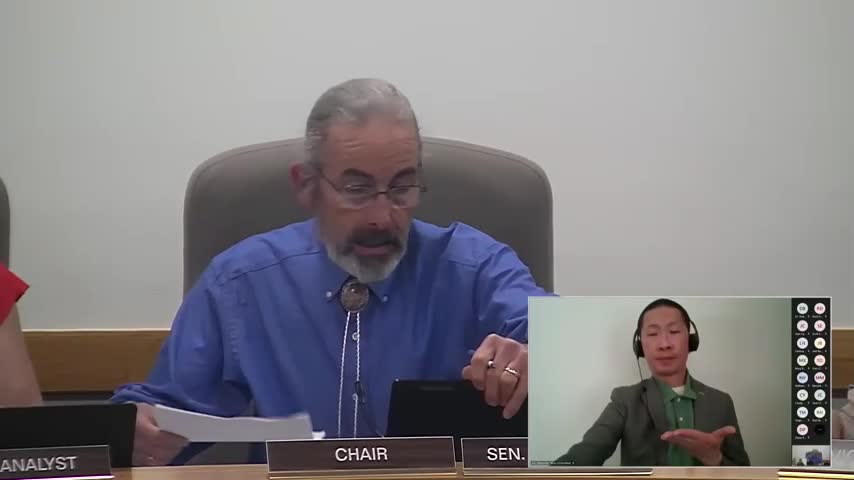
Chair Senator Prozanski laid out rules for the hearing, which included two 20‑minute panels (one for proponents and one for opponents) followed by two‑minute slots for individual testimony. She said technical questions should be submitted in writing to legislative staffer Jillian for Legislative Counsel review and reminded the public that supplemental testimony could be submitted until 3 p.m. Saturday, March 29.
No formal action or vote was taken at the March 27 hearing. The bill will remain in the Senate Judiciary Committee as members consider testimony, possible amendments and legal review.
Sources and attribution
This article is based on testimony and statements delivered at the March 27 Senate Committee on Judiciary public hearing on Senate Bill 243 (dash‑1). Quotes and attributions are drawn from the hearing transcript; the first references to people and titles follow committee usage.
Ending
The committee recessed after several hours of testimony. Lawmakers and staff said they would continue to accept written testimony through the Saturday deadline and that additional legal review and amendment drafting would inform any future committee vote.