Get Full Government Meeting Transcripts, Videos, & Alerts Forever!
Get email alerts on the Courts And Justice topic
No spam. Unsubscribe anytime.
Struthers municipal judge outlines court backlog fixes and proposes courtroom renovation for jury trials
Summary
Judge James Malone reported a higher caseload in 2024, said changes to local rules are returning court costs to the city’s general fund, described staffing pressures and a plan to restart drug court, and asked council to consider renovating the council chamber/courtroom for formal jury trials with upgraded AV systems.
Judge James Malone, the sitting municipal judge, told the Struthers City Council on March 26 that his first year on the bench focused on clearing backlogs and improving court operations and that he plans to renovate the council chamber so it can properly host jury trials.
"My focus in 2024, my first year as judge was to just get everything cleaned up, running smoothly," Malone said, describing changes to civil-case procedures and an effort to keep criminal dockets moving.
Malone said the court handled "over 3,300 cases" in 2024, about 1,000 more than in 2023, and that he had revised local rules to reduce the civil-case backlog. He told council the court now generally meets Ohio Supreme Court time guidelines for case processing, with only occasional exceptions.
As part of operational changes, Malone said he adjusted where court costs are allocated so more of those revenues flow back to the city. "Early in 2025 this year, I made the same change, to the civil cases. So now, when we bring in court costs, the lion's share is now going back to the city," Malone said. He said he and city staff will monitor the effect on the court’s deficit.
Malone also described staffing needs: the office recently lost a longer‑tenured staff member to retirement and expects a newer hire to leave for law school in the fall. He said the court is seeking a versatile employee who can serve as security, process server and clerk support.
On programmatic matters, Malone said the court has begun the application process to reestablish a drug court program in 2025 but that the process will take time.
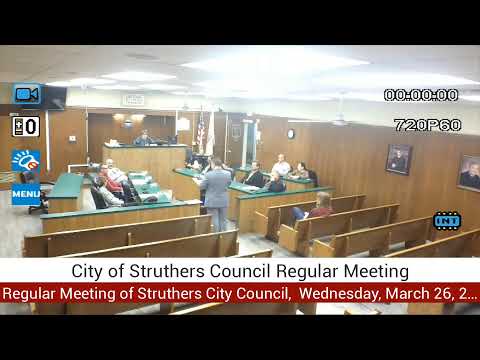
The principal request Malone presented to council was a plan to renovate the council chamber so it can function as a properly outfitted courtroom for jury trials. Malone described the current set‑up as makeshift: "We don't have a jury box. We don't have a witness stand. We don't have appropriate counsel tables." He asked permission to hire an architect and to develop drawings for review by council.
Malone outlined several proposed changes: removing or shifting one row of gallery seating to create space; building an elevated two‑row jury box with about 10 seats (he said this would accommodate an eight‑person jury plus officers); adding a witness stand, improved counsel tables that could be moved for council meetings, and upgraded microphones and cameras. He said the city already pays for two sets of telecommunications lines into the building and suggested consolidating to a single shared line to support a new integrated video/audio system.
The judge said his office had contacted Oslowski (an architect firm identified as "Oslowski downtown" in the meeting) — the same firm that worked on Youngstown municipal projects — and that he expected an initial meeting with the architect soon. Malone asked that council review drawings when available; he said he would not seek city funds for the initial drawings and said he would contribute money personally for some aspects of the work.
Malone and council discussed how to minimize disruption during construction. He said he had not yet spoken with the other local judges in detail but hoped to arrange limited temporary use of a neighboring court (referred to in the meeting as Judge Komasick's court) for the duration of construction, and noted that the court has a July–August recess that might reduce service interruptions.
Safety Service Director Bob and council members present offered procedural and logistical comments as Malone described the concept and asked for a wish list; the judge said he would return to council with architect drawings and a proposed schedule and bid plan.
Next steps Malone stated on transcript: meet the architect in the coming week, produce drawings, present them to council for comment, then put the project out to bid and schedule work to minimize disruptions.