Get Full Government Meeting Transcripts, Videos, & Alerts Forever!
Get email alerts on the Transportation topic
No spam. Unsubscribe anytime.
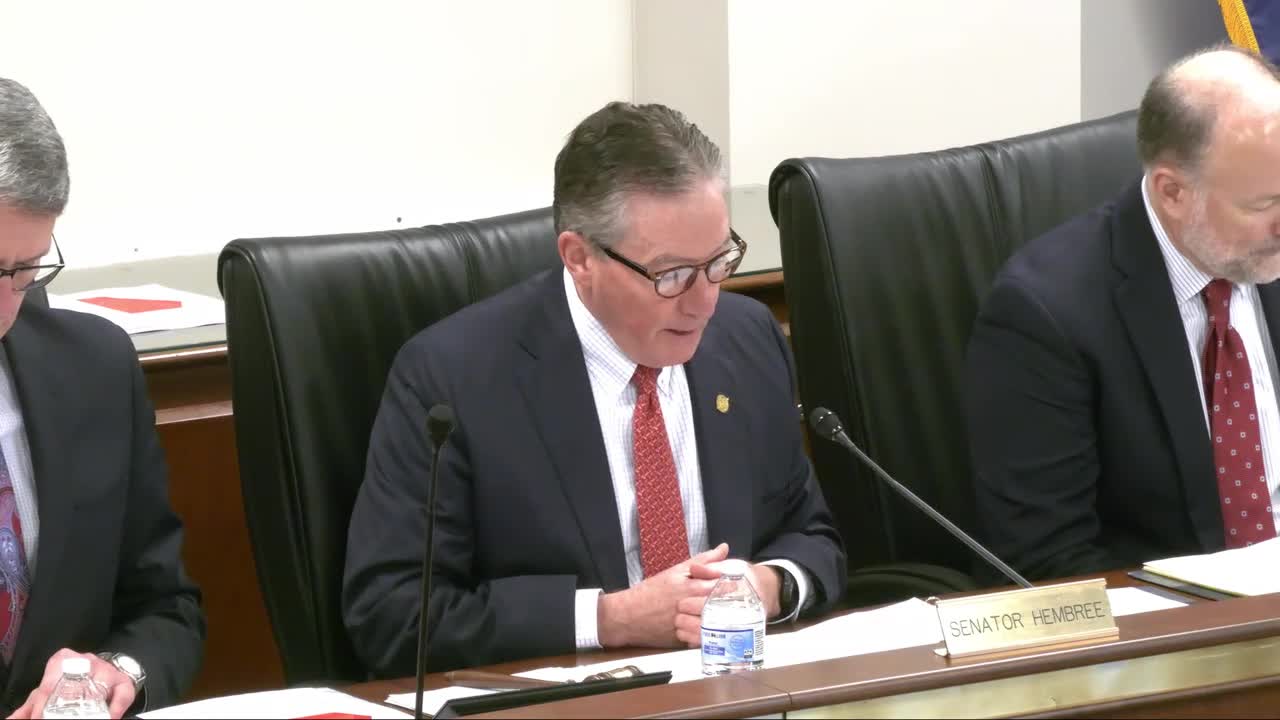
Senate subcommittee pauses debate on bill to allow UTVs on South Carolina roads
Summary
A Senate Transportation Subcommittee heard hours of testimony for and against S.222, a bill that would permit utility terrain vehicles on public roads with licensing, registration and insurance requirements. Lawmakers and witnesses flagged safety, insurance and liability concerns; the subcommittee carried over three bills for further work.
At a Senate Transportation Subcommittee meeting, members heard hours of testimony on S.222, a bill that would allow utility terrain vehicles (UTVs or side-by-sides) to operate on public roads in South Carolina while requiring licensing, titling, registration and insurance.
The bill, introduced in the packet as S.222, was summarized to the panel by legislative staff member David Owens, who said, "it permits the operation of utility terrain vehicles or UTVs, sometimes known as side by sides, on public roads. It requires licensing, registration, titling, and insurance, and it exempts UTVs from property taxes and specifies violations." Owens also noted written testimony distributed from a national industry group.
Why it matters: The proposal touches on public safety, local law enforcement discretion, employer and manufacturer liability, and a manufacturing presence in the state. Witnesses said the issue affects rural travel, recreational use, and businesses that build UTVs in South Carolina.
Safety was a central theme. The subcommittee chair opened by urging members to weigh statewide fatality statistics, noting South Carolina's high rankings on multiple highway-fatality metrics and saying, "I think safety is our number 1, absolutely our number 1 issue." Jeff Reed, government relations lead for Honda, told the panel Honda opposes the bill as written because "UTVs ... are not intended for on-road use" and because the vehicles lack automobile safety systems such as airbags and certain crash-energy designs. Reed said manufacturers and workers at Honda's state plant would seek liability protections if the vehicles were legalized for road use: "there must be some sort of liability protection for the companies that embark on the research design development and manufacturing of these products."
Opponents focused on crash risk and behavior. Michael Covington, the registered lobbyist in South Carolina for the Auto Club Group (AAA), said South Carolina already has among the highest highway fatality rates in the nation and argued the bill would increase risk: "Putting more off road vehicles on the road is not a step in the right direction." Covington pointed to state data he had reviewed and raised a technical issue with the bill's code citations, calling one reference a scrivener's error.
Supporters said the law is currently unclear and that legalization with regulation would improve enforcement and insurance coverage. Charlie Stabler, who testified for street-legal side-by-side proponents, said the legislation is about "fairness, consistency, and public safety" and urged the subcommittee to move the bill forward so the statutes are clearer for citizens and law enforcement. A submitted written statement from Dave Hayes of the National Side by Side Association emphasized potential economic benefits and cited other states' approaches.
Other stakeholders asked for amendments or protections. The South Carolina Trucking Association and other witnesses asked the subcommittee to consider liability protections for manufacturers and commercial drivers sharing roads with UTVs. Some witnesses also asked that UTVs remain subject to local restrictions inside municipalities and that safety equipment and insurance amounts be specified in any final law.
Clarifying provisions discussed in the hearing included: the bill's limit that UTVs may not exceed posted speed limits where those limits are under 55 mph; a registration choice for owners to register vehicles for on-road use or keep them off-road; a requirement for seat belts and helmet rules for minors mentioned in testimony; and a sales-tax/property-tax distinction (testimony said the bill would exempt UTVs from property tax while subjecting them to sales tax and removing an infrastructure maintenance fee). Witnesses also noted the bill did not specify minimum liability limits in its current form.
Outcome and next steps: The subcommittee did not vote on S.222 itself. With broad interest and additional witnesses for other bills on the agenda, the committee agreed to carry over all three bills on the panel's agenda for further work. The chair asked staff to review the state's statutory structure for low-speed vehicles, golf carts, and related categories and bring structural amendments back to the panel. The chair said the committee will reconvene to continue working on the bills rather than advancing them in their current form.
Votes at a glance: The subcommittee took one formal procedural action at the end of the session: the motion to carry over the three bills on the day's agenda was approved by voice vote. The subcommittee made no roll-call vote on S.222 itself.
The hearing record includes written materials submitted by industry groups and manufacturers; committee staff said additional meetings will be scheduled so members and outside parties can draft and review targeted amendments.