Get Full Government Meeting Transcripts, Videos, & Alerts Forever!
Get email alerts on the Conversion Therapy Ban topic
No spam. Unsubscribe anytime.
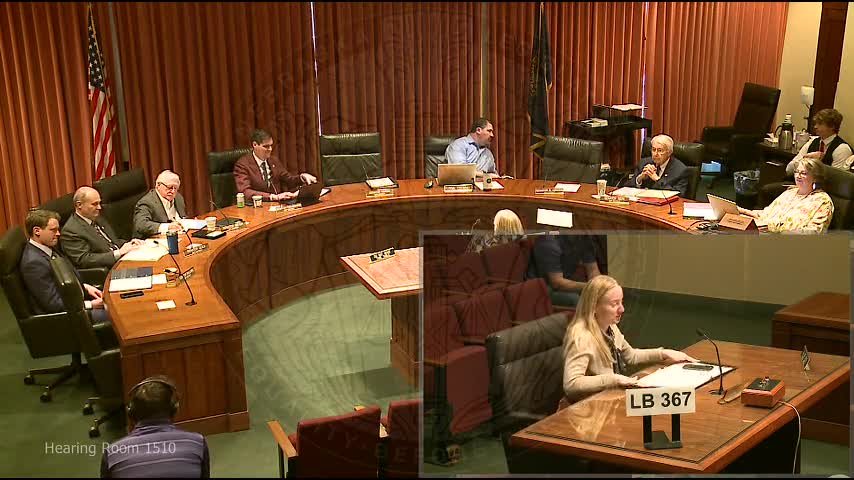
Neb. HHS committee hears testimony on bill to ban conversion therapy for minors
Summary
The Nebraska Health and Human Services Committee held a public hearing on LB367, a bill introduced by Sen. Megan Hunt that would prohibit licensed health professionals from providing conversion therapy to minors and bar state funds for such treatments.
The Nebraska Health and Human Services Committee held a public hearing on LB367, a bill introduced by Sen. Megan Hunt that would prohibit licensed health professionals from providing conversion therapy to minors and bar state funds for such treatments.
Supporters told the committee the practice is widely discredited and harmful, while opponents — including legal groups — said the bill would impermissibly regulate speech between clinicians and patients and risk constitutional challenges.
Sen. Megan Hunt, the bill’s introducer, told the committee LB367 would "end the harmful, widely discredited practice known as conversion therapy for minors and bar the use of state funds for its use." She said the bill would make conversion-therapy interventions by credentialed health professionals grounds for disciplinary action under Nebraska’s Uniform Credentialing Act and could create a civil claim under the Uniform Deceptive Trade Practices Act. Hunt also said the bill has no fiscal note and includes an exception for pastoral counseling when a clergy member is not acting in the capacity of a licensed health professional.
Proponents described clinical harms and cited professional organizations. Britta Tollefsrud, an independently licensed mental health practitioner, said, "Conversion therapy is not only harmful to our youth, it is also unethical, it is ineffective, and costly to taxpayers." MacKenzie Loncke, policy fellow for OutNebraska, cited national surveys and told the committee that 17 percent of Nebraska’s LGBTQ+ youth were threatened with or subjected to conversion therapy, citing Trevor Project survey results. Several other clinicians and people with personal experience testified in support and highlighted studies linking the practice to increased depression, substance use and suicidality among young people.
The bill’s text, as described in testimony, would: 1) treat conversion therapy administered by credentialed professionals to minors as cause for licensure discipline under the Uniform Credentialing Act; 2) allow a patient to assert deceptive-trade-practice claims under the Uniform Deceptive Trade Practices Act; and 3) exclude pastoral counseling when a faith leader is not acting as a licensed health professional.
Opponents framed the bill as a free-speech and religious-liberty problem. Greg Baylor, senior counsel for Alliance Defending Freedom, told the committee, "LB 3 67 violates the First Amendment. It invades the counselor–patient relationship to dictate what can and cannot be said." Attorney Matt Heffron of the Thomas More Society made similar points and warned the state could face litigation and attorney-fee exposure if the statute is enacted and later held unconstitutional. Opponents pointed to a split in federal appellate rulings and noted that the U.S. Supreme Court has agreed to review a related case, Charles v. Salazar, later this term.
Committee members asked detailed questions about how the bill would define conversion therapy in practice, how the neutrality of clinicians would be protected, and whether the restriction would inadvertently channel patients toward other forms of care. Clinicians who testified said exploratory, neutral counseling is not targeted by the bill; rather, the bill is written to prohibit interventions that actively pair a minor’s LGBTQ identity with aversive stimuli or otherwise seek to change sexual orientation or gender identity. Several senators, including members of the committee, pressed witnesses on how the law would distinguish permissible assessment and supportive counseling from prohibited conduct.
Proponents told the committee that similar bans exist in other jurisdictions and countries; witnesses cited about two dozen states and multiple countries that have enacted conversion-therapy prohibitions in some form. Witnesses also emphasized that major medical and mental health organizations — including the American Medical Association, the American Psychological Association and the American Academy of Pediatrics — oppose conversion therapy for minors.
No formal committee vote on LB367 was recorded at the hearing. At the conclusion of testimony, committee leadership moved the panel into executive session.
The committee hearing transcript contains extensive submitted written comments and online testimony referenced during the hearing; senators and witnesses noted the record includes prior multi-year testimony on the topic and public comments filed via the legislature’s website.