Get Full Government Meeting Transcripts, Videos, & Alerts Forever!
Get email alerts on the County Initiative Referendum topic
No spam. Unsubscribe anytime.
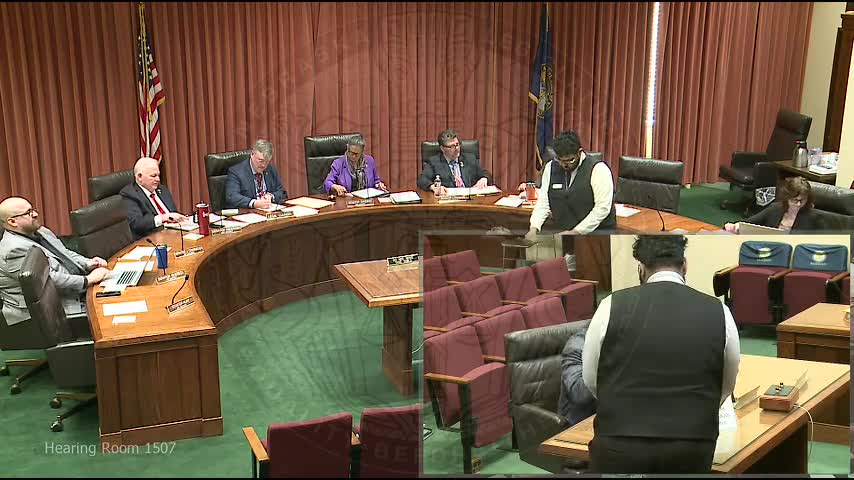
Senators hear bill to allow county-level initiative and referendum; amendment offered
Summary
Senators on the Government, Military and Veterans Affairs Committee heard public testimony on LB629 on an amendment, AM0415, that would extend initiative and referendum authority to county governments in Nebraska.
Senators on the Government, Military and Veterans Affairs Committee heard public testimony on LB629 on an amendment, AM0415, that would extend initiative and referendum authority to county governments in Nebraska.
Senator Brian Hardin, the bill's introducer, said the amendment adapts the existing municipal INR framework for counties and described the change as intended to give county voters a direct check on county legislating. “There is an expense associated with conducting special elections, and I'm sure that the committee is going to hear about that expense from some of the testifiers today,” Hardin said, while adding he was open to holding citizen measures on regular primary or general election ballots to reduce costs.
Supporters framed the measure as expanding direct democracy. Doug Keegan of Nebraska Taxpayers for Freedom testified that petitioning is “one of our greatest opportunities to engage in direct democracy,” saying counties perform many functions similar to state government and should be subject to citizen-initiated measures. Bill Hawkins, a farmer and longtime petitioner, described local examples in Lancaster County where citizens opposed a 2,000-acre solar project and said petition authority would provide a needed check when elected officials approve projects viewed as harmful.
Neutral testimony from Beth Bazyn Ferrell of the Nebraska Association of County Officials (NACO) flagged both benefits and technical concerns, especially the cost of running countywide special elections and signature verification. Bazyn Ferrell said county election officials estimated county special-election costs roughly as follows: Douglas County about $700,000, Lancaster about $500,000, Buffalo about $506,000 and Hall about $60,000, with separate signature-verification costs. She also noted the amendment's residency language differs from the domiciled standard in existing election law and urged alignment for election integrity, and she recommended clarifying language that would preserve the clerk/election commissioner's administrative role rather than converting it into a decision-making role about ballot placement.
Committee members asked several practical questions about scope and use. Senator Linowski asked whether county commissioners' roles would change; Hardin said the bill would not change commissioners' roles but would give voters a new mechanism to place measures on the ballot. Senator Garcia raised examples of county-level regulatory decisions that might prompt petitions and noted the amendment excludes measures that would modify zoning or affect contractual obligations. Senators and witnesses discussed rural scenarios — including Banner County and other sparsely populated counties — where large energy projects, cryptocurrency operations or infrastructure proposals have generated concern among residents who feel they have limited avenues to object.
Testimony also touched on technical drafting specifics: the amendment's signature-threshold language (15–20 percent in the draft), the time and cost for verifying signatures (Lancaster County estimated about four weeks and $26,000 for verification under a 20% threshold), and inconsistencies between the amendment's ‘‘residence’’ definition and the election act's ‘‘domiciled’’ standard. NACO recommended considering putting citizen measures on primary or general election ballots rather than costly special elections, a suggestion Senator Hardin said he would consider.
Senator Rita Sanders, committee chair, opened and closed the hearing; she and others noted the committee would accept written comments through the legislative portal. AM0415 was distributed to committee members and the hearing concluded with no committee vote on LB629. Earlier in the hearing, Senator Sanders briefly opened LB244; she said that LB244 was a second shell bill and the sponsor planned to keep it in committee.