Get Full Government Meeting Transcripts, Videos, & Alerts Forever!
Get email alerts on the Truancy topic
No spam. Unsubscribe anytime.
Sen. Danielle Conrad seeks to narrow truancy rules, add defenses and accountability for school interventions
Summary
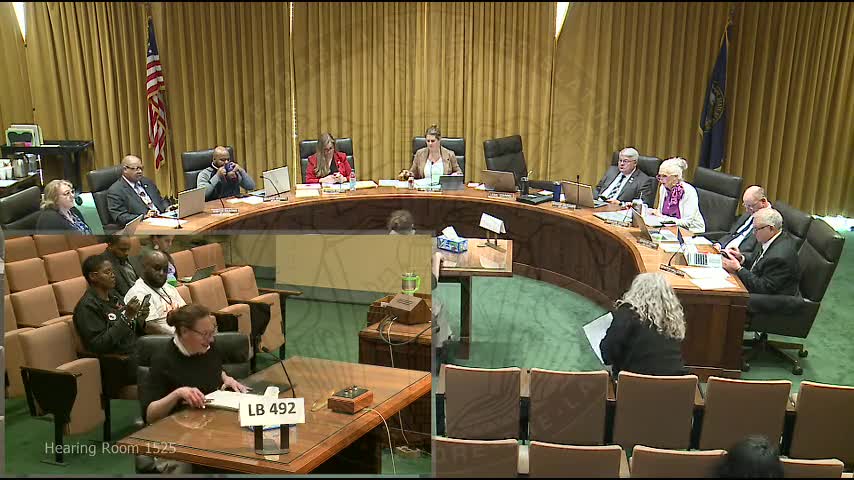
LB492 would tighten Nebraska's truancy law, add affirmative defenses and require more evidence of educational harm before juvenile court involvement, sponsor Danielle Conrad said at a lengthy Judiciary Committee hearing.
Senator Danielle Conrad introduced LB492 to the Judiciary Committee as a measure to narrow Nebraska's current truancy rules and to reduce reliance on juvenile court for many attendance issues.
Conrad told the committee the bill aims to move the statute away from a rigid "20‑day" trigger that often leads to county attorney involvement even where a student shows no loss of educational attainment. "What we see happen in Nebraska is that kids reach this 20 absence mark, but they may not be suffering educational loss," Conrad said, describing cases caused by transportation limitations, illness, extracurricular activity or family hardship.
The bill would (as presented) create clearer definitions for when a child may be adjudicated for truancy, add affirmative defenses tied to documented school interventions and supports, and raise the age threshold for "habitual truancy" from 11 to 13 in certain subsections. Jennifer Holden, chief deputy of the Lancaster County Public Defender's juvenile division, testified the change would restore a narrower focus to the statute and avoid prosecuting children who are not responsible for absences.
Voices for Children Nebraska and community advocates emphasized racial and socioeconomic disparities in how attendance enforcement is applied. Anahi Salazar, policy coordinator for Voices for Children Nebraska, cited statewide chronic absenteeism figures in written testimony and urged supportive over punitive responses.
Students from the Lincoln Youth Advisory Council provided first‑hand examples of transportation and family care barriers; ninth grader Naveah Brown described a car breakdown that constrained her ability to reach school and urged flexibility.
County attorneys' representatives expressed concerns. Bridal McCarty of the Nebraska County Attorneys Association said the bill's affirmative defense language could "override" compulsory‑education rules and interfere with prosecutorial discretion; she also warned an unintended effect could harm eligibility for certain locally funded diversion programs that depend on juvenile court jurisdiction.
Committee discussion focused on three recurring questions: (1) Does the bill remove necessary tools that lead to early interventions for at‑risk youth? (2) Would raising the habitually‑truant age leave younger children with fewer options? (3) How will schools document and be held accountable for the collaborative plans and interventions the bill requires?
Conrad and supporters said LB492 aims to require evidence schools are attempting supports before court referral and to provide an affirmative defense so children not responsible for absences are not adjudicated. Opponents asked whether phrasing in section 3 could be interpreted to excuse absences when parents fail to participate in collaborative plans; supporters said the provision operates as a court‑stage defense rather than a school‑level veto.
The hearing included multiple proponents and opponents; committee staff listed five proponent, three opponent and one neutral written comments for the record. No committee vote occurred on the day of the hearing.