Get Full Government Meeting Transcripts, Videos, & Alerts Forever!
Get email alerts on the Sovereign Immunity Schools topic
No spam. Unsubscribe anytime.
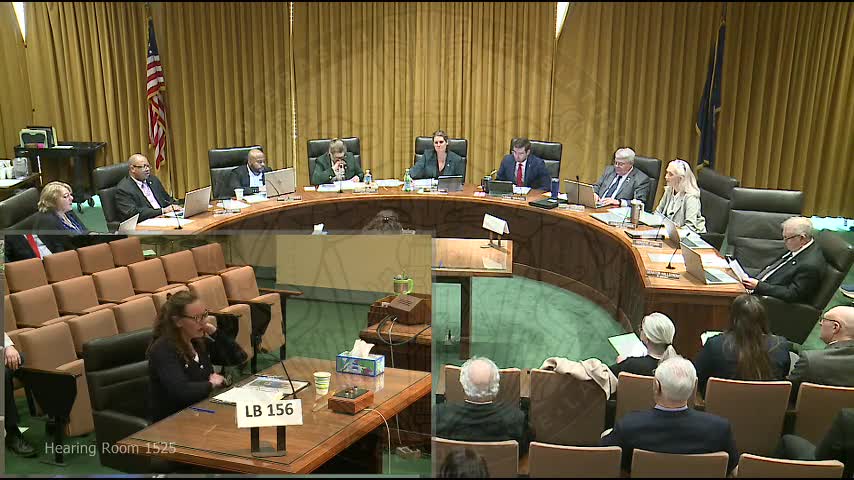
Judiciary committee hears LB 156 to allow limited suits against public schools in child sexual‑assault cases
Summary
At a public hearing before the Nebraska Legislature's Judiciary Committee, lawmakers heard competing arguments on LB 156, a bill by Senator Danielle Conrad that would create a narrow waiver of sovereign immunity to allow negligence suits against public schools for child sexual assault occurring on school property or at school activities.
At a public hearing of the Nebraska Legislature’s Judiciary Committee, senators heard testimony on LB 156, a bill introduced by Senator Danielle Conrad that would create a narrow waiver of sovereign immunity to let families sue public schools for child sexual assault when the school’s negligence contributed to the harm.
LB 156 responds to recent Nebraska court decisions, supporters said, by restoring a limited civil remedy for children sexually assaulted at school; opponents warned the bill’s language is broad, could expose taxpayers to large judgments and would erode long‑standing sovereign‑immunity protections.
Senator Danielle Conrad, the bill’s introducer, told the committee the proposal is intended to be narrow and targeted. “If there was ever a need to have a waiver of sovereign immunity, it’s for cases like Taylor’s,” Conrad said, describing a constituent whose family sought redress after a student with developmental disabilities was sexually assaulted during a school activity and whose case was affected by the Nebraska Supreme Court’s Moser decision. Conrad said LB 156 would allow suits when a child is sexually assaulted “on school grounds or in a vehicle owned, leased, or contracted by the school and being used for school purposes” or during school‑sponsored activities, and that the measure seeks to match public‑school accountability to that of private schools in comparable situations.
Proponents said the current law leaves many victims without any civil remedy. Elizabeth Cogerda, general counsel for the Education Rights Council, said schools “stand in loco parentis” and have a heightened duty to protect students; when districts fail in that duty, liability should be possible. “When a school district fails to do that duty, that’s when we would generally expect liability to arise,” Cogerda said.
Several witnesses described traumatic cases and trafficking concerns. Lauren Misek Vargas of Education Rights Council said ERC has helped students who were groomed and trafficked and urged the committee to adopt a narrow exception so victims can seek counseling and other remedies. Witnesses described local instances and national reporting they said show sexual exploitation occurs in and around school settings.
Opponents — including insurance‑pool representatives, county associations and the attorney general’s civil litigation chief — urged caution. Cameron Gunzel, testifying for the Nebraska Association of Trial Attorneys in a separate appearance, argued LB 156 does not go far enough and instead urged repeal of the broader rule carved out by the Moser and Joshua M. decisions; other opposing witnesses warned the bill’s wording left uncertainties about when school property or school‑sponsored activities would trigger liability. Huxoll, civil litigation bureau chief for the attorney general’s office, said the bill’s undefined phrases, such as “school grounds” and “child,” and the proposed negligence standard risk expanded taxpayer exposure and do not reduce crime.
Insurance and pooled‑defense groups told the committee they already train school employees in prevention and reporting. Chuck Wilbrand, representing ALICAP, said the pool provides training and defended proactive prevention efforts, while Brandy Johnson of the Nebraska Intergovernmental Risk Management Association (NIRMA) said NIRMA’s members conduct hiring and misconduct trainings and that an unexpected large payout could strain smaller political subdivisions. Testimony included quantitative details such as Alicap’s claim of more than 145,000 trainings delivered and NIRMA’s membership of 84 of Nebraska’s 93 counties. Opponents and insurers also flagged that the Political Subdivisions Tort Claims Act contains limits and that the State Tort Claims Act lacks a similar cap.
The hearing included repeated technical questions from committee members about the bill’s negligence standard, whether the statute requires proximate cause language, how the measure would interact with 42 U.S.C. § 1983 federal claims, and whether the bill would apply to state‑run schools or juvenile treatment centers. Several senators suggested legislative changes that could limit liability exposure — for example, a higher threshold than simple negligence (such as gross negligence), a safe‑harbor for entities that adopt specified preventive practices, or dollar caps and limits on attorney fees. Conrad told the committee she is open to negotiations on caps, fee limits and safe‑harbor language to reach a compromise.
Testimony also included personal accounts. Vincent Valentino described long‑term family impacts after a relative was raped at a private school decades earlier and urged passage. Licensed psychologist Wesley Sime described lifelong harms he has seen among victims of sexual abuse and urged lawmakers to act, while others warned that many assaults identified in testimony occurred off campus after grooming and might fall outside the bill’s scope.
No committee vote was taken during the hearing. Committee members asked for follow‑up on legal questions raised during testimony, including whether particular claims against individual school employees remain available under existing law and how state correctional‑education settings should be treated.
The committee will have further opportunities to amend LB 156; sponsors and opponents signaled willingness to continue discussions on drafting fixes such as proximate‑cause language, safe‑harbor provisions for vetted hiring/supervision practices, caps on damage awards, or limits on attorneys’ fees.
Ending: The Judiciary Committee concluded the LB 156 hearing after extensive testimony from victims, advocacy groups, insurers and state legal counsel. Senator Conrad also introduced a related, broader measure (LB 236) later in the session; committee members said they will consider both bills and possible compromise language in subsequent hearings.