Get Full Government Meeting Transcripts, Videos, & Alerts Forever!
Get email alerts on the Nuisance Ordinance topic
No spam. Unsubscribe anytime.
Osceola County supervisors review draft nuisance ordinance focused on health and safety
Summary
Supervisors and public-health staff discussed a draft countywide nuisance ordinance modeled on Iowa law, emphasizing health-and-safety wording, complaint-driven enforcement, and concerns about county cleanup costs and scope.
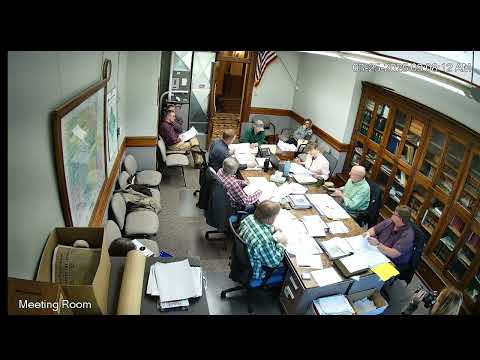
The Osceola County Board of Supervisors on March 25 reviewed a draft countywide nuisance ordinance that county public-health staff said they modeled on existing state language and are proposing to tailor for county needs.
Public-health staff presented the draft and said they tried to limit the ordinance to health-and-safety harms rather than aesthetics. "So everything I really want is geared towards the health and safety," the public-health specialist told the board, adding the draft would remove language that could allow enforcement purely on appearance and instead focus on hazards such as vermin, sanitation failures and property conditions that create public-health risks.
Board members and local residents discussed practical and fiscal questions. Several supervisors said they worry about how enforcement would work if a property owner cannot afford remediation or does not comply. "What if they don't have any money? ... Who does it fall on to clean it up?" a supervisor asked. Staff said they would consult the county attorney and the board of health about enforcement steps and potential county costs.
The draft cites Iowa Code 455B.171 for the definition of abandoned wells and notes that some statewide nuisance provisions reference city limits, which limits county authority to address certain vegetation problems outside municipal boundaries. The public-health presenter said that provision in state law leaves county staff without a statutory tool for weed/vegetation complaints outside city limits and that the proposed county language (items labeled "D," "E" and "F" in the draft) aims to address gaps such as pest harboring and abandoned wells.
Speakers also clarified how complaints would be handled under the draft: enforcement would be complaint-driven, not proactive or anonymous, and complainants would need to identify themselves and show demonstrable harm (for example, property damage caused by rodents). "It is complaint based only. Complaints have to state their name. It's not gonna be anonymous complaints," the public-health specialist said.
Board members asked staff to present the draft to the Osceola County Board of Health at its meeting the following day and to return with any recommendations. The board did not vote to adopt the ordinance March 25; staff said they will forward supervisors' comments to the Board of Health and bring revised language back for further consideration.
The discussion included several specific concerns supervisors asked staff to address if the county pursues adoption: the ordinance's interaction with property-tax and lien processes if the county must perform a cleanup, whether temporary construction or abatement costs could be added to property tax rolls, and how enforcement would be prioritized when complaints are numerous.
Beyond the ordinance wording, staff and supervisors discussed sample enforcement language that allows staff or the board discretion in determining when a complaint merits action, and the presenter emphasized that the intent is to avoid enforcement based solely on appearance. The presenter said they will bring supervisors' feedback to the Board of Health to try to reach consensus on narrower, health-focused language.
The board took no formal action on adoption on March 25 and asked staff to coordinate with the Board of Health and the county attorney before bringing any final ordinance back for a vote.