Get Full Government Meeting Transcripts, Videos, & Alerts Forever!
Get email alerts on the Student Representation topic
No spam. Unsubscribe anytime.
Committee update: districts weigh student representative models as lawmakers signal support for EV buses and cellphone policy flexibility
Summary
A board committee reported it is preparing a student‑representation policy after a state directive and said lawmakers contacted at a lobbying day signaled support for electric-bus funding and local flexibility on cellphone rules.
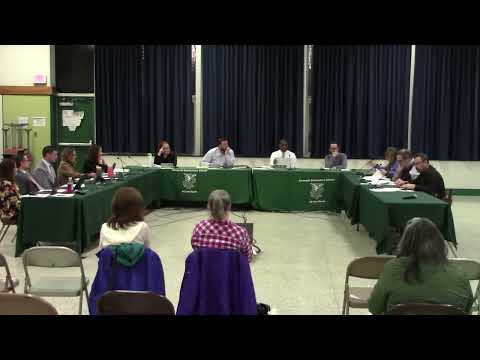
Board committees reported on two substantive topics at the March 10 work session: a proposed student-representative policy in response to a state requirement and outcomes from a recent advocacy day in Albany.
Christian, speaking during committee updates, summarized the visitation of other districts and said many had adopted models that include a junior and senior student representative so the junior gains experience before becoming a senior representative. "The idea was that the Junior would then migrate into Senior and have some more experience," Christian said, and he added that many districts pair student representation with a student research/presentation assignment so representatives have a focused role during the year.
Christian and other committee members noted that a state requirement — described in the discussion as coming from the education department or recent state action — will require districts to adopt a policy on student representation by a stated deadline in late spring or summer. Committee members said student representatives are typically non‑voting and are not entitled to confidential personnel or student records; the committee discussed whether student reps must attend every meeting or could attend alternate meetings as part of a locally determined practice.
On lobbying day, committee members reported that legislators were broadly supportive of two priorities: additional funding or subsidization for electric school buses and greater local flexibility in implementing a proposed cellphone ban. Christian said the legislators he met — including Senator Rolleston and Assemblyman Brian Mayer — were generally favorable and that NISBA’s statewide advocacy points drew bipartisan support. Committee members cautioned that funding and timelines remain "somewhat nebulous" pending the governor’s budget and subsequent allocations.
The committee recommended the board continue developing a local policy on student representation and consider models from nearby districts; it also suggested monitoring state budget developments for potential EV-bus subsidies and guidance on cellphone policies.
Ending: Policy committee will draft local language for a student‑representation policy and return to the board for a first reading; administration will track state budget actions related to bus funding and cellphone policy guidance.