Get Full Government Meeting Transcripts, Videos, & Alerts Forever!
Get email alerts on the Zoning Wetlands Impact Fees topic
No spam. Unsubscribe anytime.
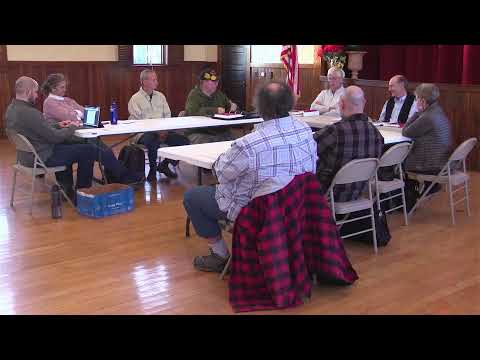
Planning Board discusses conditional‑use permits for wetlands, seeks Conservation Commission input and considers impact‑fee options
Summary
Board members discussed using conditional‑use permits in the Wetlands District, soliciting input from the Conservation Commission, mapping wetlands/FEMA overlays for parcel review, and exploring impact‑fee rules tied to RSA 674 as a means to fund infrastructure impacts from development.
Planning Board members spent substantial time discussing whether to adopt conditional‑use permits for activities in the Wetlands District, how such permits would differ from existing special exceptions, and what role the Conservation Commission should play in the review process. The board also discussed preparing a town map showing tax parcels with wetlands and FEMA floodplain overlays and began a preliminary conversation about pursuing local impact fees under RSA provisions.
Board members described conditional‑use permits as a potential way to provide specific, criteria‑based relief for activities such as driveway crossings, utility crossings, or other limited intrusions into wetlands while preserving wetlands protections. Several speakers suggested the board solicit the Conservation Commission’s recommendations on conditions or mitigation the commission would accept, and some advocated for a joint meeting to craft practical criteria. A member noted that the state still requires a dredge‑and‑fill permit for wetlands work, meaning any local conditional permit would not replace required state approval.
Members discussed how conditional permits would be implemented: drafting narrow criteria (the board mentioned "five or six" criteria as an example), building a review window so the Conservation Commission can comment before the board acts, and ensuring the local zoning or site‑plan regulations explicitly require conservation input where appropriate. The board agreed not to replace existing special exceptions wholesale; the conversation focused on testing conditional permits in the Wetlands District first.
On technical support, staff offered to prepare an overlay map showing tax parcels, mapped wetlands and FEMA flood zones so members and residents could view examples. Board members requested concrete examples of parcels and suggested the Conservation Commission could meet independently to propose conditions before a joint session with the planning board.
Later in the meeting the board briefly discussed impact fees and reviewed RSA references related to impact fee authority and administration. Members noted that impact fees must be tied to the specific infrastructure that a development affects (for example, a new commercial development’s share of road, fire, or school costs) and that fee schedules and accounts must be set up so funds are used only for justified, related projects. The board agreed to read the statute (RSA 674 series was cited) and consider whether impact fees would be appropriate for commercial and multifamily development while excluding most single‑family residential builds.
Several members emphasized procedural clarity: if the Conservation Commission’s input is required for certain applications, make that a step in the application acceptance/complete‑application process so the 65‑day statutory clock is managed appropriately. The board directed staff to draft initial language, gather conservation commission input, and prepare mapping and example cases for a future joint meeting.