Get Full Government Meeting Transcripts, Videos, & Alerts Forever!
Get email alerts on the Cdbg And Housing Services topic
No spam. Unsubscribe anytime.
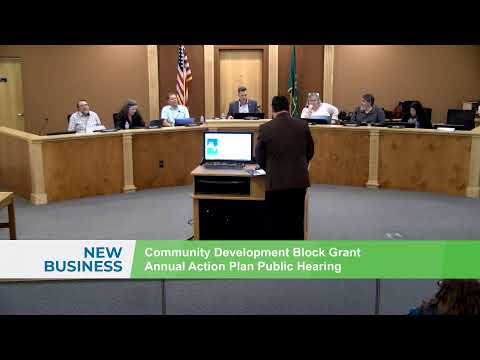
Mount Vernon holds first public hearing for 2025–26 CDBG action plan; five applicants present
Summary
The Mount Vernon City Council heard from five organizations on March 26 during the first public hearing for the city’s 2025–26 CDBG annual action plan; applicants described rising demand for services and requested both public‑service and capital funds.
The Mount Vernon City Council opened a public hearing March 26 on the city’s draft 2025–26 Community Development Block Grant (CDBG) annual action plan and heard presentations from five applicants seeking funds. Steve Sexton, the city’s special projects manager, told the council that HUD had not yet announced allocations and that the city was using the same funding estimate as in 2024 for planning.
Applicants who spoke and their main requests:
- Dulce Vasquez, Resource Center Manager at Community Action of Skagit County, requested support to continue operations of the Mount Vernon Resource Center and said the office served a dramatically higher caseload: 308 households (525 individuals) in July 2021–June 2022 versus 1,148 households (reported as 202,236 individuals in the transcript; applicant emphasized large growth) in July 2023–June 2024. Vasquez estimated the center could serve about 2,500 residents with continued support.
- Greg Grama of Salem Lutheran Church described a $645,000 building project to expand facilities for Welcome Home Skagit’s day‑shelter and related services; Salem said it has spent $47,000 to date, is using $300,000 from church reserves and had raised $70,000, leaving an anticipated construction loan of about $195,000. Salem seeks a portion of CDBG capital funds (the application cited a potential CVVG grant representing about 8% of the project).
- Sarah (managing director) of Welcome Home Skagit outlined services provided by the county’s only drop‑in day shelter and seasonal overnight shelter: care coordination, recovery support, showers, meals, case management, transportation assistance and vocational training. She said the day shelter had been used 7,586 times this year by 516 unduplicated individuals and the overnight shelter 1,967 times by 219 unduplicated individuals; the organization seeks funding to sustain and expand operations and pursue a year‑round low‑barrier shelter.
- Amanda Etchey and Chuck Messinger of Volunteers of America Western Washington urged continued support for the countywide Coordinated Entry system (the 211 access point and assessment/referral system). They reported stabilized enrollments and faster call response times, warned of an anticipated 20% funding reduction from county funding notices, and said about 500 individuals were on the coordinated entry list at the time of the hearing.
- Victor Ponce, bilingual business adviser and program manager for the Center for Inclusive Entrepreneurship (CIE), requested $30,000 for bilingual business advising, training and technical assistance targeted to Spanish‑speaking entrepreneurs and microbusinesses.
Council members asked several clarifying questions during and after the presentations about administrative capacity, applicant readiness to meet CDBG billing and reporting requirements, whether applicants could use other funding sources (including local HB 1590 sales‑tax funds), and how the city would allocate the CDBG budget between administration (20%), public services (15%) and capital projects (remainder). Sexton confirmed the administrative cap is 20% and public services are limited to 15% of the grant; five applicants sought public‑service funding and seven total applications were on file for this funding cycle.
No funding decisions were made at the hearing; Sexton said the council will review a funding worksheet at a later meeting (April 2 is the next scheduled presentation of the annual action plan funding worksheet to the Public Safety Committee). Sexton reminded the council that CDBG allocations from HUD were pending and that the city may also consider HB 1590 local funding opportunities in the fall.
The public hearing closed after the scheduled presentations and council questions; further deliberation and a final funding decision will follow the statutory public‑input period and staff recommendations.