Get Full Government Meeting Transcripts, Videos, & Alerts Forever!
Get email alerts on the Energy Infrastructure topic
No spam. Unsubscribe anytime.
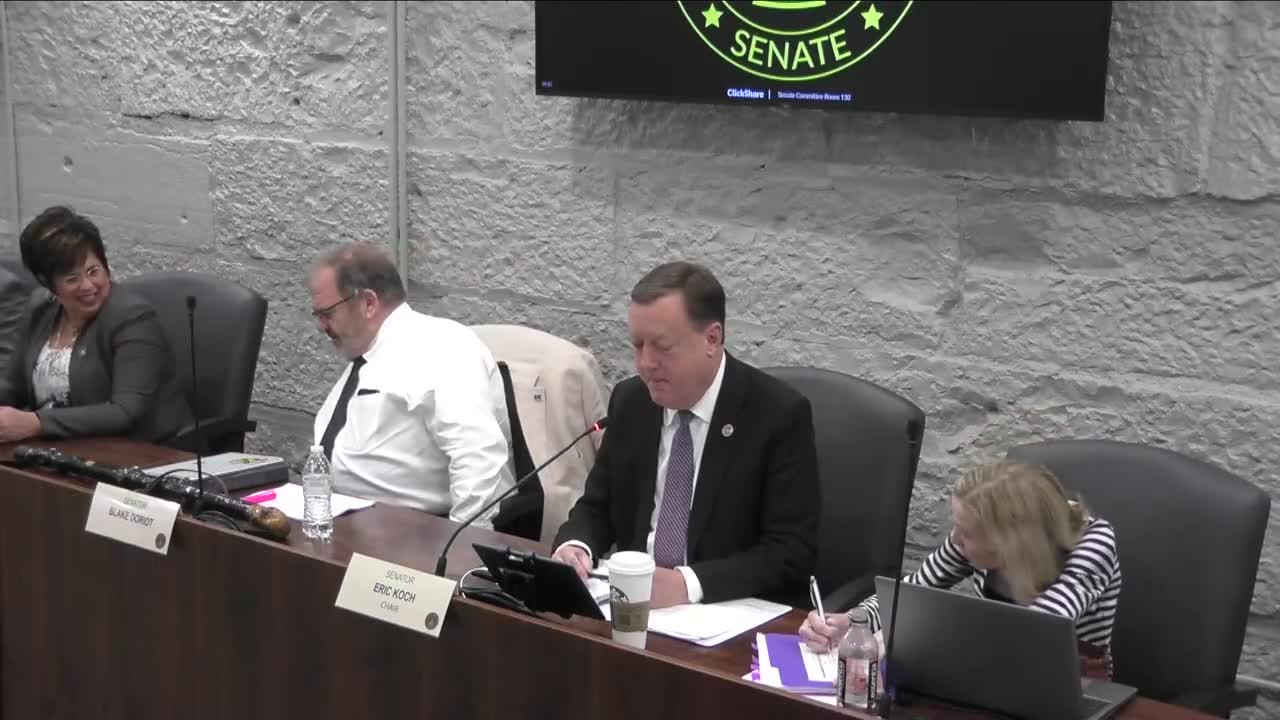
Senate utilities committee advances HB 1007 to speed large‑load projects, offer SMR incentives amid debate over ratepayer risk
Summary
A Senate utilities committee on Thursday moved House Bill 1007 forward to the Tax and Fiscal Committee after passing amendments and a floor motion to recommit. The bill would create a framework to support small modular nuclear reactors (SMRs), speed approvals for generation added to meet large industrial or data‑center customers, and allow utilities to recover certain development costs as projects advance.
A Senate utilities committee on Thursday moved House Bill 1007 forward to the Tax and Fiscal Committee after passing amendments and a floor motion to recommit. The bill would create a framework to support small modular nuclear reactors (SMRs), speed approvals for generation added to meet large industrial or data‑center customers, and allow utilities to recover certain development costs as projects advance.
Representative Soliday, the bill’s principal presenter, said the bill includes a construction‑in‑progress style mechanism intended to lower utilities’ financing costs during construction and to share some risk with customers. “Quip does not throw all of the risk on the consumer. It does not,” Soliday said, describing an 80/20 structure that limits automatic recovery if a project fails and directs the Indiana Utility Regulatory Commission (IURC) to judge prudence in any rate case.
Why it matters: supporters said the bill helps Indiana compete for large manufacturers and data centers by offering predictable timelines and tools for utilities to add capacity. Opponents said it shifts too much financial risk to ratepayers, risks subsidizing unproven SMR technology and could delay or complicate plant retirements.
Key provisions
- SMR incentives and manufacturing tax credit: HB 1007 authorizes a 20% sales‑tax credit for in‑state manufacture of SMR components intended to make Indiana a competitive site for SMR factories. Soliday noted SMR factories are factory‑built and shipped to sites, and cited Purdue research and industry interest.
- Pre‑construction cost recovery (construction‑in‑progress / QuIP‑style tracker): utilities may petition the IURC to recover certain development and construction costs on an accelerated schedule. If a project is abandoned, the bill caps automatic recovery at 80%; utilities seeking more must show prudence in a rate case, Soliday said.
- Large‑load and expedited approval tracks: the measure defines a “large load” (the committee discussion referenced 150 megawatts as a threshold for an expedited certificate of public convenience and necessity) and establishes an expedited resource or project‑specific track (150 days was cited for the expedited CPCN in committee discussion). It also requires the Indiana Economic Development Corporation (IEDC) to notify affected utilities within 15 days when working with a customer requesting 20 megawatts or more.
- Coal plant retirements: the bill requires the IURC to issue a written order showing a retirement is cost‑effective and that replacement resources provide equal or greater grid availability using MISO metrics before a coal plant may be retired, a provision supporters say preserves reliability and opponents say could delay appropriate retirements.
Committee amendments and votes
- Amendment 5 (tariff language removed): adopted by consent; the author explained floor language conflicted with existing contracts and the amendment removed that tariff language.
- Amendment 6 (allowed utilities to create voluntary low‑income customer assistance programs similar to water/wastewater utilities): presented by Senator Hundley to let energy utilities design IURC‑approved assistance programs in rate cases. That amendment was defeated on a roll call, 3 in favor and 8 opposed (motion defeated 8–3).
- Final committee action: after debate the committee voted to recommit HB 1007 to the Tax and Fiscal Committee (motion carried 8–3). The committee record shows the bill as amended will move forward to tax/fiscal review.
Who testified
Support: Danielle McGrath, president of the Indiana Energy Association; Ryan Hadley, Indiana Electric Cooperatives; David Ober, Indiana Chamber; representatives of major utilities and industrial energy consumers. Supporters emphasized the need for regulatory clarity to meet rapid load growth, attract manufacturers and data centers, and to begin building an SMR supply chain.
Opposition or concerns: Robin Scayabos (Sierra Club Hoosier Chapter), Sam Carpenter (Hoosier Environmental Council), Kerwin Olson (Citizens Action Coalition), Delaney Barber Quan (Indiana Conservation Voters), Peg Hausman (Monroe County), Denise Abdul Rahman (Indiana State Conference NAACP), and other ratepayer and environmental advocates. Common objections included: radioactive waste and site risk for SMRs, high and uncertain construction costs, insufficient consumer protections for trackers, and limited time for public review under expedited tracks.
Representative Soliday and several industry witnesses defended the bill as balancing investor, utility and customer interests and as a competitive necessity to attract new large customers. Danielle McGrath of the Indiana Energy Association said the bill “positions Indiana for the future” by fostering a nascent SMR industry and adding tools to allow utilities to act “at the speed of business.”
Clarifying details from the hearing
- Low‑income assistance statistics cited in committee: AES accounts using LIHEAP ~3% (~15,000 customers); Duke Energy ~0.5% (~4,000 customers); NIPSCO electric ~1% (~5,000 accounts); NIPSCO gas ~1.5% (~12,000 accounts); Indiana Michigan Power ~0.6% (~2,000 accounts). These figures were offered during debate on amendment 6 as context for targeted assistance needs.
- Large‑load thresholds and notices: IEDC must notify impacted utilities within 15 days when it works with a prospective customer requesting 20 megawatts or more. The expedited CPCN pathway and the 80% customer guarantee were discussed as mechanisms to limit speculative projects.
Next steps
HB 1007, as amended in committee, was recommitted to the Tax and Fiscal Committee for fiscal analysis. If reported from tax/fiscal, the bill will return for further floor consideration and potential conference committee action between House and Senate versions.
Ending
The committee’s action leaves the underlying policy questions unresolved: how to weigh fast‑track approvals and rate recovery tools against protections for existing ratepayers and how quickly Indiana should embrace nascent SMR manufacturing and deployment. The bill now goes to tax and fiscal review for a formal fiscal analysis and further amendment possibilities.