Get Full Government Meeting Transcripts, Videos, & Alerts Forever!
Get email alerts on the Insurance Fiduciary Duty topic
No spam. Unsubscribe anytime.
House defeats amendment to extend fiduciary duty to insurance beneficiaries
Summary
The Indiana House rejected an amendment that would have explicitly restored fiduciary duties to beneficiaries in employer-sponsored plans, with the roll call showing 29 yeas and 60 nays.
The Indiana House of Representatives on a roll call defeated an amendment aimed at restoring an explicit fiduciary duty to beneficiaries in employer-sponsored insurance plans.
Representative Carball, speaking in support of the amendment, said the change would “ensure that Hoosiers’ best interests are put first rather than the bottom line, big insurance companies,” and argued beneficiaries deserve the same protections as plan sponsors. The amendment sponsor asked for a roll call vote.
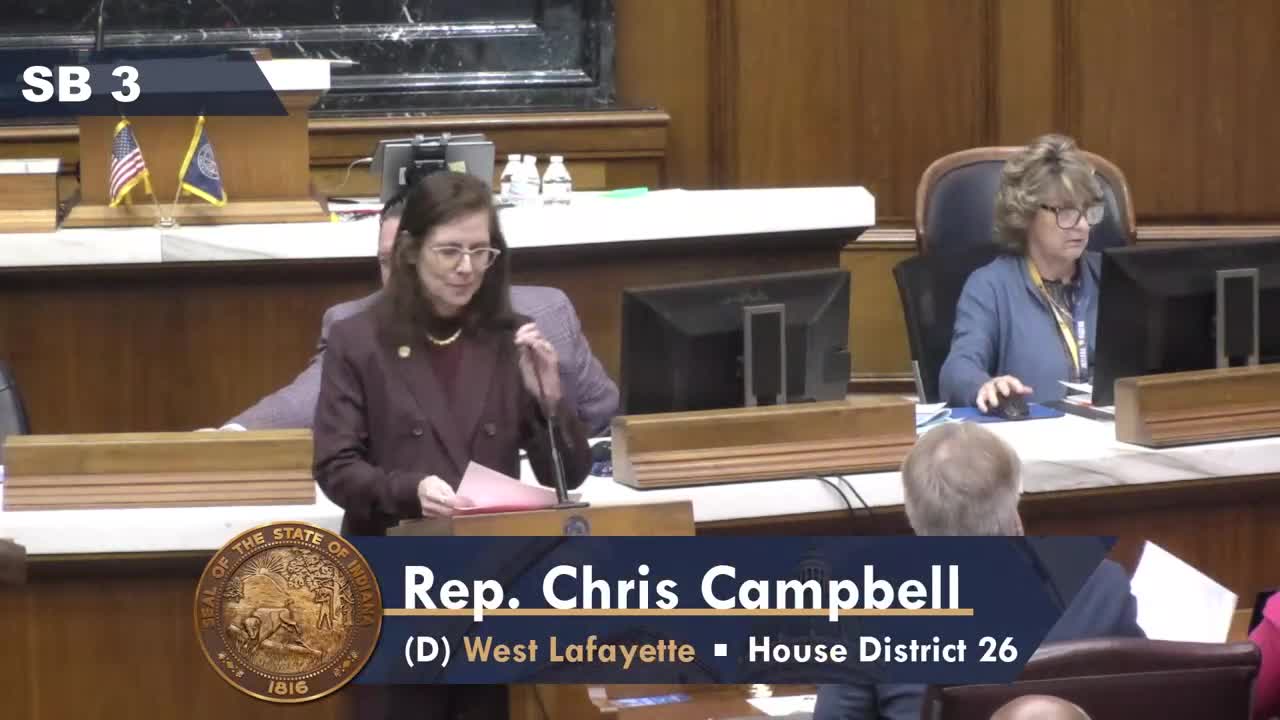
The amendment’s supporters told colleagues the language would restore protections that had been in earlier versions of the bill and put patients ahead of profit. Opponents, including Representative Campbell and other members who spoke, said the employer–employee relationship and the role of third-party administrators (TPAs) and pharmacy benefit managers (PBMs) make imposing a fiduciary duty to beneficiaries problematic. They warned the change could open new legal challenges because employers, not employees, typically make plan design decisions.
A roll call produced 29 votes in favor and 60 opposed; the amendment was defeated. The House proceeded with the bill as amended in committee and on its second-reading calendar.
Members who spoke on the amendment included Representative Carball (support) and Representative Campbell (opposition). The transcript records both policy and procedural objections from members who said they had limited time to review a chairman’s amendment before committee action.