Get Full Government Meeting Transcripts, Videos, & Alerts Forever!
Get email alerts on the Health Insurance Reimbursement topic
No spam. Unsubscribe anytime.
Senate committee adopts amendment to require out-of-network allowable charges, expands 450% Medicare floor to all providers
Summary
The Senate Health and Social Services Committee advanced Senate Bill 121 with two amendments: one clarifying the equal-pay language applies only to out-of-network services, and a second adding a 450% of CMS Medicare fee-schedule floor for all providers rather than only primary care. The committee moved the bill from committee as amended.
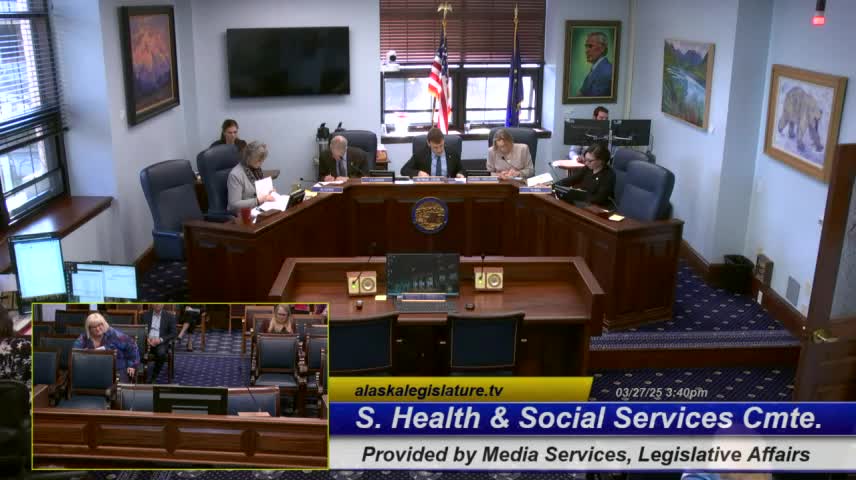
The Senate Health and Social Services Committee on March 27 adopted two amendments to Senate Bill 121, a measure that would change how insurers reimburse out-of-network providers, and voted to send the bill from committee as amended.
The bill’s sponsor, Senator Kathy Giesel, introduced language intended to set an out-of-network reimbursement floor tied to the Centers for Medicare & Medicaid Services (CMS) fee schedule. Jane Conway, staff to Senator Giesel, told the panel the first amendment “would require the same reimbursement for the same CPT code regardless of who that provider is,” and that the amendment clarifies that requirement applies to out-of-network providers only.
The second amendment replaces a provision that had applied a 450%-of-CMS-Medicare floor only to primary-care providers and extends that 450% floor to all provider types. Senator Giesel told the committee she backed the change to preserve access to care after the repeal of the state’s prior reimbursement floor, which sponsors say left many clinics with sharply reduced pay rates.
Opponents on the committee raised concerns about the breadth and cost of the change. Senator Sandra Hughes said she worried the provision could “disincentiviz[e] people to go on to medical school,” and that applying a uniform 450% floor across specialties could raise insurance premiums and disproportionately affect small employers who provide coverage. Senator Hughes kept an objection on the second amendment during its consideration.
Senator Clayman and other members urged more data before final decisions are made. Clayman asked the Division of Insurance to provide comparisons showing Medicare, Medicaid and private contract rates for representative procedures so the legislature can judge whether the 450% floor would in practice be above or below existing contract rates.
The committee recorded a roll-call vote on the second amendment (record in transcript): one member voted no; the other committee members present voted yes. After debate and additional public testimony that committee members described as “an hour or more,” Vice Chair Kiesel moved the underlying bill from committee “as amended with individual recommendations and attached fiscal note,” and committee leadership announced no objection, so the bill was moved from committee.
The bill will continue in the legislative process; committee members said further review and analysis will take place in the next committee of referral.
Notes from the hearing: the bill’s amendments reference the CMS fee schedule and make the 450% floor effective “for the state in effect at the time of delivery of health care services.” Committee members repeatedly said the aim is to protect access to primary care clinics that reported canceled contracts or unsustainably low out-of-network rates after the repeal of the state’s prior percentile-based rule.