Get Full Government Meeting Transcripts, Videos, & Alerts Forever!
Get email alerts on the Foreign Influence Higher Education topic
No spam. Unsubscribe anytime.
Panel advances bill requiring public universities to report foreign gifts, creates waiver process
Summary
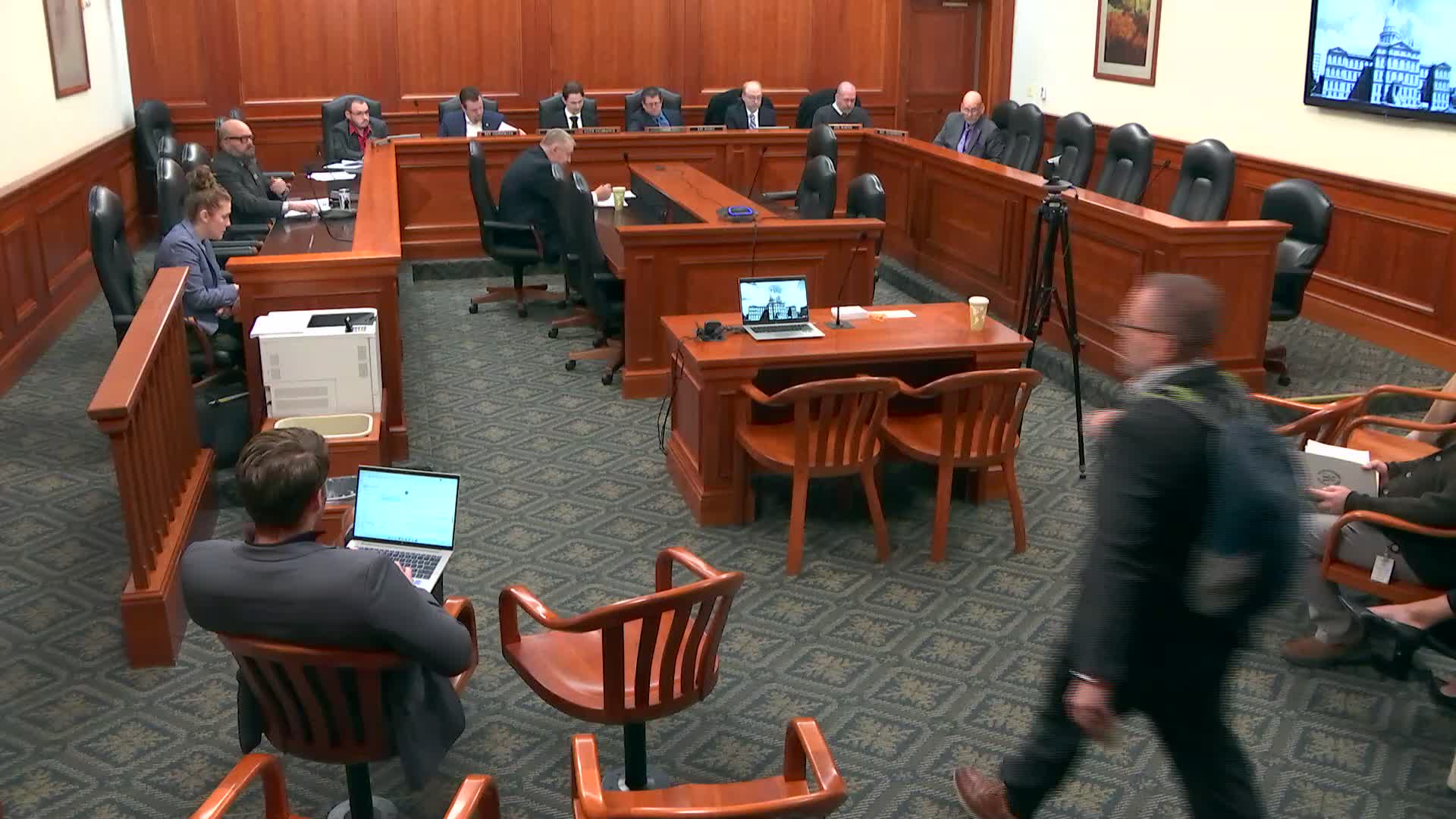
The House Committee on Government Operations on Tuesday adopted a substitute and reported House Bill 42‑39, a measure that would require public colleges and universities to report foreign gifts and contracts of $50,000 or more and to seek waivers for agreements with specified foreign countries or entities of concern.
The House Committee on Government Operations on Tuesday adopted a substitute and reported House Bill 42‑39, a measure that would require public colleges and universities to report foreign gifts and contracts of $50,000 or more and to seek waivers for agreements with specified foreign countries or entities of concern.
Representative Brock, the bill sponsor, told the committee the package is intended to increase “transparency plus accountability equals risk mitigation,” and said the measure aims to add “guardrails” for publicly funded universities that enter into relationships with foreign entities. Brock said the substitute clarifies the federal agency involved as the U.S. Department of State and increases the role of the State University Board.
Supporters and the bill text, as presented, would: require annual reporting of gifts or contracts at or above a $50,000 threshold (including cumulative gifts from the same source), identify the giver and purpose, and require a waiver process for agreements with listed foreign countries or foreign entities of concern. Brock described the waiver process as one in which institutions must seek approval roughly “120 days out prior to accepting the gift.” He said the substitute would align some definitions with federal authorities and rely on the Department of State to assist in determining which countries or entities are of concern.
Brock cited figures in testimony to illustrate the scope of foreign funding: “over the past decade there has been estimated $6,500,000,000 of unreported foreign investment in universities in America,” including “about $2,300,000,000 just from the country of the People’s Republic of China” in the last 10 years. He also said the U.S.–China Economic and Security Commission listed the University of Michigan as eighth among universities receiving funding from China and Hong Kong and cited the university’s reported $153,000,000 in such funding; Brock said Harvard topped that list at $396,000,000.
Committee members pressed staff and the sponsor on operational details. Chair (name not specified) and Representative Harris asked whether the bill’s country list covered only certain adversaries; Brock said the committee is developing a substitute to align the list with federal standards (including Title 10 and federal foreign‑entity lists). Representative McFall asked who would process waivers; Brock said the substitute relies on the State Department to assist, and that institutions would file with the state. Representative Fitzgerald expressed concern about diplomatic and academic impacts; Brock acknowledged possible effects on funding but said the measure seeks transparency and accountability rather than an absolute bar on foreign engagement.
Two public commenters urged opposition. Kyle Zawakian, legislative director for the American Civil Liberties Union of Michigan, told the committee the bills use “very ambiguous language,” warning the absence of a clear definition for terms such as “detrimental” and noting there is no appeals process for those flagged under the measure. Kyle said the ACLU favors transparency but argued the bill risked “unwarranted restriction of resources, research collaborations, and international partnerships.”
Henry Duong, organizing director at Rising Voices, said the bills “dangerously conflate the actions of foreign governments with the presence and contributions of international students, immigrant families, [and] refugees” and warned of discriminatory impacts. Duong also raised constitutional and enforcement concerns, saying state law cannot compel federal agencies to act and that the bills could invite litigation and confusion about enforcement responsibilities.
The committee adopted the H‑1 substitute for HB 42‑39 by roll call: 3 ayes, 0 nays, 2 pass. The committee later reported House Bill 42‑39 with recommendation as substituted by roll call: 3 ayes, 0 nays, 2 pass; the bill was forwarded with the substitute and referred as recommended (the committee record lists the referral as “reported with recommendation as substituted”).
The measure’s next procedural step is consideration by the committee named in the referral (committee on rules as recorded on the committee report). The bill’s sponsor and several members said they plan further edits to refine the list of covered countries and to clarify the waiver and reporting mechanics.
Votes at the committee on the substitute and the final report indicate majority support among members present; several members recorded passes on the roll call votes.