Get Full Government Meeting Transcripts, Videos, & Alerts Forever!
Get email alerts on the Education Foreign Influence topic
No spam. Unsubscribe anytime.
Bill would bar public schools from certain cultural‑exchange agreements with countries of concern; sponsor cites Confucius Institutes
Summary
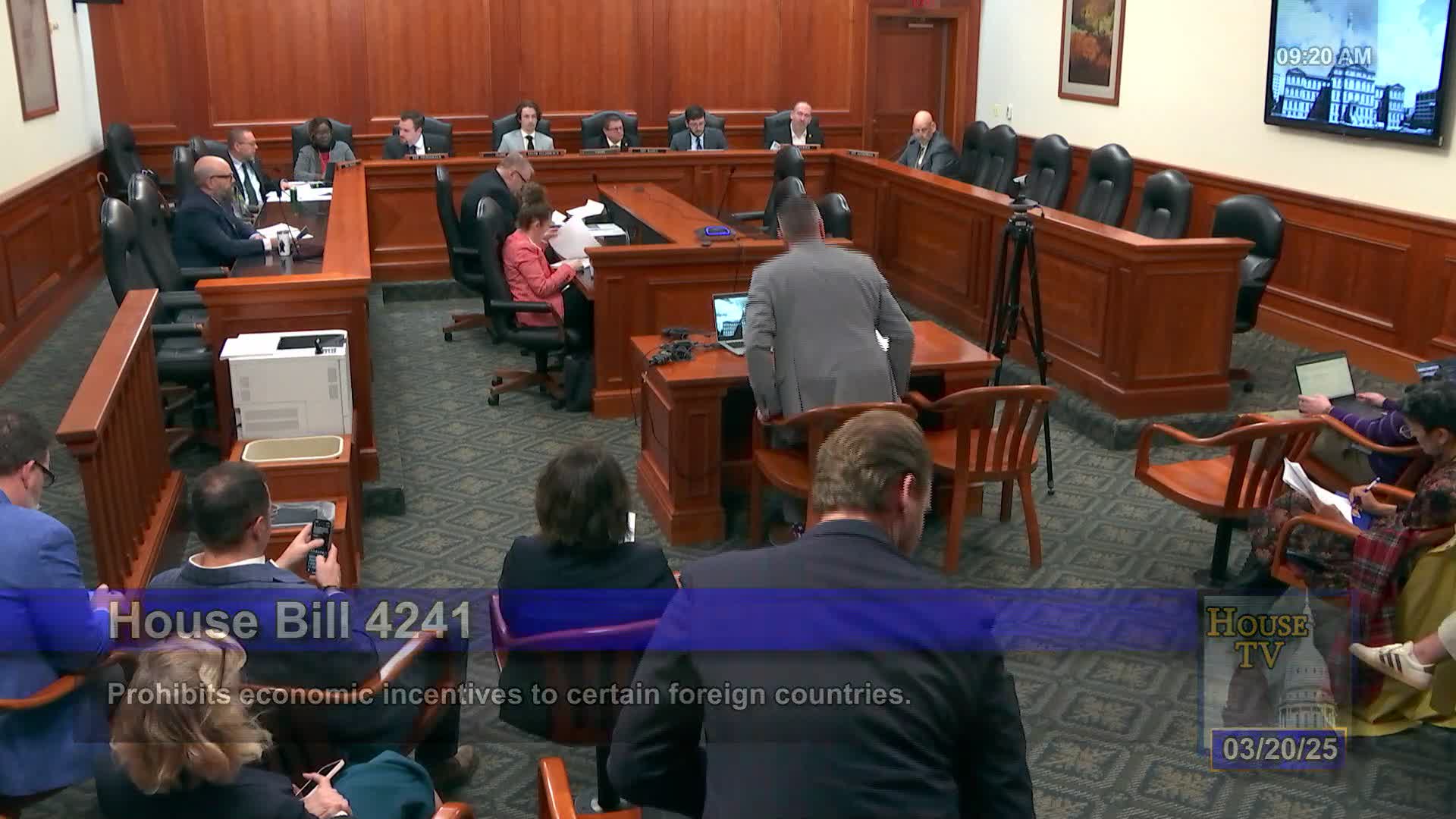
Representative Jenkins Arno told the House Committee on Government Operations that House Bill 4238 would bar public schools from certain cultural‑exchange agreements with specified foreign countries of concern if those agreements limit contracting ability, allow curriculum control, or promote agendas harmful to U.S. safety or security.
Representative Nancy Jenkins Arno presented House Bill 4238 to the House Committee on Government Operations. The bill would amend the Revised School Code to prohibit public schools from entering cultural‑exchange agreements with certain foreign countries of concern if the agreement or grant limits the school’s ability to enter contracts, allows curriculum or values to be directed or controlled by a foreign country of concern, or promotes an agenda "that would be detrimental to the safety and security of the United States or its people."
The bill would also create criteria governing how state institutions of higher education enter cultural‑exchange agreements or accept anything of value from a foreign country of concern; it would require that any such school agreement be shared with a federal entity that oversees national security. The sponsor said the measure would prevent agreements that allow external parties to shape curriculum or classroom values and cited the Confucius Institute model as an example of programs her office views as problematic.
Committee members pressed the sponsor on vagueness and enforcement. Representative McFaul asked how the phrase "promotes an agenda that is detrimental to the safety and security of the United States or its residents" would be defined and who would determine that standard. Jenkins Arno referenced national‑level security criteria and cited past examples—she said federal security authorities would be involved in evaluating whether an agreement is detrimental. Representative Fitzgerald expressed concern that the language could be overbroad and subject to abuse.
No vote on House Bill 4238 was recorded in the transcript; the sponsor concluded testimony and committee members asked follow‑up questions.