Get Full Government Meeting Transcripts, Videos, & Alerts Forever!
Get email alerts on the E Verify Public Contracts topic
No spam. Unsubscribe anytime.
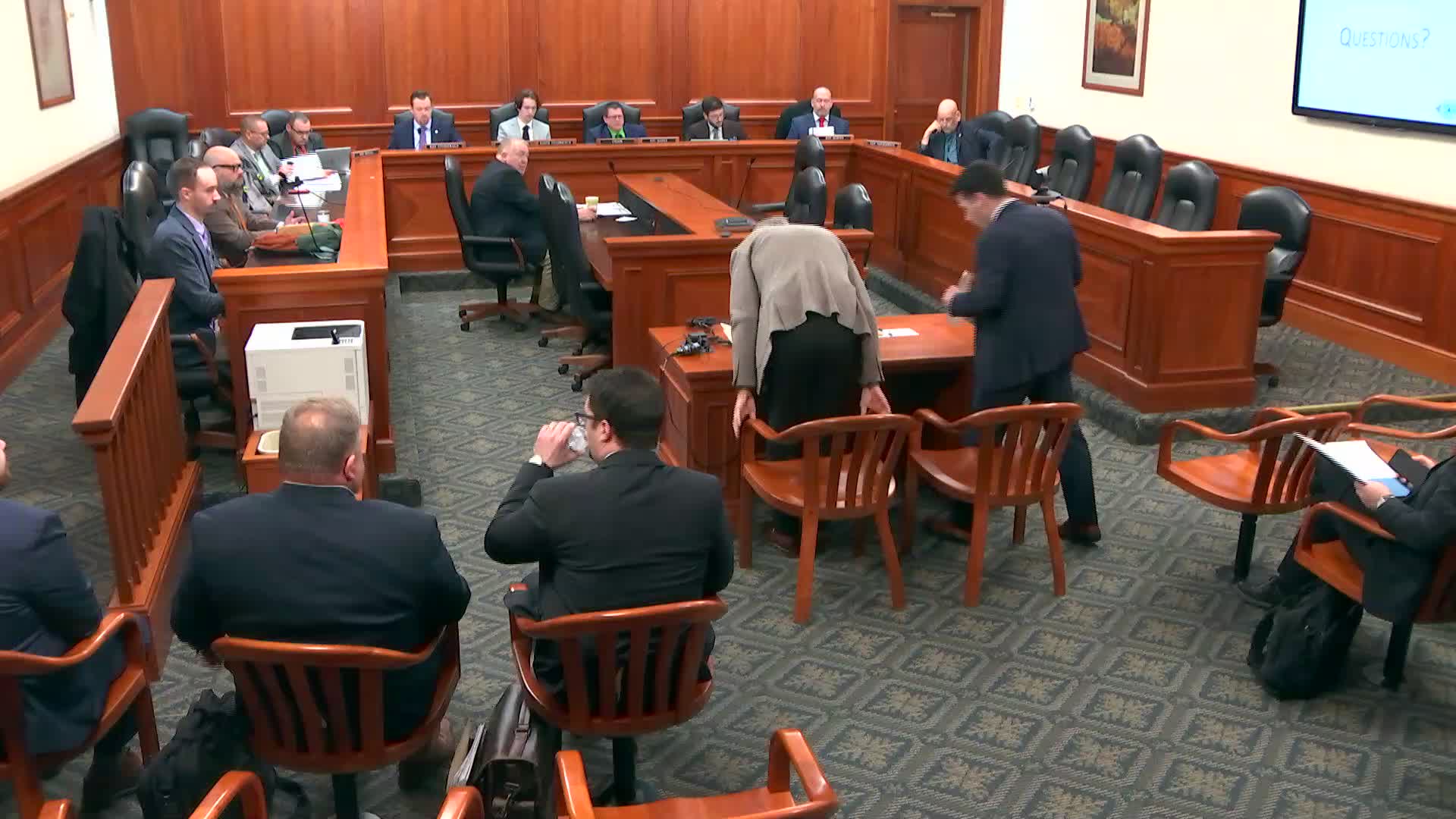
Committee hears testimony on E-Verify requirement for state contractors
Summary
House Bill 4061 would require E-Verify for state contractors and public employers with 10 or more employees; sponsor said it is basic due diligence, opponents including the ACLU warned of error rates, discrimination, and heavy penalties; no committee vote was recorded.
Lawmakers in the Committee on Government Operations took testimony on House Bill 4061, which would require public employers and state contractors with 10 or more employees to use the federal E-Verify system to confirm work authorization for new hires on taxpayer-funded contracts.
Representative Michael Tisdale, sponsor of the bill, said the change "is simple: if a company wants to do business with the state of Michigan and benefit from taxpayer funded contracts, it should be required to hire legally authorized workers." Tisdale said the Department of Labor and Economic Opportunity would create rules and administer the program and that E-Verify is a free, fast tool that cross-checks I-9 information against federal records.
Tisdale and his legislative director, Kevin Rose, told the committee the requirement would apply to contractors and subcontractors working on public contracts and to political subdivisions when state funds are used. Tisdale said the bill applies to new hires only and that the E-Verify system shifts some verification responsibility from employers to federal databases. He also described possible civil and criminal penalties in the bill, including perjury charges for false affidavits and civil fines.
Opponents said the system's known error rate and operational limits create real risks for workers and employers. Kyle Zwachian, legislative director for the American Civil Liberties Union of Michigan, told the committee the E-Verify program has produced incorrect initial results that were later reversed; he cited Department of Homeland Security numbers and said more than 58,000 people who were initially deemed not work authorized had their status changed to work authorized after contesting (data point cited for fiscal year 2023). Zwachian warned that the system can produce wrongful denials, disproportionately affect communities of color and immigrant workers, create data-security risks, and impose burdens on small businesses.
Committee members asked technical questions about the I-9, what data E-Verify uses, the appeal window for contested results (a member cited a 10 federal working-day remedy), whether the requirement would create an unfunded mandate for local governments, and how employers or employees correct mismatches. Tisdale responded that E-Verify is free, that registration and training are required for users, and that the system returns many results in seconds; he said subcontractors with fewer than 10 employees would submit affidavits under the bill.
Tisdale and other members discussed penalties: he cited the Michigan penal code's perjury provisions (which the bill references) and said perjury can carry penalties up to 15 years and that civil fines could range from $100 to $1,000 per violation depending on rules set by the administering department.
Kyle Zwachian recommended rejecting the bill and urged lawmakers to pursue alternative policies that "promote fairness, economic opportunity, and protection of civil liberties for all residents." Other organizations filed written cards opposing the bill, including the Michigan League for Public Policy and the Michigan Association of State Universities. The transcript records discussion and multiple questions but does not show a committee vote or final action on House Bill 4061.