Get Full Government Meeting Transcripts, Videos, & Alerts Forever!
Get email alerts on the Foreign Influence Land Ownership topic
No spam. Unsubscribe anytime.
Committee considers bills to bar foreign principals from buying Michigan farmland or land near military sites; substitute narrowed scope
Summary
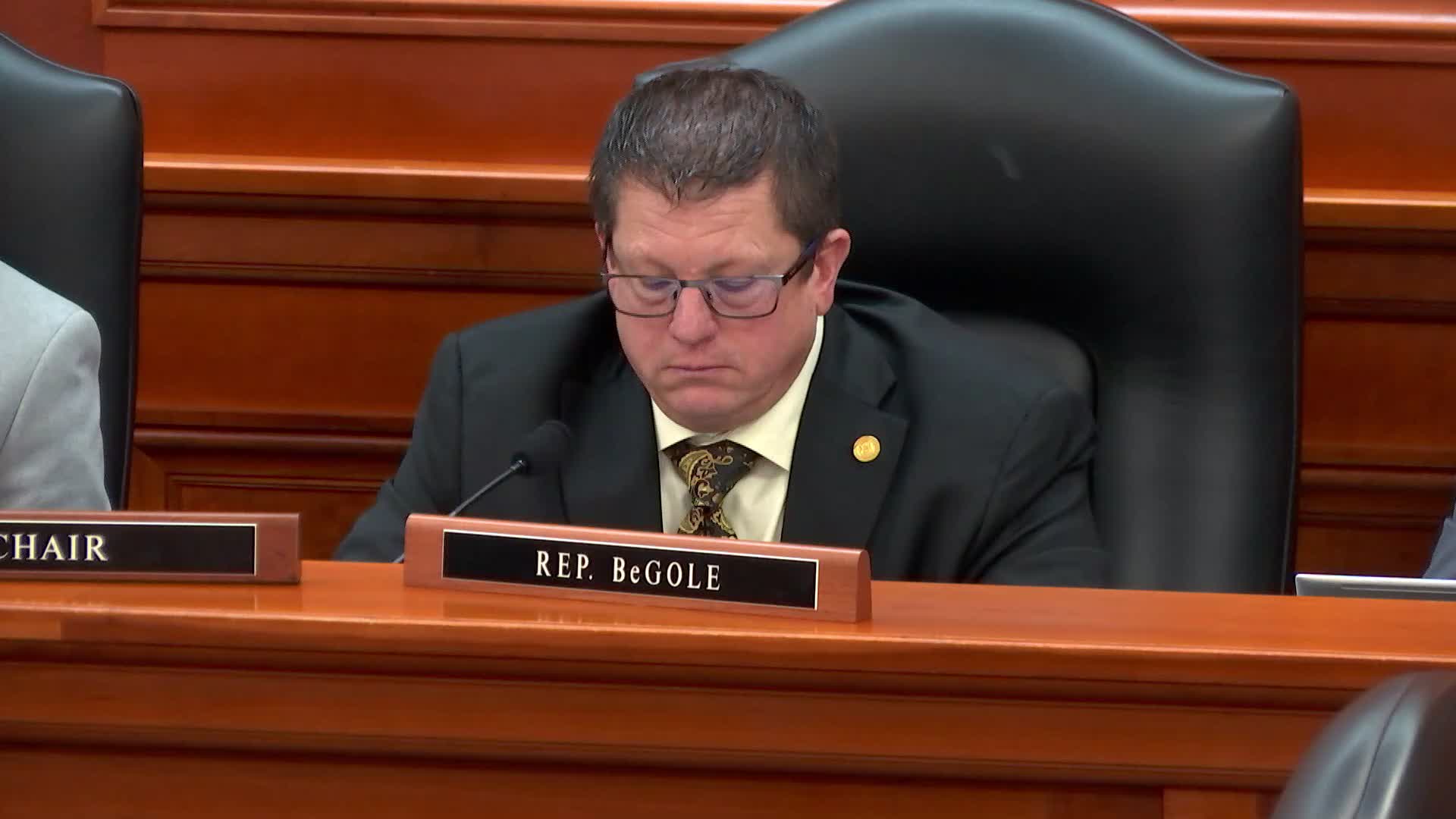
The House Committee on Government Operations heard extensive testimony on bills that would bar certain foreign principals from owning Michigan agricultural land or property near military installations; the committee adopted an H‑1 substitute narrowing House Bill 4233 to foreign principals from designated countries of concern.
Members of the House Committee on Government Operations spent extensive time on a pair of bills that would restrict foreign acquisition of Michigan agricultural land and real estate near military installations.
Sponsors and supporters framed the bills as safeguards for food security and national security. Representative Johnson, sponsor of House Bill 4233 as substituted, told the committee the bill is “a critical step in safeguarding Michigan's agricultural lands” and said the legislation would prohibit foreign principals from the listed countries of concern from purchasing agricultural land in Michigan and require existing foreign principals to register holdings with the Secretary of State. The sponsor said limited, reasonable exemptions would apply, including a two‑year divestment period for land acquired by devise or descent and a two‑year requirement to sell ag land acquired through legal debt‑collection processes.
Representative Bierman (sponsor/advocate on the companion bill) described HB 4235 as a prohibition on ownership and purchase of land within 20 miles of military installations or other “key facilities.” Committee members repeatedly asked how the bills would be enforced, who would shoulder liability, and how broad terms such as “key facility” and “agricultural land” would be applied in practice.
The committee adopted an H‑1 substitute for House Bill 4233; Representative Harris moved the substitute and the clerk recorded three yays and two passes (recorded in the transcript as “3 yeas, 0 nays, 2 pass”), after which the committee proceeded with testimony. The substitute narrowed the bill’s scope to foreign principals from the committee’s listed “foreign countries of concern” (China, Russia, Iran, North Korea, Cuba, Venezuela and Syria were listed repeatedly in testimony).
Stakeholders and public witnesses offered sharply divergent views.
- Supporters cited espionage incidents and alleged influence campaigns. Witness Autumn Smith urged the committee to curb Chinese Communist Party influence in land ownership and research ties. Barry Adams cited concerns about economic development agreements that he said let foreign proxies gain influence.
- Industry groups raised practical and legal concerns. Sean Cecil of the Michigan Realtors warned the bills’ definitions are inconsistent across measures and urged a primary‑residence exemption and liability protections for real-estate professionals acting in good faith. David Martin, president of the Michigan Land Title Association, urged the committee to add a bona‑fide purchaser protection and to ensure recorded liens and mortgages retain priority; he warned that the broad 20‑mile restriction around “key facilities” would be impossible for settlement agents to check from public records and could require almost every buyer to file an affidavit.
- Civil liberties and community advocates opposed the bills as discriminatory. Kyle Zawake, legislative director for the ACLU of Michigan, said the bills “pose serious threats to civil liberties, privacy and economic fairness,” argued there is little evidence that foreign land ownership by itself caused national‑security breaches, and noted historical parallels to early 20th‑century alien land laws. Emily Liang of Rising Voices said the measures would chill immigration, harm Asian American communities and recalled United States Supreme Court precedent rejecting national‑origin restrictions on property ownership.
Committee members pressed sponsors on enforcement. Sponsors said the attorney general would have authority to initiate proceedings, including divestment or escheat to the state, and that registration with the Secretary of State and record checks could be part of the compliance framework. Several members and witnesses said those enforcement mechanisms raise administrative burdens and could produce litigation over marketable title and lender priority.
Clarifying details raised in committee testimony included a two‑year divestment window for inherited property or property acquired through debt collection; the sponsor’s intention to authorize the attorney general to seek divestment through circuit court; and the stated list of countries of concern. Witnesses noted that the bills use the legal standard “knowingly” for seller liability and recommended clearer language to protect realtors and lenders who act without knowledge of a restricted owner.
Votes and formal actions
- H‑1 substitute to House Bill 4233: adopted (mover: Representative Harris; clerk recorded: 3 yeas, 0 nays, 2 pass).
No final passage votes on the bills were recorded in the committee transcript; the measures remained at the testimony stage following public comment.
Ending
Committee members asked staff and sponsors to consider clarifying language addressing bona‑fide purchaser protections, lien/lender treatment, the definition of agricultural land, the ambit of “key facilities,” and the administrative burdens of affidavit and registration requirements. Multiple stakeholders asked to work with bill sponsors to refine drafting before further committee action.