Get Full Government Meeting Transcripts, Videos, & Alerts Forever!
Get email alerts on the Veterans Services topic
No spam. Unsubscribe anytime.
Michigan Veterans Affairs Agency outlines resource center, homelessness and suicide prevention efforts to legislature
Summary
Executive Director Brian Love described MVAA programs including a veterans resource call center, veteran service officers, grants, the Michigan Veterans Trust Fund, CORE regional outreach, the buddy-to-buddy mentorship program and suicide-prevention work; he provided state homelessness figures and said MVAA is expanding outreach.
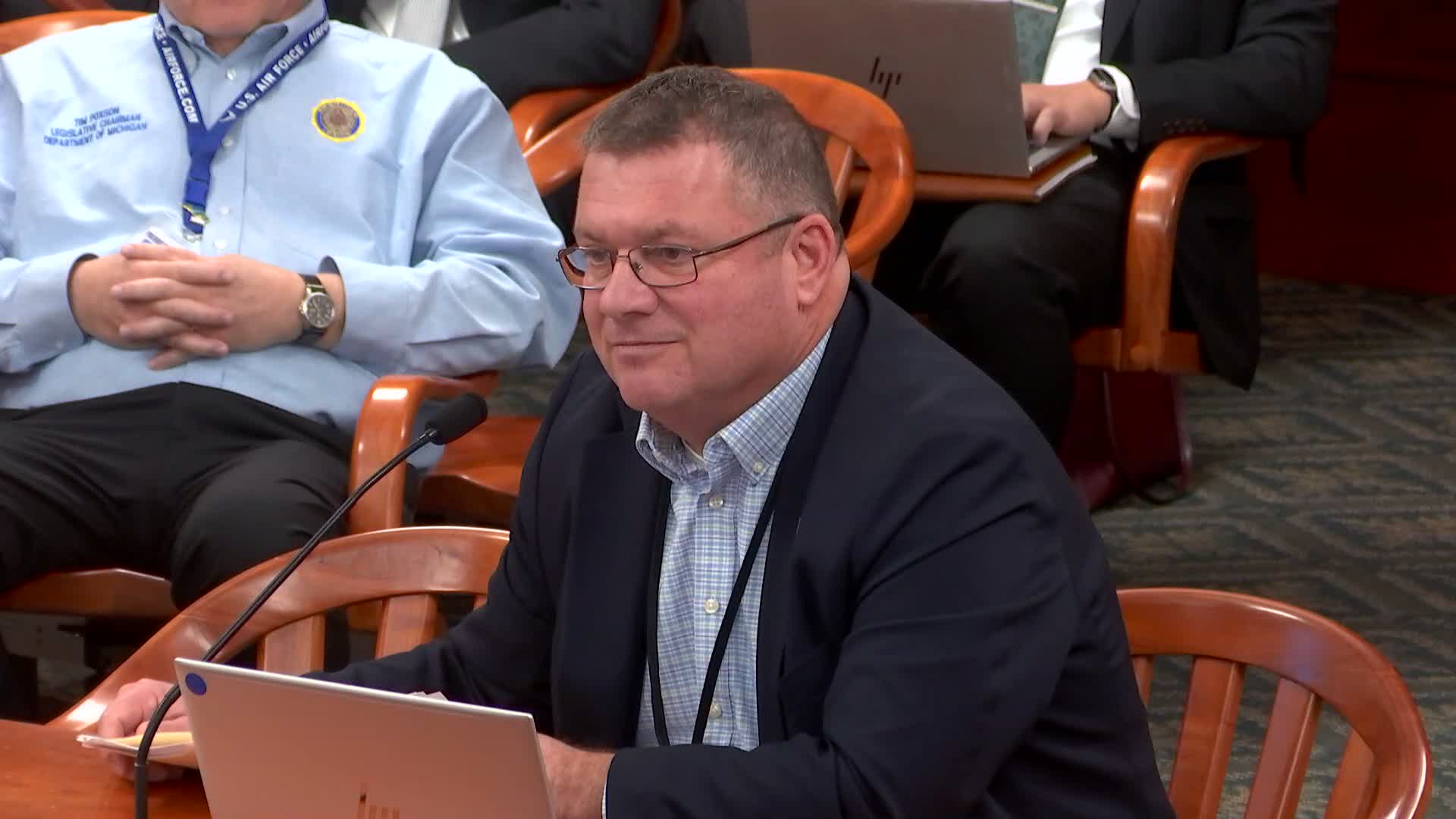
Brian Love, executive director of the Michigan Veterans Affairs Agency, told the House Family and Veterans Committee that the agency’s work centers on connecting veterans and their families to federal and state benefits and community resources.
Love said MVAA was created in 2013 to be the state’s central coordinating agency for veterans’ benefits and that the agency’s mission is to help veterans "stand for those who have served." He said MVAA staff total about 61 people and that many staff members are veterans or have family members who served.
The agency’s first line of assistance is a veteran resource service center reachable by a statewide number; Love repeatedly urged veterans and family members to call the center for help obtaining records (DD-214s), emergency services, referrals to county or nonprofit partners and other supports. "Please, if you know if you're a veteran, you've not connected to your resources ... please have them call +1 800," Love said.
Love summarized MVAA programs and partnerships: seven VA-certified veteran service officers around the state who help veterans complete claims and follow up on benefits; grant programs that fund county veteran services, statewide veteran service provision, networking and homelessness prevention; a $50 million Michigan Veterans Trust Fund for emergency needs; a veteran-friendly employer and school recognition programs; and the CORE (Community Outreach and Regional Engagement) network and Veteran Engagement Officers that provide local outreach.
On homelessness, Love said the number of veterans identified as homeless in Michigan was 1,699 in 2023, a 5% decline from the prior year among identified cases; he cautioned the figure covers only veterans who received services and that the real number is likely higher. He said homelessness among veterans age 65 and older rose by 3% and that women veterans with children are an increasing share of those experiencing homelessness.
Love described suicide prevention as a major focus. MVAA participates in the nationwide governor’s challenge program and has reorganized a mental-health-focused team that includes suicide prevention and homelessness support. He said Michigan is working to integrate the 988 crisis line and to partner with law enforcement on messaging and referral pathways.
On the buddy-to-buddy peer-mentorship program, Love said the state is rebuilding the program after the University of Michigan-managed model ended and that the current program is volunteer-based; agency staff reported difficulties recruiting volunteer mentors and noted prior iterations received paid support from partners such as Major League Baseball. The agency said it has spent funds promoting the program and is seeking sustainable funding and volunteer recruitment.
Love also described MVAA’s Vietnam Veteran recognition certificates and service pins as an outreach and recognition program for older veterans and noted efforts to identify veterans exposed to Agent Orange for benefit claims.
He urged lawmakers to use MVAA resources with constituents and mentioned partner agencies and platforms the agency uses to refer veterans to services. Lawmakers asked about outreach to veterans who do not self-identify and applauded the agency’s outreach and recognition efforts.