Get Full Government Meeting Transcripts, Videos, & Alerts Forever!
Get email alerts on the Juvenile Indigent Defense topic
No spam. Unsubscribe anytime.
House Judiciary Committee reports bill to set juvenile indigent-defense standards
Summary
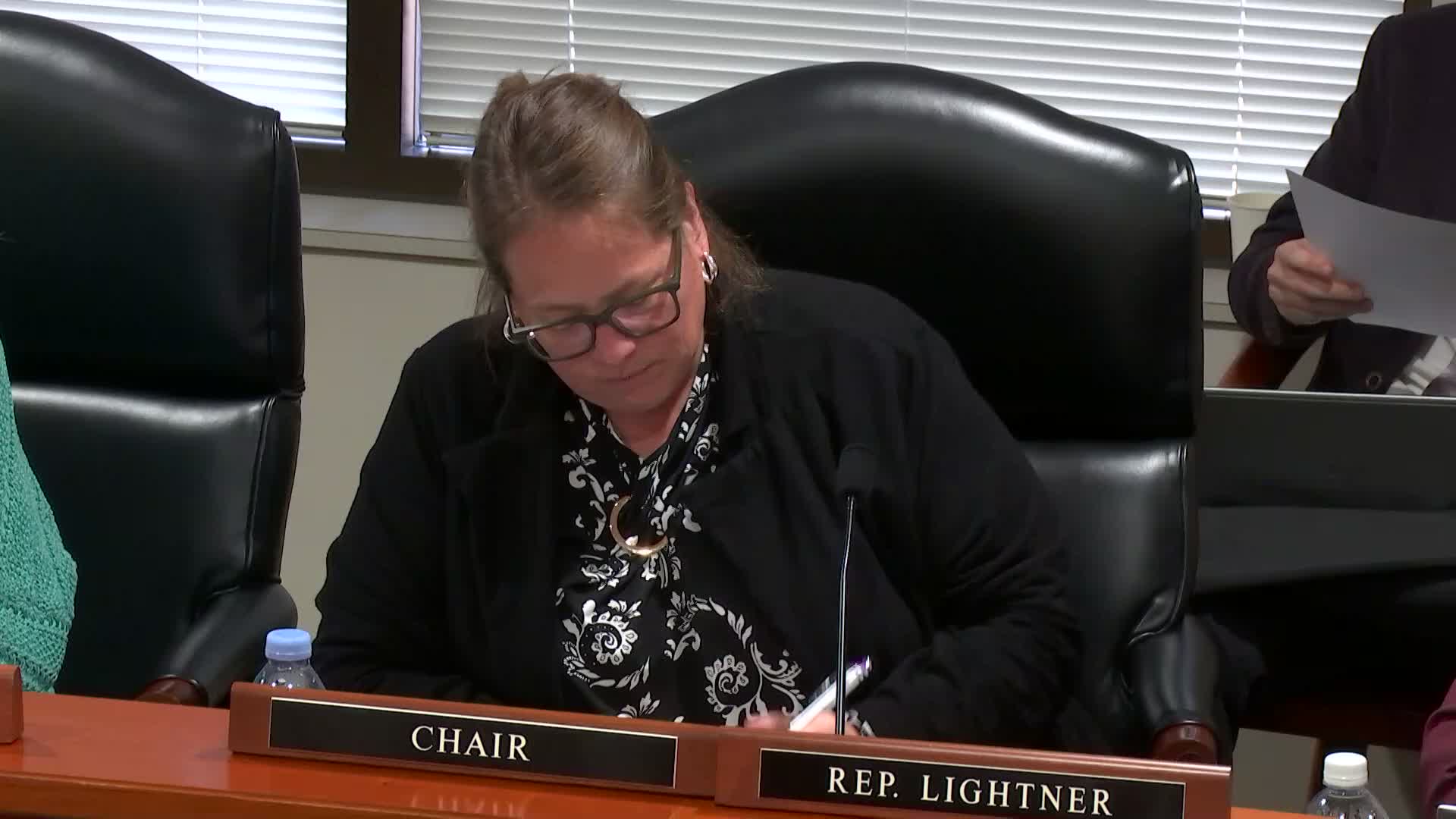
Chair Lightner, chair of the House Judiciary Committee, introduced House Bill 4,070 at the committee meeting and moved the committee to report the bill with recommendation.
Chair Lightner, chair of the House Judiciary Committee, introduced House Bill 4,070 at the committee meeting and moved the committee to report the bill with recommendation. The bill, a reintroduction from the prior term, would extend the Michigan Indigent Defense Commission’s standards and training requirements for adult criminal trial defense to juvenile delinquency proceedings and add a juvenile-expert commissioner to MIDC.
Proponents told the committee that the bill seeks parity between juvenile and adult indigent defense by formalizing training requirements, minimum performance standards, and guaranteed access to experts and investigators for youth. Kristin Staley, executive director of the Michigan Indigent Defense Commission, described MIDC’s role in creating and enforcing minimum standards, administering grants to local systems, and providing technical assistance. “We are required as a commission ... to develop and oversee the implementation of minimum standards on delivering public defense,” Staley said, summarizing the agency’s statutory mandate and the reforms MIDC has rolled out in adult trial courts.
The Michigan State Appellate Defender Office (SADO) also spoke in support. Madelena David, acting director of SADO, outlined the appellate office’s youth-related work and its juvenile-lifer and reentry units. “Public defenders are the only constitutionally mandated attorneys in our country,” David said, and SADO described expanding its youth-defense capacity on appeal while urging that trial-level counsel for youth be strengthened.
Why it matters: supporters said the bill would address a longstanding gap in Michigan’s juvenile courts. Testimony noted that MIDC’s adult standards have led to new county public defender offices, funded investigators and experts, training programs and caseload limits designed to improve representation and reduce wrongful convictions and excessive sentences. Committee members asked about federal grant funding, how a juvenile expert commissioner would be selected, data tying standards to reduced incarceration, and how local offices hire and assign counsel.
Key details from testimony and committee discussion: - The bill would add one juvenile expert seat on the MIDC, expanding the commission from 18 to 19 commissioners; the amendment discussed said that the children’s law section of the state bar would choose the appointee. (Selection language discussed in committee testimony.) - MIDC staff described nine standards already adopted for adult trial courts that MIDC enforces through grants and oversight, including requirements that counsel meet clients in confidential settings, funding for experts and investigators, presence of counsel at first appearance, independence of defense delivery from the judiciary, workload caps and minimum qualifications for accepting cases. - MIDC staff stated that current workload caps under their standards are 400 misdemeanors or 250 felonies per attorney per year. - MIDC staff reported administering grants to 33 local trial-court funding units, operating with a staff of 18 and a 19-member commission, and organizing the state into six regions for field services and technical assistance. - Witnesses said MIDC has used multi-year federal Department of Justice grants to fund training; those grants are term-limited and may not be continuously available. - SADO described growing its juvenile-appeals work, the juvenile-lifer unit created after U.S. Supreme Court decisions, and a project reentry team that assists individuals returning from long sentences. SADO reported savings to the state from successful appellate work in reduced incarceration and resentencing outcomes.
Committee action and vote: Representative Agold moved to report House Bill 4,070 with recommendation. The committee roll call produced 11 yeas, 0 nays; the clerk reported the bill as “reported with recommendation.” The committee record shows the following yes votes: Chair Lightner; Representative Seagull; Representative Wozniak; Representative Harris; Representative DeBoer; Representative Johnson; Representative Schuette; Representative Carter; Representative Hope; Representative Breen; Representative Scott.
Discussion versus decision: - Discussion: Committee members examined what a “juvenile expert” appointment would entail, whether federal grant funds could be used for juvenile training, available data tying standards to reduced incarceration or sentence length, and how local appointment and roster systems operate. MIDC and SADO provided program details and national and state research references during questioning. - Direction: No formal referral or amendments were made on the floor; the committee voted to report the bill with recommendation to the next legislative step. - Decision: The formal committee action was to report House Bill 4,070 with recommendation (11-0).
Stakeholder list and public positions recorded in committee materials included the State Defender’s Office, Michigan League for Public Policy, Michigan Catholic Conference, Michigan Association of Counties (neutral), ACLU of Michigan and numerous local and statewide juvenile-justice and defense organizations; several filed written support and did not speak.
What remains: The bill was reported out of committee with recommendation; further floor action by the House (and subsequent steps if enacted) would be required to change statute or to fund any implementation beyond existing MIDC grant programs.
Ending: Committee members and agency witnesses said they would continue working with the committee as the bill moves forward. No amendments were adopted in committee on the day of the hearing, and the committee adjourned after the presentations and questions.