Get Full Government Meeting Transcripts, Videos, & Alerts Forever!
State officials describe plan to close Shawano Center and move operations to Macomb as lawmakers press for northern Michigan capacity
Summary
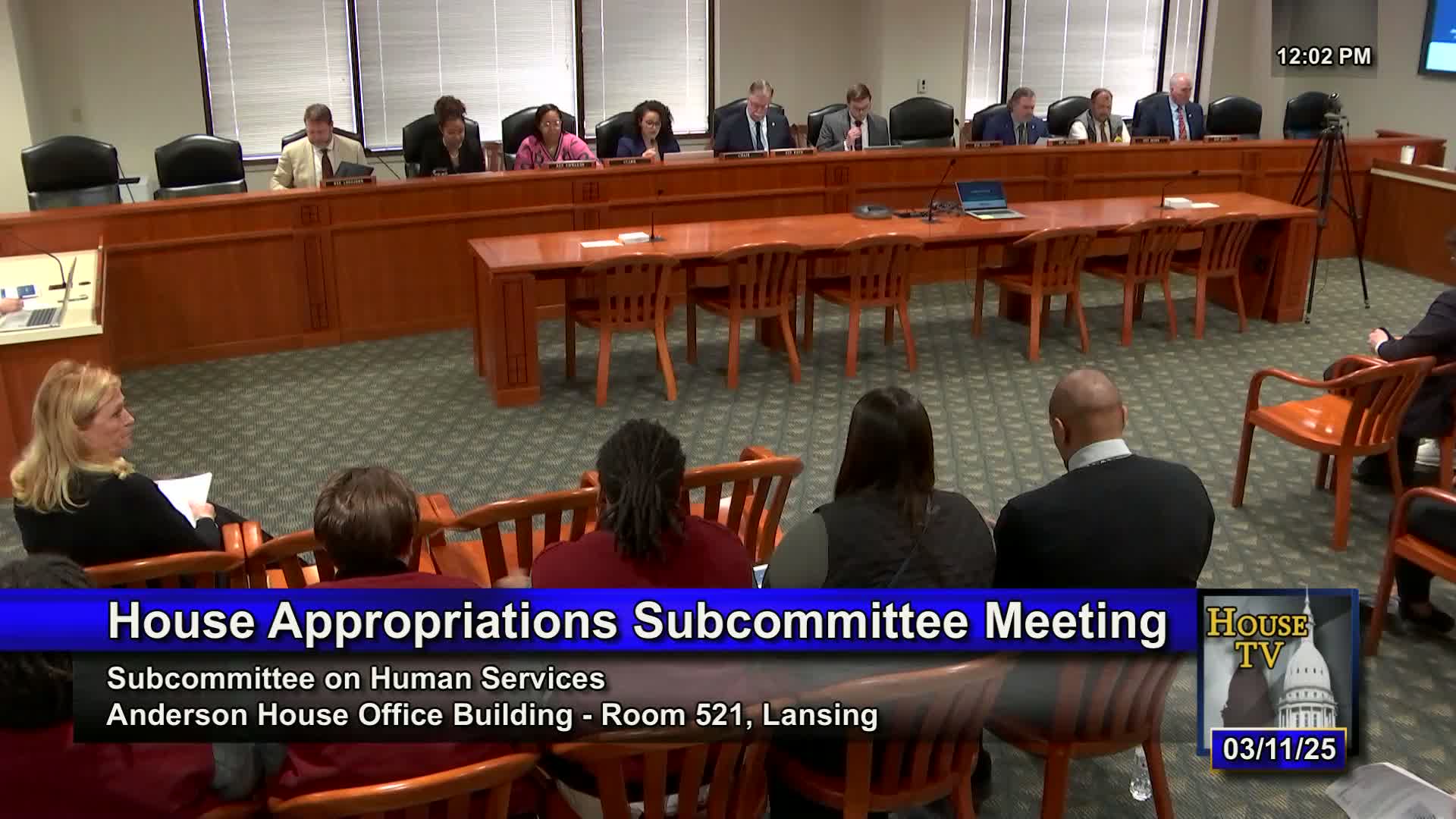
Michigan health officials told a House appropriations subcommittee they will close the Shawano juvenile treatment center in Grayling and move youth and operations to the renovated Michigan Youth Treatment Center in Macomb County, a transition the department says will improve staffing and family access but that lawmakers and northern providers warned may leave northern Michigan without secure capacity.
LANSING — Michigan Department of Health and Human Services officials told the House Appropriations Subcommittee on Human Services that the Shawano Center in Grayling will close and operations and youth will move to the Michigan Youth Treatment Center at the Macomb County Juvenile Justice Center in Mount Clemens as part of a broader juvenile justice realignment.
Demetrius Starling, senior deputy director for the department’s Children’s Services Administration, told the subcommittee the department’s mission is “to ensure all youth and families of diverse populations involved in Michigan's juvenile justice system have equitable access to a continuum of research and evidence based services that provide rehabilitation opportunities in a safe, supportive, and respectful environment that honors the youth and family voice.” He said the department began moving youth in January 2025 with a planned completion of transition by early summer.
The move is intended to consolidate state-operated treatment capacity into a renovated Michigan Youth Treatment Center built in 1989 and located in southeast Michigan. Starling said the Michigan Youth Treatment Center will have a 60‑bed capacity after renovations and, when fully operational, “will be able to sustain 111 staff.” He described the relocation as a response to staffing and family‑access challenges in the Grayling region and said the department expects improved family involvement and staffing stability at the Macomb site.
Amy Apke, senior deputy director of financial operations for MDHHS, outlined the juvenile justice budget and recent infrastructure investments. She said the department’s juvenile justice (JJ) budget is $43,500,000; roughly two‑thirds of that funding is for Bay Pines and…
Already have an account? Log in
Subscribe to keep reading
Unlock the rest of this article — and every article on Citizen Portal.
- Unlimited articles
- AI-powered breakdowns of topics, speakers, decisions, and budgets
- Instant alerts when your location has a new meeting
- Follow topics and more locations
- 1,000 AI Insights / month, plus AI Chat