Get Full Government Meeting Transcripts, Videos, & Alerts Forever!
Get email alerts on the Hidden Kinship Caregivers topic
No spam. Unsubscribe anytime.
Kinship caregiver urges better outreach and supports for an estimated 50,000 Michigan children raised outside formal child welfare
Summary
A kinship caregiver and Michigan Kinship Care Coalition steering member testified that roughly 50,000 Michigan children live with kinship caregivers outside the formal child welfare system and described barriers to accessing TANF, mental-health, and other supports.
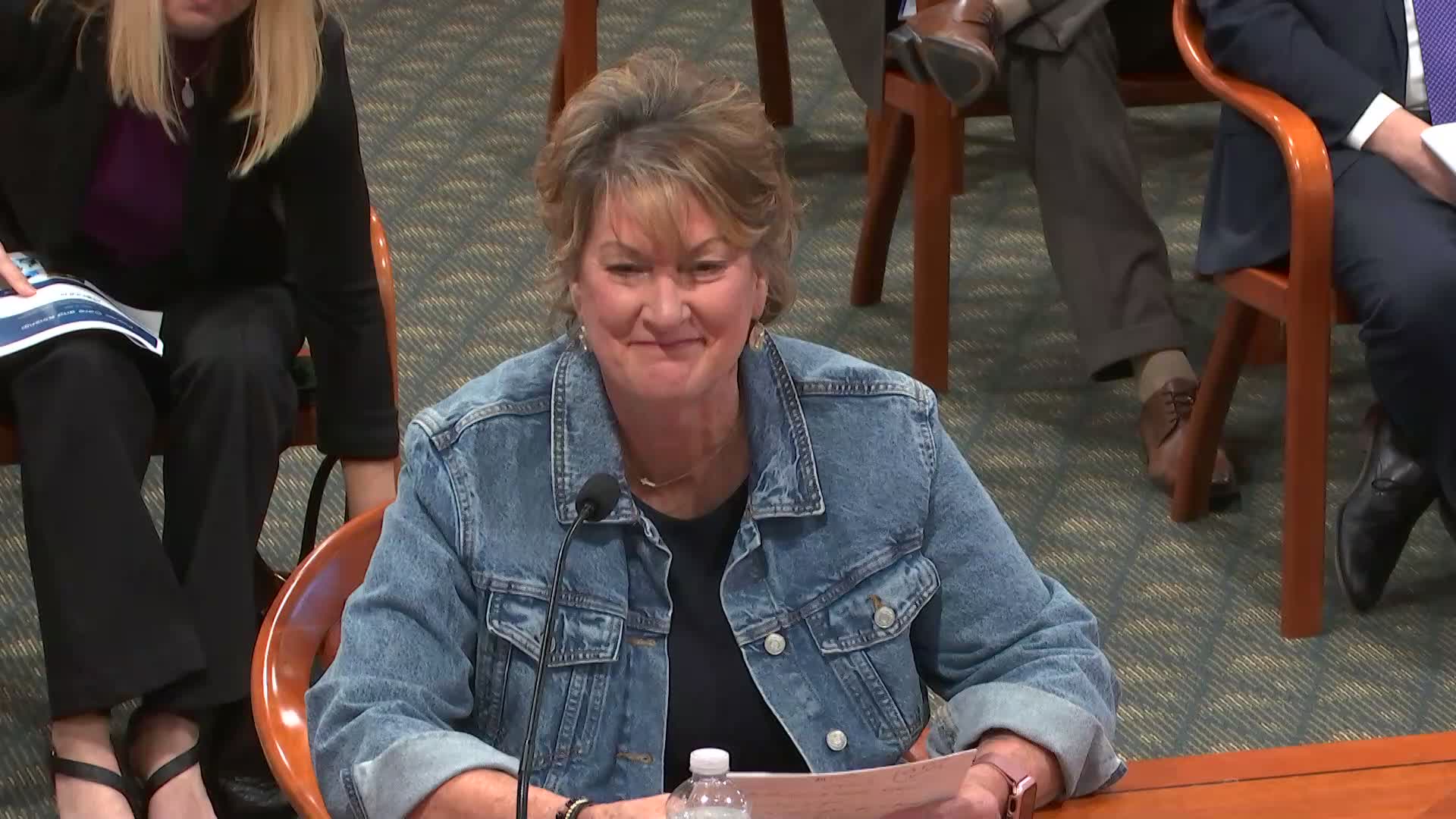
Deb Frisbie, a kinship caregiver and steering member of the Michigan Kinship Care Coalition, testified to the appropriations subcommittee about what she called the “hidden” population of kinship caregivers who care for children outside the formal child welfare system and often lack access to supports.
Frisbie said national and state data sources — including the U.S. Census Bureau, the Annie E. Casey Foundation, the Kids Count Data Center, and AFCARS (Adoption and Foster Care Analysis and Reporting System) — indicate about 50,000 Michigan children are living with kinship caregivers outside the formal system. She said many such families do not know about or cannot access resources, and that less than 5% of eligible families receive the TANF child-only grant.
Frisbie described her family’s experience: she sought guardianship for grandchildren who initially lived with her, later pursued adoption when reunification was not possible, and said the lack of consistent court or agency support for guardianship families creates uncertainty. She said many services and supports for kinship families are housed outside child welfare — in TANF, child care, mental-health, substance-abuse, legal services, housing, food and nutrition, special education and medical care — and that those programs are not uniformly structured to meet kinship families’ needs.
Frisbie urged the department and legislators to do three things: identify and reach kinship caregivers who are outside the formal system; provide a clear point of contact and guidance so caregivers can access programs; and invest in staff development so caseworkers in courts and agencies understand kinship-specific needs. She also praised MDHHS’s Kinship Advisory Council and urged the department to use a contracted “gaps and barriers” analysis to design more flexible strategies for these families.
In response to a committee question, Frisbie said many grandparent caregivers live on fixed incomes and have difficulty navigating online applications for benefits, and she urged simpler access routes and targeted outreach.