Get Full Government Meeting Transcripts, Videos, & Alerts Forever!
Appropriations panel reviews history, formulas and recent increases in state revenue sharing
Summary
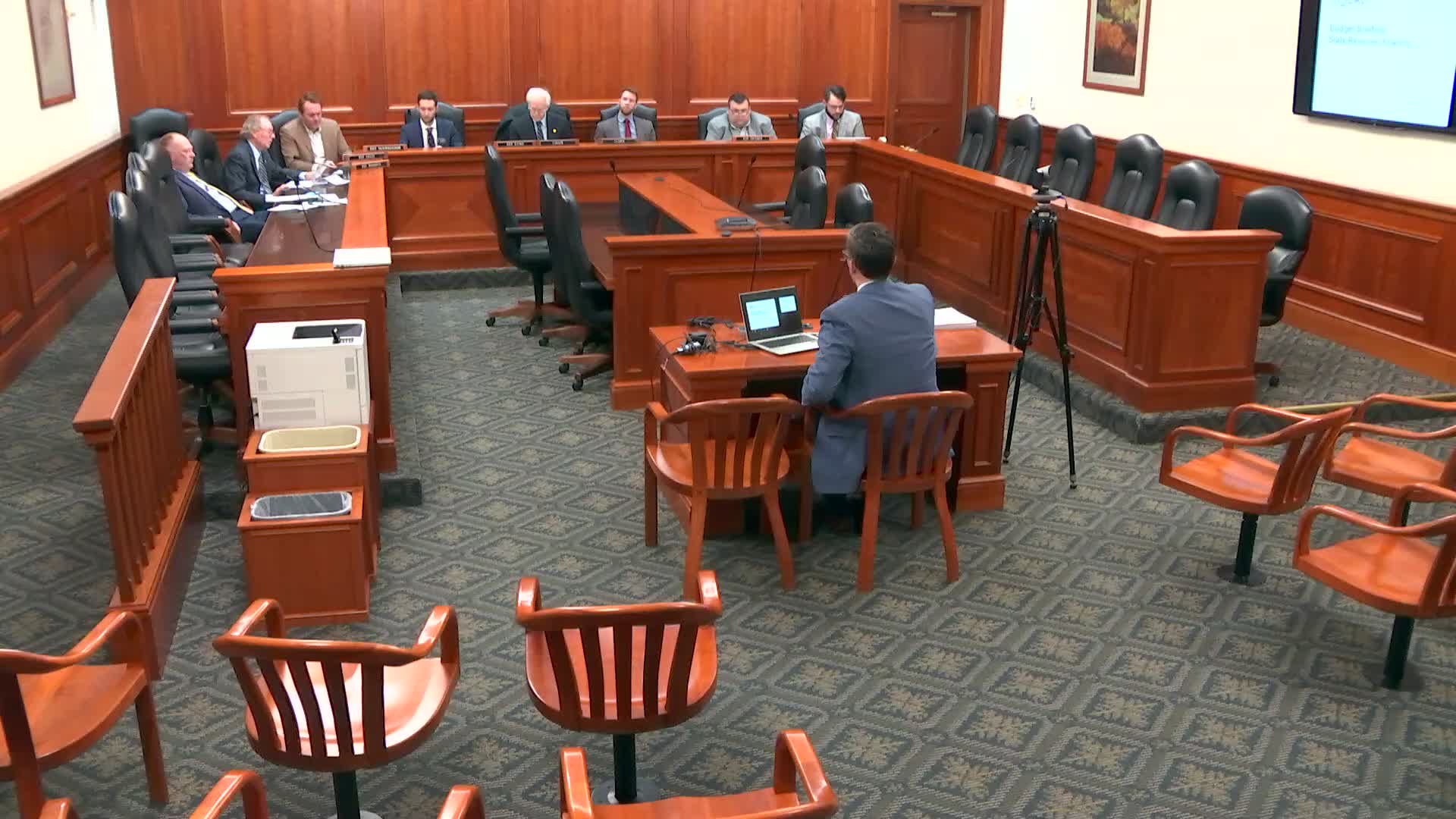
The House Appropriations Committee on General Government heard a briefing March 13, 2025, from Ben Gilchick of the House Fiscal Agency on state revenue sharing, including constitutional per‑capita payments, statutory (CVT) revenue sharing, the Economic Vitality and Incentive Program (EVIP), and county revenue sharing.
The House Appropriations Committee on General Government heard a briefing March 13, 2025, from Ben Gilchick of the House Fiscal Agency on state revenue sharing, including constitutional per‑capita payments, statutory (CVT) revenue sharing, the Economic Vitality and Incentive Program (EVIP), and county revenue sharing.
Gilchick told the committee that state revenue sharing "represent[s] the largest unrestricted portion" of a constitutional requirement that about 48.97% of state spending from state sources be paid to local units of government. He explained constitutional revenue sharing is a per‑capita payment tied to the 4% base sales tax rate and that statutory revenue sharing has undergone several programmatic changes since the 1930s, including EVIP and the current CVT revenue‑sharing structure.
The briefing traced the history of statutory revenue sharing, noting a large reduction in the late 2000s that left roughly 1,300 local units without statutory payments, the introduction of EVIP in fiscal year 2012 with accountability and transparency conditions, and…
Already have an account? Log in
Subscribe to keep reading
Unlock the rest of this article — and every article on Citizen Portal.
- Unlimited articles
- AI-powered breakdowns of topics, speakers, decisions, and budgets
- Instant alerts when your location has a new meeting
- Follow topics and more locations
- 1,000 AI Insights / month, plus AI Chat