Get Full Government Meeting Transcripts, Videos, & Alerts Forever!
Get email alerts on the Revenue Sharing topic
No spam. Unsubscribe anytime.
Appropriations panel reviews history, formulas and recent increases in state revenue sharing
Summary
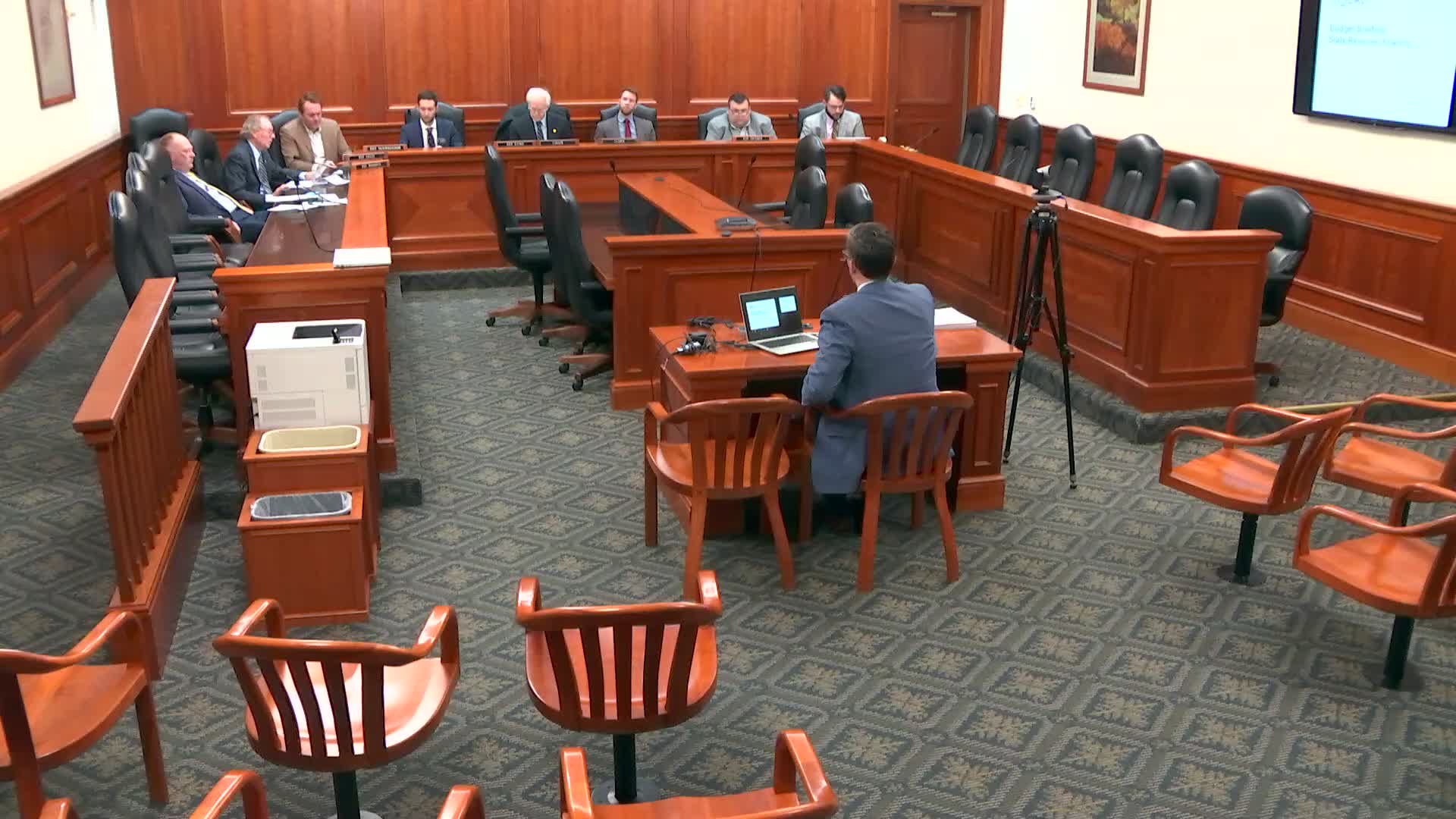
The House Appropriations Committee on General Government heard a briefing March 13, 2025, from Ben Gilchick of the House Fiscal Agency on state revenue sharing, including constitutional per‑capita payments, statutory (CVT) revenue sharing, the Economic Vitality and Incentive Program (EVIP), and county revenue sharing.
The House Appropriations Committee on General Government heard a briefing March 13, 2025, from Ben Gilchick of the House Fiscal Agency on state revenue sharing, including constitutional per‑capita payments, statutory (CVT) revenue sharing, the Economic Vitality and Incentive Program (EVIP), and county revenue sharing.
Gilchick told the committee that state revenue sharing "represent[s] the largest unrestricted portion" of a constitutional requirement that about 48.97% of state spending from state sources be paid to local units of government. He explained constitutional revenue sharing is a per‑capita payment tied to the 4% base sales tax rate and that statutory revenue sharing has undergone several programmatic changes since the 1930s, including EVIP and the current CVT revenue‑sharing structure.
The briefing traced the history of statutory revenue sharing, noting a large reduction in the late 2000s that left roughly 1,300 local units without statutory payments, the introduction of EVIP in fiscal year 2012 with accountability and transparency conditions, and subsequent transitions to CVT revenue sharing beginning in fiscal year 2015. Gilchick described fiscal year 2025 CVT appropriations totaling $333,500,000, an 11.5% increase from the prior year: $299,100,000 was distributed to all eligible cities, villages and townships at the prior‑year recipient share, and $34,400,000 was distributed through a three‑factor formula that uses inverse taxable value, weighted population by unit type, and a yield‑equalization component.
On constitutional payments, Gilchick said the state constitution directs 15% of sales tax collections at the 4% rate to be distributed on a per‑capita basis; those payments are made every other month beginning in October and are based on sales tax collections. He reported constitutional payments totaled about $1,100,000,000 in fiscal year 2024 and that forecasts showed a modest decline in fiscal year 2025 followed by a projected rebound in fiscal year 2026.
Gilchick described county revenue sharing separately: counties do not receive constitutional (protected) revenue sharing and were subject to a 2005 suspension that required many counties to create reserve funds and withdraw limited annual amounts in lieu of statutory payments. He said that by fiscal year 2022 all 83 counties had returned to receiving state payments and that the fiscal year 2025 county increase of $30,000,000 was distributed using the inverse taxable value factor (favoring units with lower taxable value per capita). He also said the county incentive program (with EVIP‑style accountability conditions) was eliminated for the current year, though the provision requiring deposits into local pension systems for increases when a pension system is unfunded remained in effect for fiscal year 2025.
Committee members pressed several follow‑ups. Representative Madic reviewed per‑capita comparisons around Milford and said: "Milford is only $67 and that's a 40 percent — that's 40% less than all the other townships surrounding Milford" and asked staff to review whether the distribution was correct; Gilchick agreed to look into those figures. Representative Snyder asked whether processing revenue‑sharing payments requires appropriated staffing in Treasury; Gilchick said he did not have a definitive answer and would follow up. Representative Van Werkom asked whether the pension deposit requirement remained in fiscal year 2025; Gilchick confirmed it did and said he would try to compile a history of deposits made under that provision.
The committee did not take formal action on policy changes during the presentation. Representative Kelly moved to approve the committee’s March 6, 2025, minutes at the start of the meeting; there were no objections and the minutes were approved.
The briefing and questions focused on how different distribution formulas (per‑capita, inverse taxable value, weighted population, and yield equalization) affect municipalities differently, the role of sales tax growth in driving constitutional payments, and implementation questions (pension deposit tracking, the breakdown of the 3‑factor formula payment, and staffing to execute payments). Gilchick repeatedly offered to provide follow‑up data to members requesting comparisons and deposit histories.