City of Bandera gets federal-state flood-infrastructure funding; engineers outline $5.4 million park and street plan
Loading...
Summary
Artura Engineering presented design and schedule details for a $5.4 million flood infrastructure project for Bandera that includes street and drainage upgrades, park riparian restoration and new pedestrian and kayak access, funded in part by the Texas Water Development Board Flood Infrastructure Fund (45% grant, 55% loan).
Artura Engineering on Thursday presented final design details and a near-term schedule for a $5.4 million flood-infrastructure project that would rebuild sections of Maple Street and Cedar Street, upsized culverts under Main Street, and make riparian and pedestrian improvements at the city park.
The project, which Artura said already has environmental clearance and an award package from the Texas Water Development Board Flood Infrastructure Fund, is funded roughly 45 percent by grant and 55 percent by a low-interest loan. Jonathan, representing Artura Engineering, said the construction-cost estimate is $5,400,000 and that the Texas Water Development Board portion covers about 45 percent of construction dollars.
Artura’s presentation summarized three component areas: citywide localized flood improvements (including upsized culverts and drainage through Main Street), a Maple Street section with full-depth pavement replacement plus parallel parking and sidewalks, and park/riparian improvements that add parking, a kayak ramp, elevated pedestrian walkways, vegetated bioswales and angler/fishing access.
Jonathan said the Maple Street portion was designed to handle a 25-year storm event and that the Maple Street cross section will widen the driving surface, add concrete ribbon curbs on the park side, and provide a five-foot sidewalk. At the park, the plan calls for stepped vegetative channels ("bioswales"), two-foot-deep toe walls on concrete sidewalks where they approach the river, elevated boardwalks over vegetated areas, kayak ramp access and cantilevered fishing piers.
Artura noted the project team coordinated with Texas Parks & Wildlife, Hill Country Alliance, the River Authority, U.S. Fish and Wildlife and the Texas Historical Commission during environmental review. The consultant said the environmental clearance process concluded in March (the presentation referred to completion of environmental clearance) and that the City is “bid-ready” for an advertised package slated for fall; the team proposed issuing the project for bid in September with a typical two-month bid period.
Council members pressed staff and the consultant on a few items: whether vegetation along informal footpaths (“Dripping Springs”/Cold Beach) would be cleared (Artura said construction-disturbed areas would be cleared but that the project is not removing existing riparian vegetation outside the work zone); whether nonmotorized boating would be allowed at the kayak ramp (Artura and council discussed nonmotorized boats/canoes); and how the project scope could be adjusted if bids come in high (Artura said the package is bid as one general contract with trade subcontractors and that elements such as the number of fishing piers or number of kayak access points could be adjusted as cost-control measures).
On financing and timing, Artura and council discussed that the estimated 45 percent grant portion translates to roughly $2.4 million of the $5.4 million estimate (consultant math discussed in the meeting). The consultant also said the Economic Development Corporation (EDC) and the City currently budget for loan principal payments and that the loan repayment was anticipated in the city budget when the award was accepted.
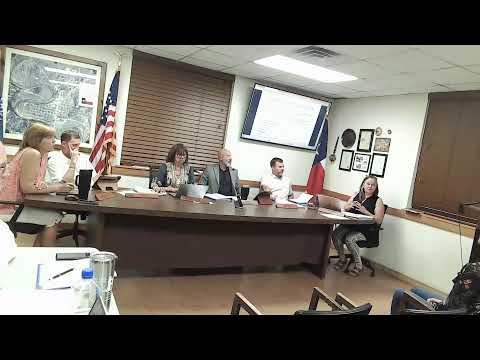
The presentation closed with the consultant saying the team is prepared to advertise the full package as one bid in September and return to council as bids are evaluated. No formal council vote on the project occurred at the meeting; the item was a staff/consultant presentation and discussion.
Artura’s slides and the consultant’s answers tied the project closely to prior planning work that began in 2019 and to a community workshop the consultant said was held with Texas Parks & Wildlife and local stakeholders.
The consultant flagged that some elements—number of fishing piers, irrigation ("purple pipe") and finishes—could be reduced if bids exceed budget, but cautioned that scaling down elements tied to the grant scoring could affect the principal-forgiveness portion of the award.