Get Full Government Meeting Transcripts, Videos, & Alerts Forever!
Get email alerts on the Agriculture Research And Extension topic
No spam. Unsubscribe anytime.
MSU presents SEEDS climate-resiliency grants, PFAS research and animal-agriculture funding to appropriations subcommittee
Summary
Dr. George Smith outlined Michigan State University AgBioResearch and Extension programs including the Agriculture Climate Resiliency Program (SEEDS), $5 million+ competitive grants, PFAS research at affected farms and the Michigan Alliance for Animal Agriculture.
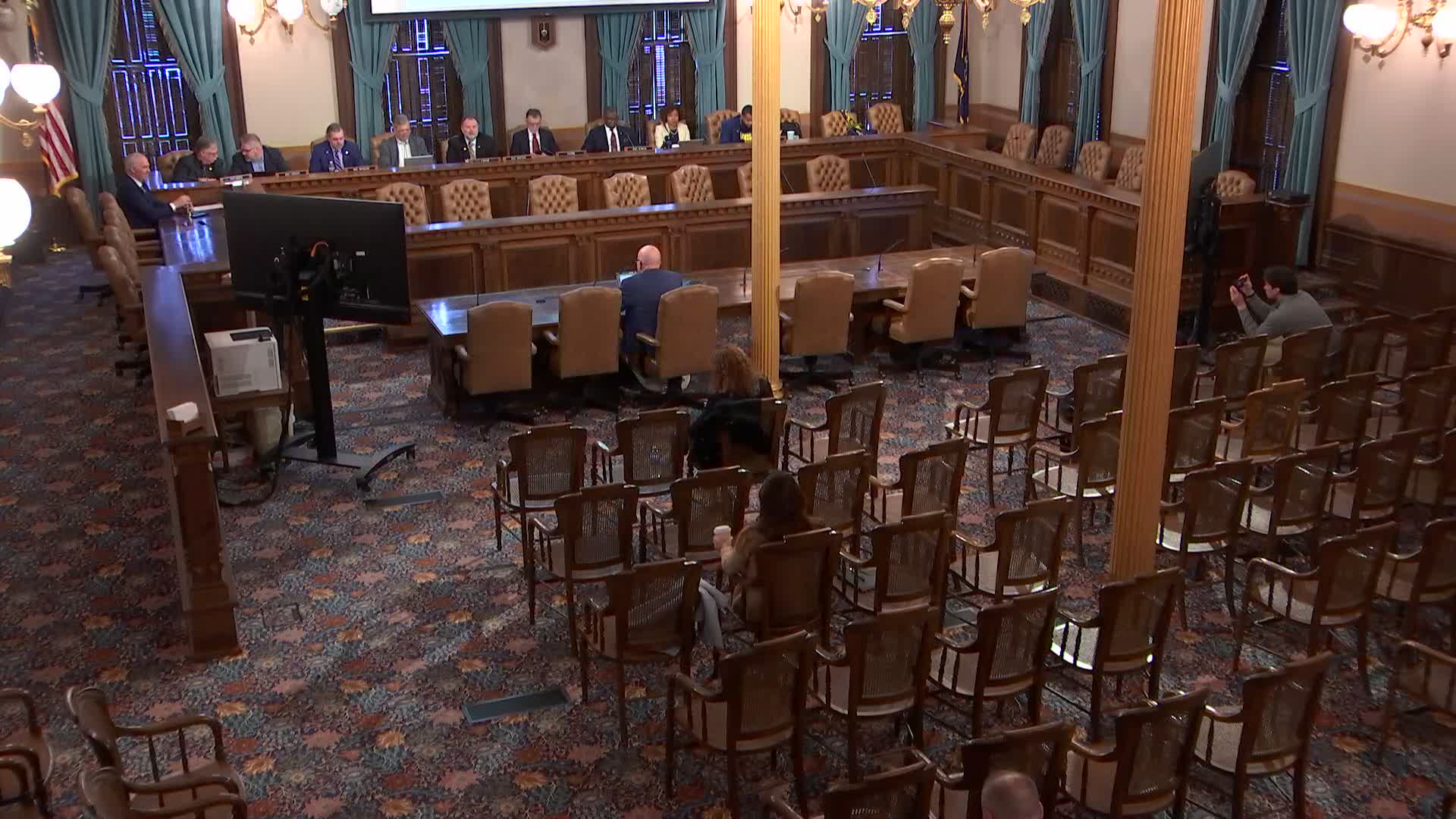
Dr. George Smith, director of Michigan State University AgBioResearch, told the House Appropriations Subcommittee on Agriculture, Rural Development and the Department of Natural Resources that state-supported research and extension programs are addressing extreme-weather impacts, water use and emerging contaminants in Michigan agriculture.
Smith described the Agriculture Climate Resiliency Program (referred to in testimony as SEEDS), which was established in 2024 with resources provided through the Michigan Department of Agriculture and Rural Development (MDARD) budget. He said the program included $1,000,000 in recurring funding to support faculty and extension positions and $5,100,000 in nonrecurring FY 2025 funding for competitive grants.
Nut graf: The SEEDS program is intended to develop practical, Michigan-specific research and extension projects to help producers manage water, build soil health and adapt to extreme weather; committee members questioned how the work translates to on-farm economics, regulatory decisions and responses to contamination such as PFAS.
Smith summarized projects funded in the first grant cycles: four FY 2024 projects that target orchard irrigation and nutrient-sensing technologies, groundwater-use and fate-and-transport modeling, on-farm regenerative-agriculture demonstrations, and pest- and disease-management tools for fruit crops. He said four additional projects in 2025 focus on subfield precision tools (led by Dr. Bruno Basso), AI-based forecasting and management systems, climate-smart drainage and nutrient-loss prevention, and another regenerative-agriculture demonstration across multiple commodity systems.
The director listed new faculty hires and extension educators funded or partly funded through the program: positions in biosystems and agricultural engineering (water-quality and water-use monitoring), agricultural, food and resource economics (economics of adoption), entomology (insect ecology and climate impacts), and extension educators focused on precision agronomy and cover crops.
Smith also described the Michigan Alliance for Animal Agriculture (MAAA), a program created to address industry priorities on animal agriculture; he said MAAA receives $3,000,000 through MDARD for research and outreach. He cited a Project Green (research-extension) program that he said generates recurring federal capacity funds and cited historical return-on-investment figures: roughly $5.2 million per year in one embedded program and an estimated $2.5 billion in economic return over a prior 20-year period for a sister program.
On the PFAS issue, Smith said AgBioResearch organized a Center for PFAS Research to marshal MSU expertise, that the university is conducting site-specific research on an affected Livingston County farm and that many questions remain about plant uptake, livestock transfer, soil amendments and regulatory thresholds. He said state investment has leveraged federal funds in some cases and noted the need for data to inform policy and producer solutions.
During questions, members raised labor and processing capacity for livestock and specialty crops, turfgrass research (including MSU work developing turf technologies used for the 2026 FIFA World Cup), and the impact of federal funding changes on long-running international programs supported by USAID, which Smith said had been curtailed and reduced research linkages.
Ending: Smith asked for continued state support and noted that MDARD appropriations and university partnerships have been critical to launching applied research and extension that state producers rely on; the subcommittee reserved follow-up for future budget discussions and technical briefings.