Get Full Government Meeting Transcripts, Videos, & Alerts Forever!
Get email alerts on the Agriculture Policy topic
No spam. Unsubscribe anytime.
Michigan Farm Bureau outlines education, hunger-relief and regulatory priorities to appropriations subcommittee
Summary
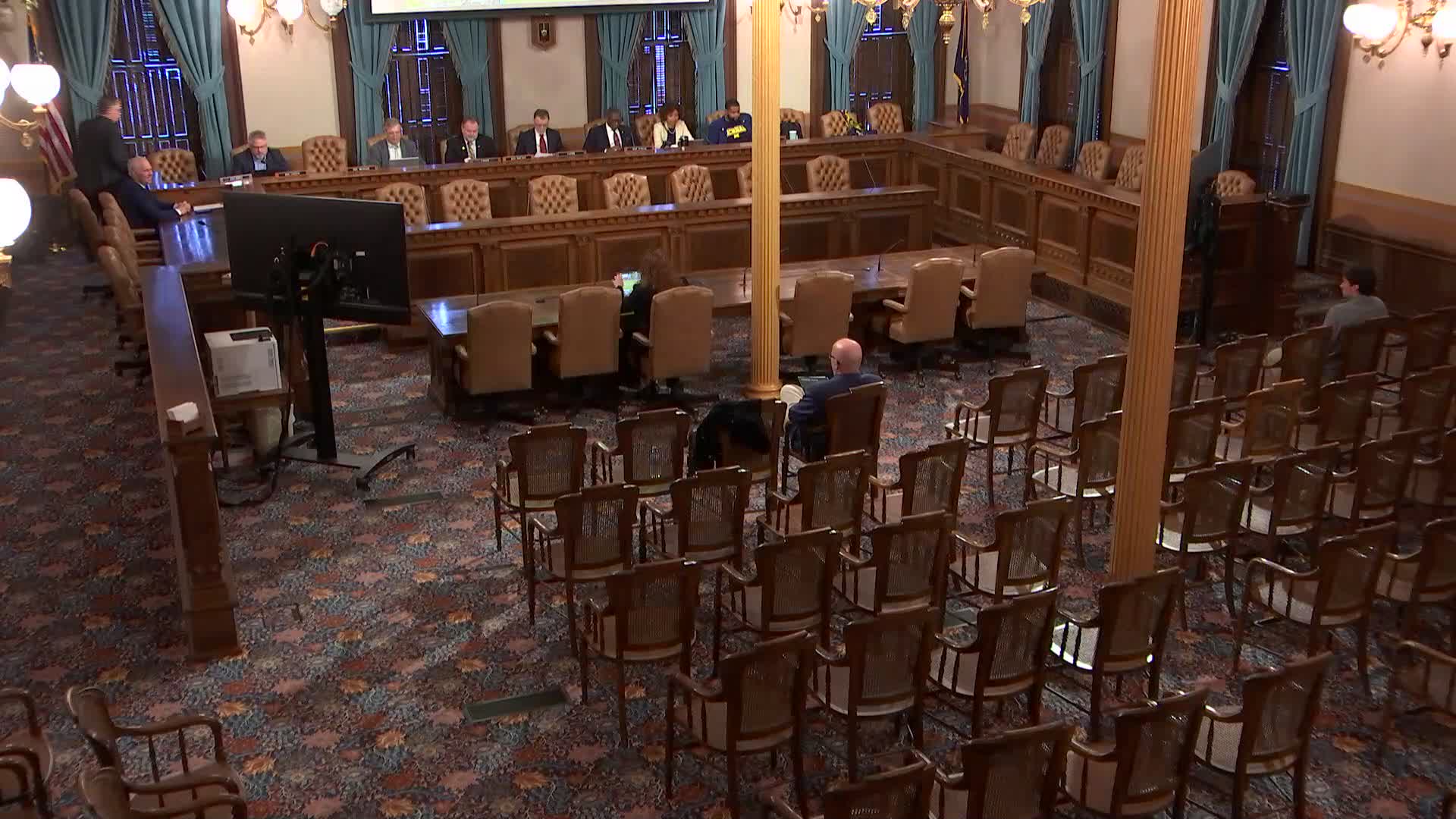
The House Appropriations Subcommittee on Agriculture, Rural Development and the Department of Natural Resources heard a presentation from Rebecca Park, legislative counsel for the Michigan Farm Bureau, who described the group’s education programs, volunteer and fundraising efforts against childhood hunger and policy priorities for the coming year.
The House Appropriations Subcommittee on Agriculture, Rural Development and the Department of Natural Resources heard a presentation from Rebecca Park, legislative counsel for the Michigan Farm Bureau, who described the group’s education programs, volunteer and fundraising efforts against childhood hunger and policy priorities for the coming year.
Park told members the Farm Bureau is “the state's largest general farm organization, representing all of agriculture with over 41,000 farm families” and reviewed outreach programs such as agriculture-in-the-classroom, mobile farm-science trailers and a “farm crate” curriculum that reaches roughly 10,000 K–5 students and 400 educators each month.
The presentation outlined Farm Bureau social-mission work launched in 2022 to help end childhood hunger through volunteer days, fundraising and partnerships with local food programs. Park said the organization donated more than 1,200 volunteer hours in 2024 and described a new, developing venison-donation committee aimed at increasing charitable-protein donations while reducing road and field deer collisions.
Nut graf: The Farm Bureau’s combination of large membership, K–12 outreach and charitable programming positions it as an influential stakeholder for appropriations and policy decisions affecting agriculture, food access and farm education; members of the subcommittee asked about regulatory and environmental issues that affect farm operations and markets.
In the question-and-answer period, representatives pressed Park on several topics that members identified as priorities. On the Michigan Agricultural Environmental Assurance Program (MEAP), Park said the Farm Bureau values the program’s voluntary and confidential approach and will engage on funding levels; she described the program as subject to a five-year sunset process and said members see value in continuing it. On PFAS, Park acknowledged the issue’s prominence and said the Farm Bureau is engaged in conversations about indemnity funds and other potential responses for farmers who find PFAS on their land but said she did not have statewide contamination data available and would follow up with the committee.
Members also asked about cottage-food regulations, climate impacts on specialty crops such as cherries, and vocational-education issues tied to the Michigan merit curriculum; Park said the Farm Bureau will participate in those policy discussions. She urged committee members to contact her office if they needed copies of the Farm Bureau policy book distributed earlier in the year.
Ending: Committee members thanked Park for the overview and invited further engagement on MEAP, PFAS research and cottage-food rulemaking.