Get Full Government Meeting Transcripts, Videos, & Alerts Forever!
Get email alerts on the Law Enforcement Budget topic
No spam. Unsubscribe anytime.
DNR law enforcement briefs appropriations panel: personnel and equipment top budget priorities
Summary
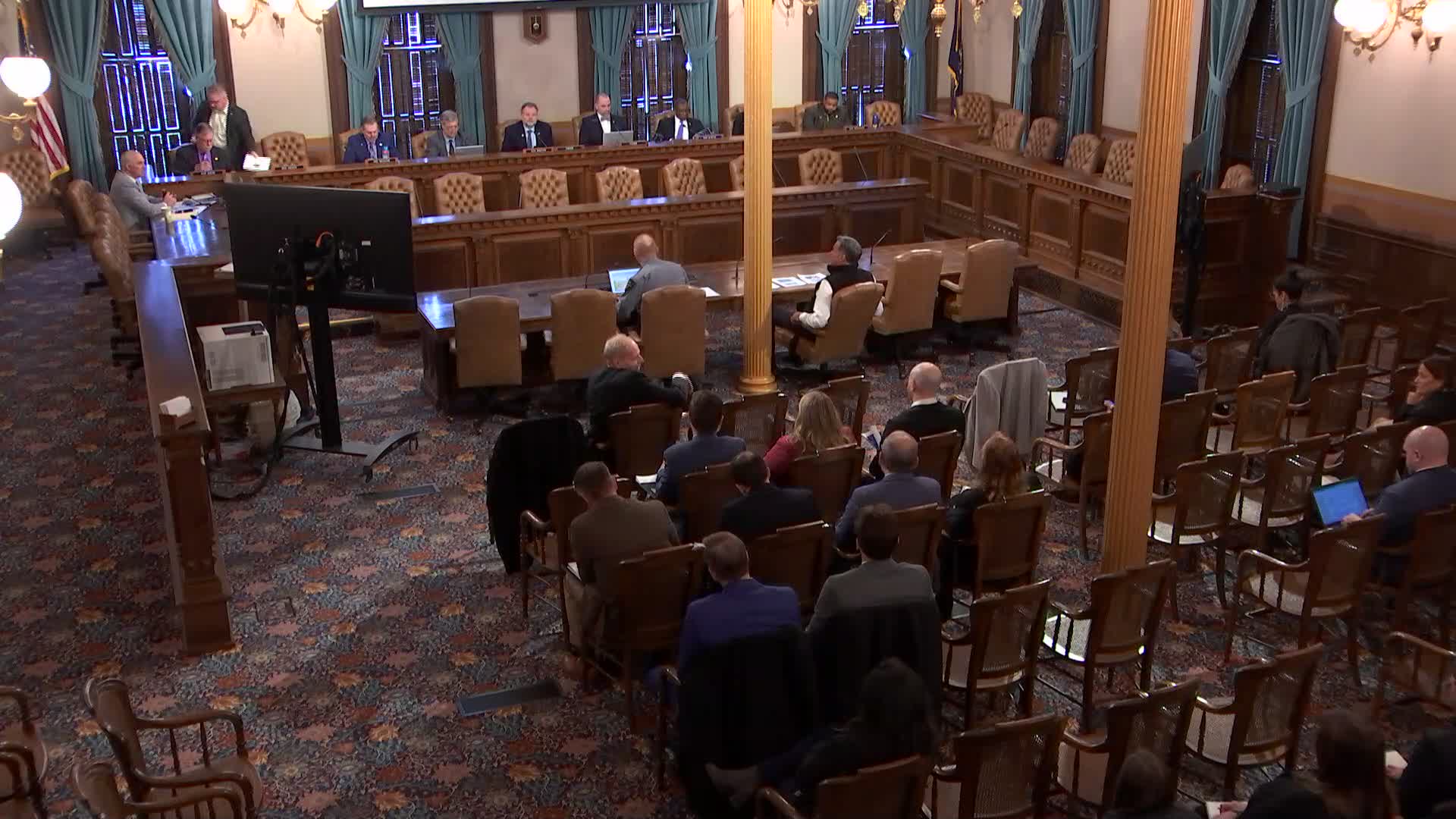
Chief Jason Haines told the subcommittee that the law enforcement division’s primary costs are payroll and equipment, outlined staffing levels and said body‑worn cameras rollout is nearly complete.
Chief Jason Haines, chief of the Michigan Department of Natural Resources law enforcement division, told the House Appropriations Subcommittee that personnel and equipment — not land or capital projects — drive the division’s budget and that the division faces fleet and technology cost pressures.
Haines told the committee that law enforcement comprises about 10% of the overall DNR appropriation, with a division budget of roughly $54.9 million. He said payroll represents about 74% of the division budget; fleet costs account for about 10%; unit (district) operating budgets about 7%; and IT and equipment account for the remainder. Haines said 39% of the division’s funding comes from game and fish revenues, 36% from the state general fund and about 13% from federal grants, including U.S. Coast Guard support for marine safety.
The division reported 236 sworn conservation officers on staff, with an academy class of 16 recruits due to graduate in July that would bring the count near 252 before accounting for expected retirements. Haines said officers logged roughly 453,000 public contacts in 2024; fewer than 2% of those contacts resulted in enforcement action (citation or arrest). He described a district structure of nine field districts grouped into two regions, staffing patterns (typical county staffing of two officers, with sergeants and lieutenants at district level) and specialized units such as the Great Lakes Enforcement Unit and a special investigations unit.
Haines highlighted non‑enforcement roles: training and volunteer instruction (about 1,600 volunteer safety instructors and more than 46,000 safety certifications in 2024), search and rescue, and emergency response in rural areas. He said conservation officers receive calls for life‑saving situations; 15 life‑saving awards were presented in 2024.
Committee members asked about recruitment, pay and equipment. Haines said a recent $3.5 million budget investment helped recruiting: civil service received about 900 applications for the latest posting and the academy currently has 16 recruits. On retention, he said the department expects continued retirements but that pay and recruitment investments increased applicant volume.
On body‑worn cameras, Haines said the rollout began in the fall, paused during heavy‑use months, and that just two Upper Peninsula districts have not yet received cameras; those districts were scheduled for early April. He said all cameras were purchased and that the appropriation also funded five full‑time equivalent staff to manage redaction and FOIA processing, plus two technicians to maintain the camera fleet.
Haines described budget pressure points: rising vehicle purchase costs (example: patrol vehicle unit cost rose from $32,000 in 2014 to $52,000 in 2023), fluctuating fuel and maintenance, and growing IT and replacement needs for boats, ORVs and snowmobiles. He told members that if deep cuts were required the department would defer equipment replacement before reducing officer ranks but acknowledged that deferring replacements increases long‑term costs and operational risk.
Ending: Haines said the division will continue recruiting and managing equipment lifecycles while partnering with federal, tribal and local agencies on enforcement, marine safety and emergency responses.