Get Full Government Meeting Transcripts, Videos, & Alerts Forever!
Get email alerts on the Dnr Budget topic
No spam. Unsubscribe anytime.
Subcommittee hears DNR budget overview; restricted funds, state parks and recreation passport emphasized
Summary
House Fiscal Agency analyst Austin Scott presented the Department of Natural Resources’ current-year budget to the House Appropriations Subcommittee, stressing that roughly two-thirds of DNR funding comes from restricted funds and highlighting state parks, Game and Fish accounts and trust-fund relationships.
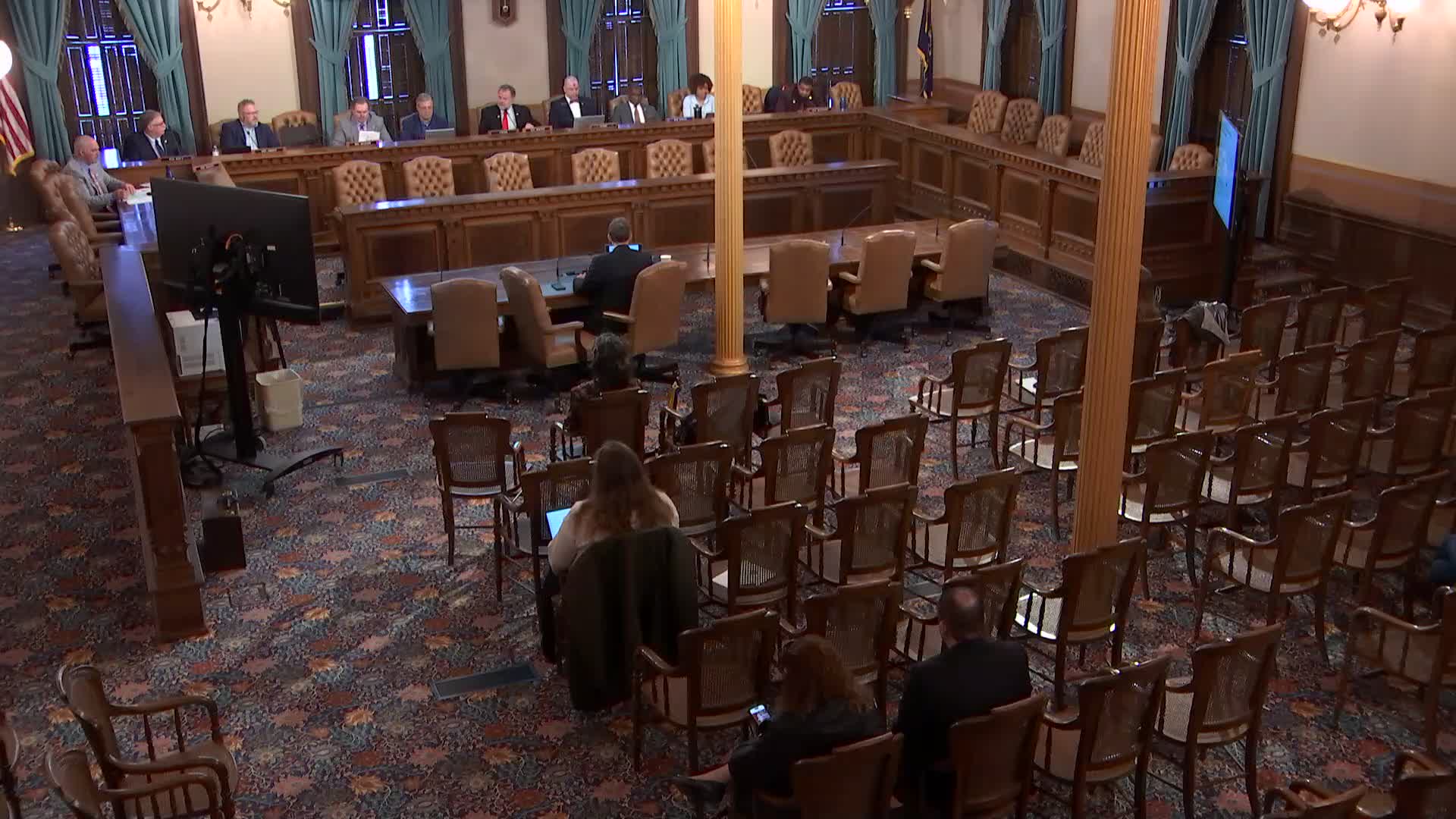
The House Appropriations Subcommittee on Agriculture, Rural Development and Natural Resources heard a presentation from Austin Scott, fiscal analyst with the House Fiscal Agency, on the current-year budget for the Michigan Department of Natural Resources (DNR). Scott told members the department’s gross budget for the current year is about $534,000,000 and emphasized that a large majority of that funding comes from restricted funds rather than the state’s general fund.
"Two thirds of DNR's budget is restricted funds," Scott said, explaining the department currently manages roughly 40 restricted funds that are statutorily or constitutionally designated for specific uses. He contrasted DNR’s fund mix with MDARD’s, saying DNR relies much more heavily on restricted accounts while agriculture has a larger share of general fund support.
Scott walked members through major program areas. Parks and recreation (state parks and recreation areas) and the core resource divisions — wildlife, fisheries and forest resources — together make up more than half of the department’s funding in the current-year bill, he said. The presentation identified 103 state park facilities (noting Flint State Park is expected to come online soon as a 104th facility) and noted most growth in parks appropriations in recent years has been driven by restricted funding sources including the Recreation Passport and income flowing from resource leases.
He described the Natural Resources Trust Fund and the State Park Endowment Fund relationship: revenue from nonrenewable-resource leases (oil, gas and minerals, as described in the presentation) originally funded the Natural Resources Trust Fund until the trust reached its statutory cap; those lease revenues now flow into the State Park Endowment Fund. Scott said the trust pays grants primarily for land acquisition and park development. He summarized changes tied to a recent constitutional amendment that set minimum shares of trust earnings to acquisition and development and clarified how lease revenue will flow once the endowment cap is reached.
Scott explained the Recreation Passport program, which most vehicle owners buy at the Secretary of State office as part of vehicle registration. He said the passport price has increased over time (from $10 when introduced in 2010 to $14 in recent years) and that passport revenue supports state park improvements, waterway access and local park grants.
On law enforcement and hunting-fishing funding, Scott said that the Game and Fish accounts (largely fed by hunting and fishing license sales) are the primary restricted funds for wildlife, fisheries and conservation officer activity. The presentation listed license revenue of just over $63,500,000 for the prior fiscal year and showed that most of those receipts go to wildlife, fisheries and conservation officer support. Scott also summarized the department’s conservation officer staffing trend and said there were 239 commissioned conservation officers early in the current fiscal year; he noted part of recent appropriations growth for law enforcement includes general fund support for conservation officer academies and investments such as body-worn cameras.
Scott addressed invasive-species funding and said the DNR has received recurring general fund support for prevention and control in recent years. The presentation listed roughly $7,100,000 as the line-item figure for invasive species prevention and control in the current year summary and noted earlier years included higher one-time amounts.
Members asked follow-up questions about trust-fund grants and ownership. Scott said when local governments receive trust-fund grants to acquire property, the local government generally becomes the owner and proprietor of that property. He also clarified the department manages about 4.6 million acres statewide (mostly forest lands) but that management does not in every case mean the department is the property proprietor; he deferred a legal ownership question to DNR staff for a definitive answer.
Representative O'Neil asked about statutes governing hunting and fishing licenses (Scott pointed members to the Natural Resources and Environmental Protection Act as the statutory source), and Scott noted the executive budget had requested increases in hunting and fishing license fees included in the introduced budget.
Scott finished by offering to provide line-item and statutory detail as members requested; the chair then invited additional questions and closed the item after members had no further comments.
Ending: Scott provided contact details and offered to supply follow-up materials requested by members, including line-item summaries and answers about ownership and statutory authority.