Get Full Government Meeting Transcripts, Videos, & Alerts Forever!
Get email alerts on the Workforce Development topic
No spam. Unsubscribe anytime.
LEO outlines FY26 workforce-development asks, highlights BREEZE, apprenticeships and Going Pro
Summary
Department of Labor and Economic Opportunity officials presented the state pproach to workforce development and outlined FY26 budget requests for barrier-removal supports, registered apprenticeships, Jobs for Michigan Graduates and the Going Pro Talent Fund.
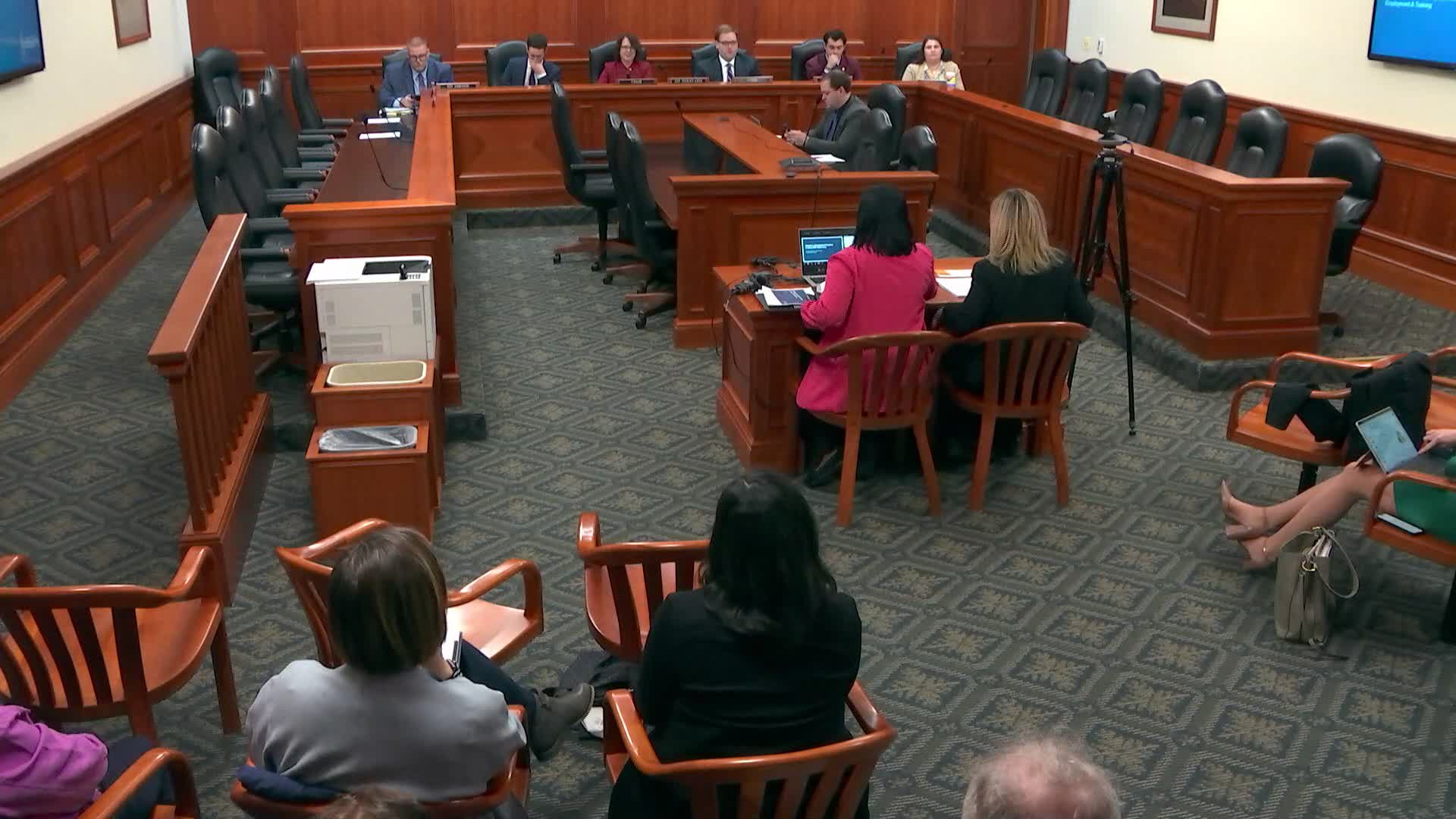
LANSING, Mich. — Department of Labor and Economic Opportunity officials told the House Appropriations Subcommittee on Labor and Economic Opportunity on March 19 that Michigan—aces persistent workforce gaps and outlined the agency—udget requests for fiscal year 2026 aimed at getting more residents into quality jobs.
"My name is Jayshawna Hicks, legislative director for the Department of Labor and Economic Opportunity, LEO as we call it. With me today again is Stephanie Beckhorn who's the deputy director of employment and training," said Jayshawna Hicks as she introduced the department's presentation. Hicks said Director Corbin had reviewed the governor's FY26 recommendations to the full committee the prior week.
Deputy Director Stephanie Beckhorn said workforce development in Michigan combines federal and state dollars and targets employers and job seekers, and she summarized several program-level requests the administration has included in the governor—udget.
Beckhorn said the workforce development budget for fiscal year 2025 was just over $510 million, with about 81% (roughly $413 million) from federal workforce-development programs that are subject to federal rules and reporting. By law the department deploys more than $100 million in Workforce Innovation and Opportunity Act (WIOA) Title I funds and awards roughly $50 million in adult-education funding to local providers across the state.
On state-funded requests for FY26, Beckhorn highlighted: - $7.5 million for the Barrier Removal Employment Success program (BREEZE), to help people obtain and retain employment by covering needs such as transportation, housing and childcare; Beckhorn said BREEZE serves working-poor households that do not qualify for federal programs. She cited analyses showing participants were 12 percentage points more likely to be employed one quarter after program exit and that first-quarter median wages for participants rose nearly $7,000 compared with pre-service wages. - $19 million for registered apprenticeships to expand apprenticeships for women, veterans, youth and people with disabilities; Beckhorn said one-year retention after apprenticeship completion is 93% and one-year median wages for completers exceed regional medians. - $5.7 million to continue Jobs for Michigan Graduates, a dropout-prevention and youth-employment program operating in about 126 sites and serving more than 5,000 youth annually; Beckhorn said the program reports a 90% graduation rate among participants. - A $54.8 million request for the Going Pro Talent Fund (the administration—urrent-year ask and consistent with the earlier statement that roughly 80% of the state general fund portion of workforce development is devoted to Going Pro); Beckhorn said Going Pro supports short-term, employer-driven training that results in industry-recognized credentials and prioritized awards for small employers, registered apprenticeships and hires such as veterans and people with disabilities.
Beckhorn provided program metrics and local examples. She said BREEZE funding helped 43 participants in a Southwest Michigan Works site restore driver's licenses through a "Road to Restoration" clinic; restoring a license enabled participants to access insurance and commute to work and training.
On Going Pro outcomes, Beckhorn said the talent fund has supported 38,000 participants in the past year, that trainees average a 7.2% wage increase six months after completion, and that Going Pro has historically supported hundreds of thousands of businesses and workers since it began. She said employers are reimbursed after documented completion and six-month wage reporting, not paid up-front.
Committee members pressed for implementation details. Representative Brad Robinson asked for an itemized list showing how appropriated workforce dollars are allocated across programs; Jayshawna Hicks and Beckhorn said staff would provide a more detailed breakdown to the member and work with committee staff to follow up. Beckhorn also said she would return at a later meeting to present on vocational rehabilitation programs.
The subcommittee approved the March 12 minutes without objection during the same session.
Why it matters: Michigan's labor force participation rate rose to 62% in January, Beckhorn said, its highest since June 2020, but she also said the state ranks 32nd nationally on that metric. The department framed the budget asks as targeted investments to remove barriers, expand apprenticeships and provide employer-driven training that the agency says increases employment and wages.
Provenance: the department presentation began with Jayshawna Hicks introducing Stephanie Beckhorn and ended with Beckhorn offering to take questions; transcript segments for both are attached below.