Get Full Government Meeting Transcripts, Videos, & Alerts Forever!
Get email alerts on the Energy Regulation topic
No spam. Unsubscribe anytime.
Public Service Commission details reliability work, grants and new siting unit
Summary
Michigan Public Service Commission Chair Dan Scripps described regulatory work to improve power reliability, implementation of 2023 energy laws, grant awards and the commission’s new renewable energy siting section, and outlined funding streams used to operate the agency.
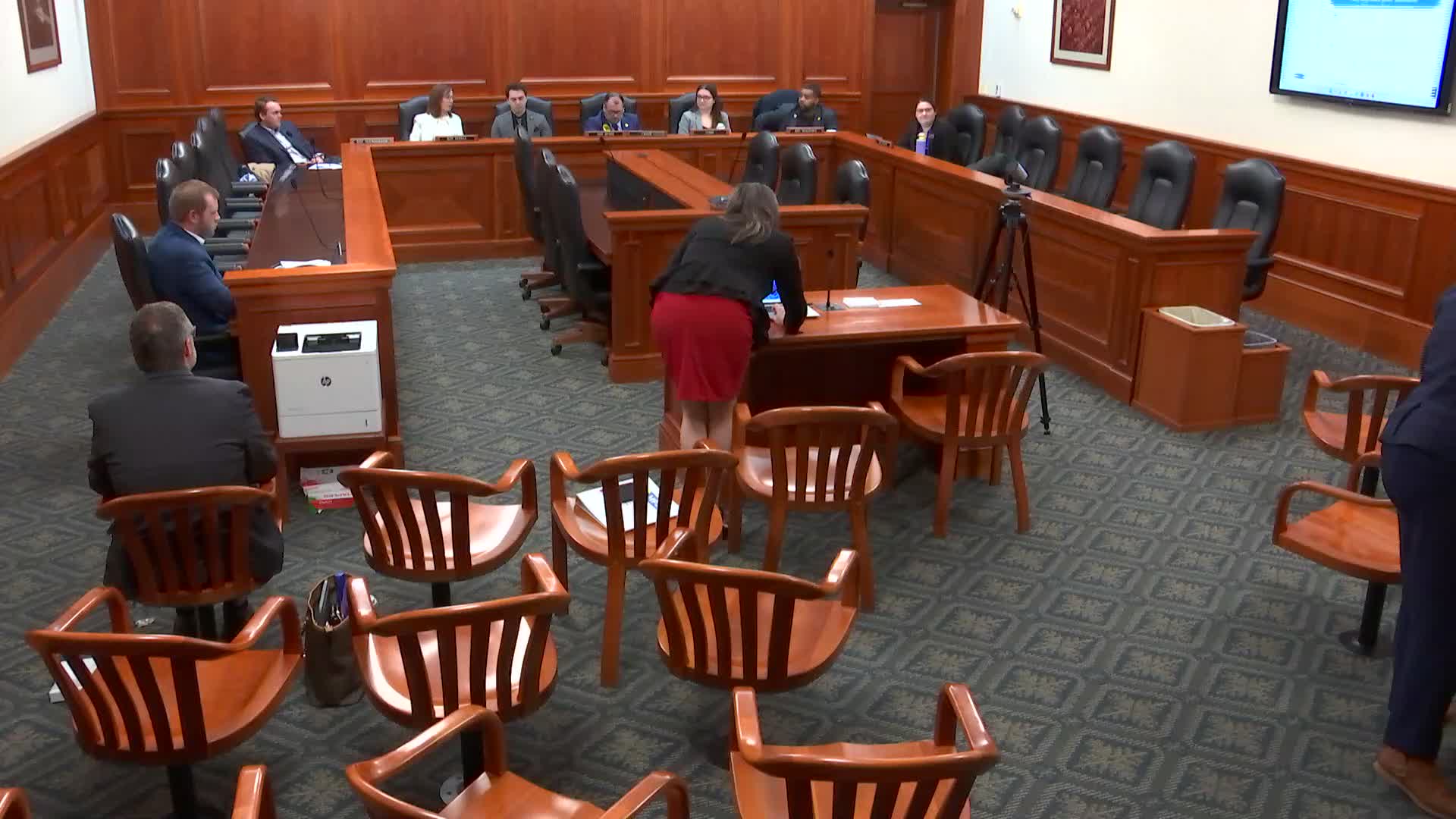
Michigan Public Service Commission Chair Dan Scripps told the House Appropriations Subcommittee that the commission’s top priorities are reliability, fair rates and implementation of recent energy laws, and he reviewed staffing, funding sources and recent grant awards.
Scripps said the commission’s mission is “to serve the public by ensuring safe, reliable, and accessible energy and telecommunication services at reasonable rates.” He told lawmakers the commission is a creature of statute, issues orders through contested‑case processes, and that staff provide independent technical and legal analyses in every proceeding.
On reliability, Scripps pointed to improvements in outage minutes in 2024: he said Consumers Energy customers experienced an average of 21 fewer outage minutes compared with 2023 and that Consumers restored power to 93% of customers within 24 hours in 2024, up from 87% in 2023. He said DTE reported a 70% improvement in time without power in 2024, in part because of grid improvements and milder weather.
Scripps described the commission’s funding mix: the Public Utilities Assessment (PUA), a restricted fund established under Public Act 299 of 1972 and assessed against regulated utilities, covers roughly 83% of current operating costs. Federal pipeline safety grants cover a portion of pipeline inspection costs under the federal PHMSA program; Scripps said the federal government authorizes up to 80% reimbursement but that actual appropriations have been lower, creating a budget shortfall the commission continues to pursue with federal partners.
He summarized recent grant activity and federal funding that affects the state: the commission awarded $20.8 million to 19 grantees under the Renewable Energy and Electrification Enhancement and Development (EIED) grants and continues to monitor $50 million allocated under earlier low‑carbon grant programs. He also noted a recent U.S. Department of Energy announcement of more than $14 billion in conditional federal loans related to gas and electric projects.
Scripps said the commission has created a renewable energy siting section following the 2023 siting law and has hired a section manager with additional staff planned; as of the hearing he said no siting cases had yet been filed with the commission because local ordinance processes and a required four‑month local review must generally occur first.
Lawmakers asked about rate impacts, residential time‑of‑use pricing, siting and public hearings. Scripps said residential rates are higher than average on a per‑unit basis but that overall residential customer bills are roughly average because Michigan customers use fewer kilowatt hours, and he highlighted Michigan’s high ranking on energy efficiency savings. On time‑of‑use and peak pricing, he said programs are meant to reflect wholesale costs and, based on early pilots, can lower overall system costs even for customers who cannot shift usage.
On grid preparedness, Scripps described an independent audit of distribution systems ordered by the commission and said the commission is categorizing audit recommendations into actions that can be implemented immediately, items to be addressed in rate cases, and long‑term distribution plan changes. He said tree trimming remains a major driver of outages and that the commission is treating distribution reliability as an “obsessive focus.”
Scripps closed with a summary of public‑facing work: the commission handles more than 11,000 customer inquiries a year, operates programs such as the Michigan Energy Assistance Program (MEEP) — which serves more than 50,000 households annually — and holds public hearings and technical sessions across the state. He said the commission will continue to hold public meetings beyond statutory minimums.
The subcommittee approved meeting minutes and excused absent members during the session (see separate item).