Get Full Government Meeting Transcripts, Videos, & Alerts Forever!
Get email alerts on the Zoning And Land Use topic
No spam. Unsubscribe anytime.
Council defers Highway 701 rezoning for planned workforce housing; developer cites tax‑credit deadline
Summary
City Council deferred a request to rezone a Highway 701 parcel to high‑density residential (R‑3) so councilmembers and the applicant can workshop outstanding questions. The developer said rezoning is needed to meet a May 19 tax‑credit filing deadline and that proposed rents would be limited by tax‑credit rules, not directly subsidized.
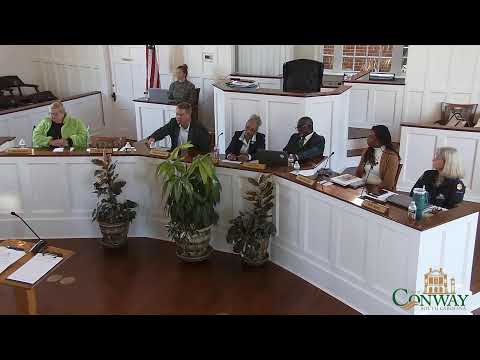
Conway City Council voted to defer consideration of a rezoning request for property along Highway 701 that the applicant said would be used for workforce housing.
Planning staff presented the request to rezone about 7.8 acres on North Main Street/Highway 701 from Highway Commercial to High‑Density Residential (R‑3). Planning Commission recommended disapproval after public opposition citing traffic, drainage and crime concerns. Council members raised similar questions at the meeting about flood risk, consistency with the comprehensive plan and infrastructure capacity.
The developer told the council they are pursuing state tax credits and “we would need rezoning in place by May 19 to be able to submit a final application for tax credits.” The developer also said the project would accept housing vouchers but “we don't subsidize the rents. We can only charge a max rent based on the tax credits that we give or get to support the project.” When asked about incomes served, the developer said the highest income served would be “70% of the area median income; so for a family of four, that's a little over $55,000.”
Council members said they support more workforce and attainable housing but wanted more information before approving a zoning change along a major corridor. Council member White expressed concern about placing new residential units close to known flood‑prone areas. Council member Goldfinch said the item would be better handled in a workshop to “hash out” outstanding questions. Goldfinch moved to defer the rezoning to a workshop; the motion passed by a 4‑1 vote.
The developer told the council they were open to a workshop and to scheduling first and second readings over the next two months if that addressed the tax‑credit timeline. Planning staff noted the property's current Highway Commercial designation is consistent with the city's future land‑use map and that changing the corridor zoning would be an exception to that map.
The council’s deferral preserves the Planning Commission record and gives staff time to provide additional detail on flood exposure, traffic impacts, infrastructure needs and the tax‑credit timetable.
Looking ahead, the applicant will meet with staff and council in a workshop setting; Planning Commission and council must still consider any formal rezoning ordinance in subsequent meetings.