Get Full Government Meeting Transcripts, Videos, & Alerts Forever!
Get email alerts on the Cfpb Structure topic
No spam. Unsubscribe anytime.
House subcommittee debates converting CFPB to bipartisan commission and subjecting it to annual appropriations
Summary
Republican lawmakers and industry witnesses urged changing the Consumer Financial Protection Bureau from a single director to a bipartisan commission and moving its funding to the congressional appropriations process; Democratic members and former CFPB officials warned such reforms would weaken consumer enforcement and protections.
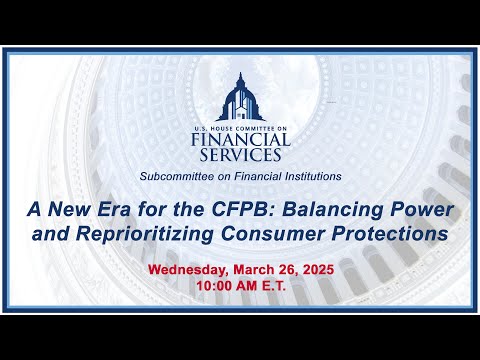
The Financial Institutions Subcommittee of the House Financial Services Committee heard competing views Tuesday on structural reforms to the Consumer Financial Protection Bureau, focusing on proposals to convert the bureau’s single-director leadership into a multi-member bipartisan commission and to subject the agency to annual congressional appropriations.
The debate framed who should set CFPB priorities and how the agency should be held accountable. “I recently reintroduced the TABS Act, which would require the CFPB to go through the traditional congressional appropriations process,” Representative Andy Barr, chair of the subcommittee, said in his opening remarks, arguing the change would “restore the power of the purse to Congress.”
Supporters of reform included witnesses from the financial sector. Brian Schneider, a former CFPB associate director now in private practice, told the panel the bureau’s current structure “in its current form, likely never be able to fulfill its mission” because it can subvert constitutional principles. Schneider said putting the bureau under annual appropriations and curbing expansive enforcement would improve stability and coordination with other regulators.
David Pomeran, general counsel at the Consumer Bankers Association, told lawmakers the CFPB’s funding and leadership structure has produced “instability and uncertainty” and backed a bipartisan commission and appropriations as ways to reduce “radical pendulum shifts between administrations.” Anna Fonseca, president and CEO of Logix Federal Credit Union, urged a commission and appropriations as well, citing compliance costs her institution is preparing for as it approaches the CFPB’s $10 billion oversight threshold.
Democratic members and a former senior CFPB official sharply disputed that the bureau should be weakened. Seth Frotman, a former CFPB general counsel, warned that recent administrative actions had “taken Wall Street’s cops off the beat” and that dismantling the bureau’s independence would harm consumers. Representative Maxwell Foster, the subcommittee’s ranking member, said the recent moves to curtail the bureau’s work amounted to “illegal attacks” and that protecting service members, older Americans and others requires an active CFPB.
Witnesses and members also debated intermediate reforms: some urged creating clearer statutory limits on the bureau’s use of broad authorities while keeping its enforcement powers intact, while others argued statutory reforms and appropriations were necessary to prevent sudden regulatory swings.
Members asked about precedents. Rebecca Keane, a former FTC assistant director, said she saw no evidence that a commission structure or appropriations process prevents an agency from protecting consumers, citing the Federal Trade Commission as an example of durable oversight.
The hearing produced no formal votes. Members on both sides signaled continued interest in legislative proposals mentioned during testimony, including the TABS Act (funding under appropriations) and the Consumer Financial Protection Commission Act (replacing a single director with a multi-member commission). Subcommittee staff will accept additional materials for the record and members may press for legislative action in coming weeks.
The committee said members would have five legislative days to submit extraneous materials for the hearing record and witnesses were asked to provide written answers to follow-up questions.