Get Full Government Meeting Transcripts, Videos, & Alerts Forever!
Get email alerts on the Parking Regulation topic
No spam. Unsubscribe anytime.
Committee passes ordinance banning parking of unregistered vehicles on city rights-of-way
Summary
The Committee of the Whole voted unanimously to add Section 404.15 to Chapter 404, making parking an unregistered vehicle in the city right-of-way a civil parking violation enforceable by daily tickets.
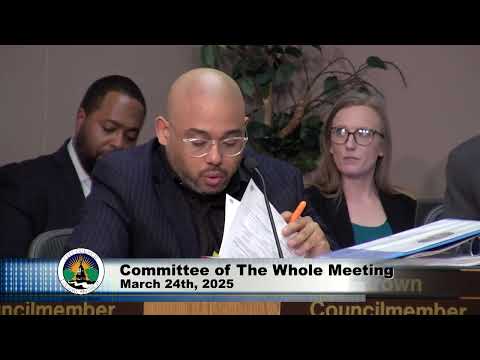
The Committee of the Whole of Lansing City on March 24 voted unanimously to amend Chapter 404 by adding Section 404.15, making it a civil parking violation to park an unregistered vehicle in the city right-of-way.
City Attorney described the measure as a straightforward expansion of parking enforcement, saying, "It's a pretty simple ordinance. It simply states that, parking in the city right of way, a vehicle that does not have valid registration, that uses the term unregistered, is a civil parking violation and can be ticketed as such." The attorney said the term "unregistered" is used to align with the Motor Vehicle Code of Michigan and would capture expired plates and vehicles with no plates.
The ordinance is separate from the city's abandoned-vehicle process, which uses green stickers for vehicles left for extended periods; the attorney and council members said the new citation could be issued daily to address long-term roadside congestion. Council member Garza asked whether expired license plates are included; the attorney replied that the ordinance's use of the word "unregistered" "captures all those provisions as it, applies in the motor vehicle code of Michigan. So, yes, an expired registration, a vehicle with no plates, all these things would be unregistered in the terms of our ordinance." Vice President Carter made the motion to adopt the ordinance; after no further discussion the committee voted "aye" and the motion passed unanimously.
The committee did not specify an ordinance number or an effective date during the discussion. The item was passed at the Committee of the Whole; any additional procedural steps for full council adoption or effective date were not specified in the meeting record.