Get Full Government Meeting Transcripts, Videos, & Alerts Forever!
Get email alerts on the Immigration Enforcement topic
No spam. Unsubscribe anytime.
Bay City debate intensifies over resolution limiting local role in federal immigration enforcement
Summary
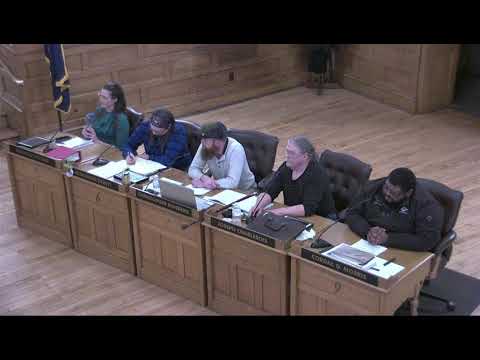
Bay City commissioners on March 17 continued a heated debate over a resolution authored by Commissioner Christopher Runberg that would affirm “Bay City's commitment to local public safety priorities and jurisdictional integrity” and discourage use of local personnel and resources for federal immigration enforcement.
Bay City commissioners on March 17 continued a heated debate over a resolution authored by Commissioner Christopher Runberg that would affirm “Bay City's commitment to local public safety priorities and jurisdictional integrity” and discourage use of local personnel and resources for federal immigration enforcement.
The resolution’s sponsor, Commissioner Christopher Runberg, moved that the commission vote on the measure, and Commissioner Tenney seconded the motion; discussion followed. Commissioner Hilliker later moved — with Commissioner Prince seconding — to refer the resolution back to staff so the city could assemble a full list of federal and state funding streams and a contingency plan in case of funding repercussions. The roll-call on the referral produced a tie and the referral failed, keeping the resolution on the table for immediate consideration.
Why it matters: The resolution has drawn large, often emotional public turnout and extensive written correspondence to commissioners. Supporters argued the measure would protect community trust in local policing and avoid diverting limited city resources to federal immigration work. Opponents warned a symbolic vote could trigger loss of federal or state grant funding that the city relies on for programs ranging from community development to public safety and infrastructure.
Public comment and legal concerns dominated the evening. Residents in favor of the resolution described it as a pragmatic firewall so local officers can focus on priority public-safety duties and to avoid chilling cooperation by witnesses and victims. Kayla Harper, who identified herself as a Bay City resident, cited the Home Rule City Act and said, “This resolution doesn't break any laws. It simply sets local priorities,” and argued it would not stop cooperation with federal law enforcement when properly requested.
Residents opposed to the resolution emphasized potential funding losses. Denise Davidson cited a list of federal and state programs she said could be at risk, including “approximately $1,400,000” in HUD community development block grants and roughly “$14,200,000” in state funding streams for general revenue sharing, public safety, parks and other programs; she asked commissioners to reject the measure to avoid budget shortfalls. Commissioner Prince repeated concerns about jeopardizing Community Development Block Grant awards and other grant streams and said he was not willing to risk the funds for what he called a symbolic gesture.
Public-Safety Director Director Grama told the commission the department does not routinely ask residents about immigration status and that it has not been deputized to enforce immigration. He said the department has limited experience participating in federal task forces (such as a six-person Safe Streets task force focused on drugs and violent crime) and that deputization to enforce immigration was not something the department has sought or expects to carry out.
Commission discussion focused on two competing obligations: protecting public trust so residents will report crimes and cooperate with police, and preserving the city’s access to federal and state grants and interlocal cooperative programs. Commissioner Hilliker urged staff analysis of potential funding impacts and a contingency plan; Commissioner Coakley and others expressed frustration at addressing a national issue in the local forum but said they were weighing the legal and fiscal consequences carefully.
Votes at this meeting: A motion to refer the resolution back to staff failed on a 4–4 roll call (4 yes, 4 no). The roll-call recorded the following votes on the referral motion: Hilliker — yes; DeWitt — no; Charlevoix — no; Morris — yes; Prince — yes; Coakley — yes; Bernie Overshaw — no; Tenney — no. The outcome left the resolution ready for immediate further consideration; the transcript ends during additional commissioner remarks and does not record a final vote on the resolution itself.
What comes next: Commissioners debated whether to proceed to a final vote or to gather additional legal and fiscal analysis. Several speakers urged the commission to act promptly to declare a local policy position; others asked the body to secure explicit estimates of grant exposure before taking a formal stand. The commission did not record a final disposition of the resolution in the meeting transcript provided.