Get Full Government Meeting Transcripts, Videos, & Alerts Forever!
Get email alerts on the Land Use topic
No spam. Unsubscribe anytime.
Council pauses controversial auto‑services zoning rewrite; removes vague “Type A/B/C street” language for legal clarity
Summary
Pontiac’s council removed vague street-classification language and postponed action on a city-initiated zoning rewrite governing gas stations, mechanics and car washes, instructing staff to return with clarified text at the April 1 meeting.
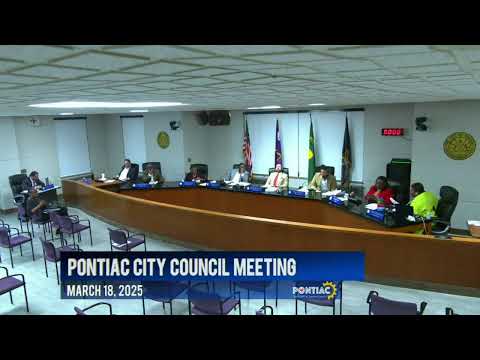
The Pontiac City Council spent extended time Tuesday debating a city-initiated zoning text amendment aimed at restricting where new gas stations, auto mechanics and car washes may locate.
Background and purpose: Staff said the change responds to resident complaints that auto-related uses, especially repair shops and tire businesses, have proliferated on major corridors and in some cases created noise, outdoor storage and blight that spill into residential neighborhoods. The city instituted a nine‑month moratorium on new automobile-service applications last year to allow time to draft new rules.
What staff proposed: Planning staff recommended splitting the single “automobile services” category into three regulated uses — automobile filling stations (gas), automobile service stations (mechanics/tire shops) and automobile wash establishments — and tightening buffer, screening and operational standards. Proposed rules required greater landscaping and masonry walls where these uses abut residential property, limited overnight outdoor vehicle storage, restricted overnight operating hours for service stations, and required car washes to confine wash activity inside a building and locate vacuums away from residential lots. Staff also initially proposed that many such uses be limited to the city’s busiest “Type A” streets.
Council amendment and legal concern: During council debate attorneys and planners warned the Type A/B/C street definitions in the city code were imprecise — they used terms such as “typically” and “generally” — creating a legal vulnerability if the code attempted to rely on them. Council adopted a technical amendment to strike cross-references to Type A/B/C street wording from the zoning text and directed planning staff to return with clarified, defensible street classifications in a follow-up ordinance and public hearing.
Postponement and next steps: Council chose to postpone final adoption to the April 1 meeting to allow staff time to prepare a clean ordinance version and to clarify how the draft rules will work in practice. A majority supported removing vague street-type wording so the ordinance will be less susceptible to legal challenge; the motion removing the Type A language passed and council postponed the full ordinance vote 6–0 to April 1, asking staff to return with tighter language and answers to neighbor concerns. The moratorium expires April 9, so postponing gives staff and council a short window to finalize legally defensible text before the moratorium lapses.
Public reaction: Planning had notified adjacent properties and held a public hearing; commenters at council expressed both support and concern. Some neighborhood residents supported stricter rules; others urged the city to avoid harming existing, long-established small auto businesses and to prioritize enforcement over sweeping bans.
Why it matters: The rewrite could change where auto-service businesses may open in Pontiac. If passed, it will give planning staff and the commission stronger tools to require buffers, limit outdoor vehicle storage and address noise and nuisance impacts while the administration produces a clarified street-classification methodology to return to council for review.