Get Full Government Meeting Transcripts, Videos, & Alerts Forever!
Get email alerts on the Housing Recovery Residence topic
No spam. Unsubscribe anytime.
Holland Board of Appeals approves My House Ministry recovery residence for nine residents at 256 W. Eighteenth St.
Summary
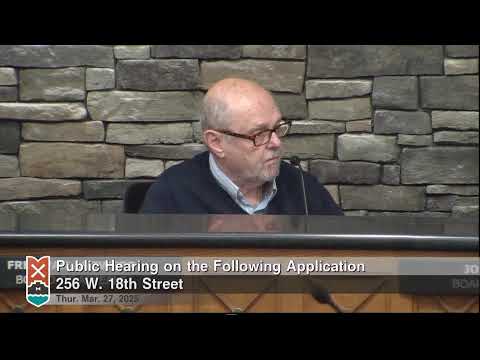
The Holland Board of Appeals approved a special-exception housing accommodation allowing nine unrelated people with disabilities to live together at 256 West Eighteenth Street, where the zoning limit is six.
The Holland Board of Appeals approved a special-exception housing accommodation allowing nine unrelated people with disabilities to live together at 256 West Eighteenth Street, where the zoning limit is six, the board decided at its meeting. The application was filed by Kimberly Van Clompenberg on behalf of My House Ministry.
The board majority found the requested accommodation is protected under fair housing laws, is necessary to make housing available to people with substance-use disabilities, does not impose an undue financial or administrative burden on the city and does not require a fundamental change to the city’s zoning code. Board member Fred moved to approve; the motion passed with six yes votes and none opposed. The board noted the approval carried conditions, including an explicit reference that residents must meet the state legal definition of disability for the accommodation to apply.
Applicant Kimberly Van Clompenberg identified herself as the operator of My House Ministry and said the organization operates three homes in Holland and is seeking the occupancy increase to serve more women in recovery. Van Clompenberg said the targeted house has hosted 103 residents since 2013 and that the full program has served about 240 people. She said the house moved to an addiction-only model in October and expects more referrals after completing MAR certification, which she estimated to be about 60 days away.
Van Clompenberg described program rules and supports: a weekly program fee of $175 per resident, medication compliance requirements for residents with prescribed medications, a program manager and sobriety coach, weekly meetings and life-skills sessions, and house rules restricting visitors. She said the ministry pays the mortgage for the property and that parking in the driveway is available for three vehicles; residents who keep vehicles must maintain current registration, insurance and a valid driver’s license. Van Clompenberg estimated an operational average occupancy of about seven once nine beds are approved and said she would not expand beyond the program’s staffing capacity.
Board members asked for details on finances, neighborhood relations, certifications and how the house would accommodate a resident with a child. Van Clompenberg said the house is intended for people with disabilities (substance-use disorder), that she had not received complaints from neighbors to her knowledge and that the ministry could move a parent with a newborn to its separate ‘‘mom’s house’’ if needed. Patricia (clerk) reported the board had received no written correspondence on the application; no public speakers came forward during the public hearing.
In the board’s findings of fact, the motion statement noted: the occupants meet the definition of ‘‘individuals with a disability’’ for purposes of fair housing protections; the accommodation is necessary to make housing available given a lack of comparable alternatives in the City of Holland; the program’s funding model and record do not create an undue burden on city services; and the request does not fundamentally alter the city zoning code. During deliberations a board member asked that the approved condition specifically reference the state’s legal definition of disability; the board included that clarification as part of the approval.
The motion to approve the special exception passed (roll call recorded: Van Antwerp — yes; Bedard — yes; Davis — yes; Sorek — yes; Lockery — yes; Fusett — yes). The board recorded the approval as a conditional special exception permitting up to nine unrelated persons with disabilities to live together at 256 W. Eighteenth Street.
The board also approved routine meeting minutes and adjourned. The decision is effective the day of the board’s action; applicants retain the right to appeal to the circuit court under state law.