Get Full Government Meeting Transcripts, Videos, & Alerts Forever!
Get email alerts on the Open Enrollment Special Education topic
No spam. Unsubscribe anytime.
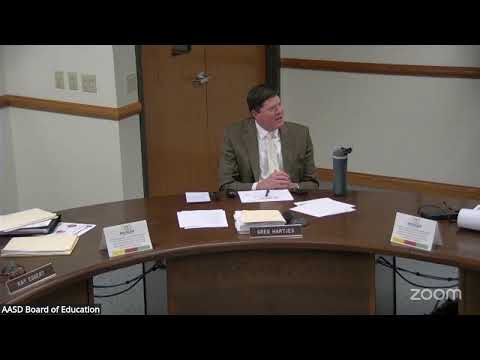
Appleton board closes special-education open-enrollment slots, approves consent agenda and policy updates
Summary
The Appleton Area School District Board of Education approved the district’s 2025–26 open-enrollment designations, recommending all neighborhood elementary, middle and high schools remain open to general open enrollment while closing most special-education open-enrollment slots except limited physical-therapy and special-physical-education openings.
The Appleton Area School District Board of Education approved the district’s open-enrollment designations for the 2025–26 application period and took several administrative votes on consent agenda and policy items.
Superintendent staff reported that, for general open enrollment, all elementary, middle and high schools will be open for the 2025–26 application period. For special education, the district recommended closing most program slots to open-enrollment applicants because projected needs exceed the open-enrollment ceiling at multiple sites. Staff recommended exceptions: two physical-therapy slots and 28 slots for special physical education remained available for incoming open-enrollment applicants.
Amy Steiner, executive director of special education, explained the district’s process. The district uses a weighted-caseload formula to convert IEP service levels into site workload capacity rather than a simple head count. That weighted approach, staff said, better reflects differences in individual student needs and drives whether a school can accept additional open-enrollment special-education students. If multiple applicants apply for the same limited slots, staff said placement is determined by lottery.
Board members raised concerns about the district’s growing special-education workload, staffing levels and how the district will respond to move-ins that can increase demand between now and the start of school. Administration said it will monitor in-bound moves and report back at the August enrollment update on staffing needs. Staff also emphasized that current open-enrolled students with IEPs already attending district schools may remain in district programs.
The board approved the open-enrollment recommendation on a roll-call vote of 7-0.
Other votes that evening included approval of the superintendent’s consent agenda (items 8a–8g), which contained a materials adoption for a Spanish course and several personnel items, the adoption of the new Board Member Electronic Communications policy (Policy 166), and acceptance of monitoring report OE-5 as submitted. Those four actions passed by roll-call votes; roll-call votes recorded board members voting aye across all items.
Key details recorded at the meeting: - Special-education exceptions: two physical-therapy slots available; 28 special physical-education slots available. (Staff presented these counts during the program-capacity discussion.) - Placement rule: district applies a weighted-caseload formula to evaluate whether individual schools can accept incoming special-education students; capacity allocations are set site-by-site. - Lottery: staff said limited program slots are allocated by lottery if demand exceeds available slots.
Roll-call votes on the superintendent’s consent agenda, Policy 166 adoption and OE-5 acceptance each showed unanimous aye votes by the board members present (Kaye Edgert, Peng Tao, Nick Ross, Jason Kolpak, Christine Sauter, Edward Ruffalo and James Bacon). The open-enrollment motion also passed 7-0.
Administration said the district will publish open-enrollment designations and special-education slot details on its website and provide additional information to families who inquire about transfers or school-of-choice options.
The board’s actions on open enrollment and policy changes are procedural and do not immediately change individual student placements; staff will process school-of-choice and open-enrollment requests according to the district’s established timelines and capacity checks.