Get Full Government Meeting Transcripts, Videos, & Alerts Forever!
Get email alerts on the Attendance Boundaries topic
No spam. Unsubscribe anytime.
Appleton board adopts new Edison Elementary boundaries to include Columbus area and parts of Franklin and Dunlap
Summary
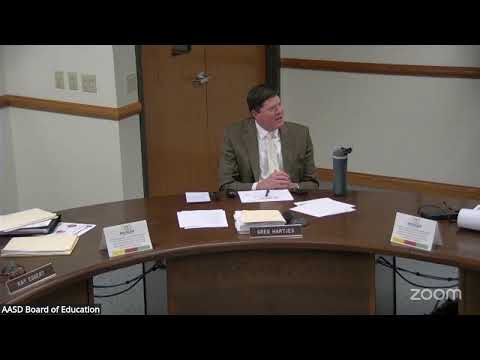
During a meeting of the Appleton Area School District Board of Education, board members voted unanimously to adopt new attendance boundaries for Edison Elementary that add the entire Columbus attendance area and portions of the Franklin and Dunlap areas.
During a meeting of the Appleton Area School District Board of Education, board members voted unanimously to adopt new attendance boundaries for Edison Elementary that add the entire Columbus attendance area and portions of the Franklin and Dunlap areas.
The administration recommended Option 3, which combines Edison’s existing boundary with the full Columbus attendance area, the portion of Franklin south of Wisconsin Avenue, and the portion of Dunlap east of Richmond Street. Board member Edward Ruffalo moved the motion; a second was made and the motion passed on a roll-call vote of 7-0.
Administration said the option reduces the number of students required to cross Richmond Street or Wisconsin Avenue to get to school, increases walkability in the historic central neighborhood and simplifies the Edison boundary to Wisconsin Avenue on the north and Richmond Street on the west. Presenting the proposal, district staff said Edison has capacity to absorb the projected students and that the change would leave Edison as one of the district’s smaller elementary attendance areas by geographic area.
Public comments at the meeting informed the board’s discussion. Oliver Zorno, who identified himself as a neighbor, taxpayer and father of two Edison-area students, urged the board to prioritize walkability and neighborhood integrity when changing attendance boundaries. Christie Codner, a community member who attended a district listening session, asked for clearer transition plans for students reassigned because of boundary changes.
Assistant superintendent Dr. Nanbano and district staff described outreach: the district mailed a letter to affected families, provided an online survey, held a public listening session and worked with the Appleton Historic Central neighborhood organization to distribute printed notices. The district reported five completed surveys; respondents outside the target attendance areas expressed majority support for the Franklin and Dunlap additions.
Board members sought and received clarifications about school-of-choice options and special-education impacts. The district noted that existing open-enrollment and school-of-choice processes remain available: families may apply to attend another district school but applications are subject to capacity and, for students with IEPs, a determination whether the requested site can meet the student’s services. Amy Steiner, executive director of special education, explained that the district uses a weighted-caseload formula (not simple head count) to determine whether a site can absorb additional special-education students and that some specialized programs are offered only at particular schools.
The board and staff also discussed transportation and safety. The district said no regular education busing is provided for these central-area elementary assignments and noted that middle- and high-school students typically use Valley Transit tripper routes. Staff said they will work with the City of Appleton and Safe Routes to School on crossing guards and other safety measures for students who would walk or bike to Edison under the new boundary.
The motion passed by roll call with the following votes: Kaye Edgert, Peng Tao, Nick Ross, Jason Kolpak, Christine Sauter, Edward Ruffalo and James Bacon — all voting aye. The board set the next meeting for Monday, Feb. 10 at 6 p.m.
Implementation notes provided by staff: current Columbus students who are already enrolled may remain in their present school through fifth grade; families may apply for school of choice; the district will evaluate school-assignment and special-education staffing needs as the student population is finalized.
The board adjourned after the vote.