Get Full Government Meeting Transcripts, Videos, & Alerts Forever!
Get email alerts on the Curriculum And Textbooks topic
No spam. Unsubscribe anytime.
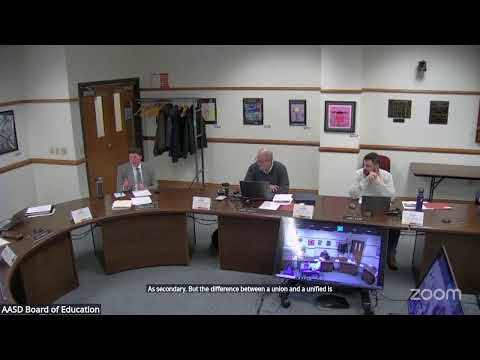
Board reviews proposed middle‑school geography textbooks to support sixth‑grade shift
Summary
District curriculum staff recommended adopting split Cengage geography texts for sixth and seventh grades to address gaps in prior knowledge after sixth grade moved to middle school; purchase would be three‑year digital access with classroom sets paid from referendum funds (source to be confirmed).
The Appleton Area School District heard a presentation from curriculum staff on proposed geography textbooks for sixth- and seventh-grade social studies, a change prompted by moving sixth grade into the middle schools.
Kelly Leopold, the district curriculum presenter, told the board that teachers and administrators evaluated options and recommended Cengage’s split edition of what had previously been a single survey text. “There is a lot of differentiation and accessibility for our special ed students and our EL, our English learning students,” Leopold said, emphasizing digital resources and National Geographic multimedia included with the text.
Leopold said teachers had been teaching without a single textbook for more than 10 years and that classroom sets and supplemental materials purchased earlier provided some consistency. She added the district would purchase a three‑year digital access package, teacher resources and professional development for teachers and administrators.
Why this matters: district staff said the change is intended to activate prior knowledge and give students the background needed for high‑school coursework. Leopold said the new materials support an inquiry‑based arc and align to Wisconsin social studies state standards, with document‑based questions, formative and summative assessments, and embedded supports such as text‑to‑speech and modified texts.
Board members pressed for implementation details. Board member Jason Kolpak asked about geographic sequencing: “Europe, in fact, is not in the Western Hemisphere. … How are we going to reconcile those?” Leopold replied that the district would “keep our curriculum status quo” with Europe taught in the Eastern Hemisphere sequence and that the company often allows access to both split volumes so teachers could draw the appropriate material.
Leopold and staff noted two public comments were received during the 30‑day public review and that the textbook recommendation would return at a future meeting for board approval. Questions remained about funding: staff said they had been “working with Holly, looking at referendum funds” to pay for the materials but that the precise referendum source (operational vs. capital) would be confirmed.
Next steps: curriculum staff expect to return with a formal recommendation and a fiscal note that clarifies the source of referendum dollars and exact purchase costs. The board did not vote on the textbook purchase at this meeting.