Get Full Government Meeting Transcripts, Videos, & Alerts Forever!
Get email alerts on the Staffing And Allocations topic
No spam. Unsubscribe anytime.
Madison school community presses board over proposed teacher, special-education and support-staff cuts; asks for clearer allocations
Summary
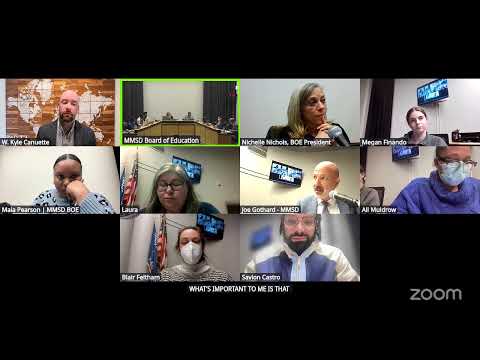
Dozens of parents, teachers and district staff told the Madison Metropolitan School District Board of Education on March 17 that proposed cuts to teaching and support positions will push classrooms past safe and developmentally appropriate sizes and weaken special‑education services.
Dozens of parents, teachers and district staff told the Madison Metropolitan School District Board of Education on March 17 that proposed cuts to teaching and support positions will push classrooms past safe and developmentally appropriate sizes and weaken special-education services.
Speakers at the board’s public-input session pressed the board to change how allocations are set and to give schools “slack” so incoming enrollment growth does not immediately trigger overfull classes. They delivered specific examples from East Side elementary schools — Lapham, Marquette, O’Keeffe and East — that are slated for reductions.
Rudy Moore, a Lapham parent, asked the board to “direct the staff to not allow allocations that are maxed out this early in the planning for next year,” saying his daughter’s cohort of 54 students would be split into two second‑grade classes of 27 if a teacher position is removed. "Ninety percent of the max class size would make a reasonable number for this early in the planning for next year," he said. Moore and other parents said the cohort experienced pandemic-related disruptions and will need smaller classes to regain lost instructional and social development time.
Multiple speakers said Lapham faces additional cuts to special‑education staff. Catherine Howley, a Lapham parent and PTG board member, told the board that the proposed reductions would create “two classrooms of 27 second graders each” and remove two special-education assistants who help fulfill students’ IEPs. She said building conditions — including persistent overheating in the 1940s-era facility — would compound the impact.
Calvin Fisher, another East Side parent, warned the board that letting experienced teachers go now will make it harder to rehire them when enrollments rise. “Our teachers are the lifeblood of our education system, and we cannot afford to lose them,” Fisher said.
Teachers and building staff testified that the district’s lack of transparent allocation calculations creates anxiety and distrust. Leland Pan, a school social worker and MTI board member, said the “lack of transparency in the system … creates an excessive amount of tension between staff and district administrators” and urged the board to publish building-level enrollment projections and the formulas used to convert projections into staffing allocations.
Several faculty members raised secondary concerns beyond class size: West High teachers who oversee the district’s Spanish Dual Language Immersion (DLI) program described increasing enrollments and uneven department budgeting. Rebecca Hill, an orchestra and AP music‑theory teacher at East, described sudden allocation cuts to her department and said the process undermined teachers’ trust.
Staff representatives and union leaders asked the board to prioritize positions that work directly with students and to seek savings in central-office costs rather than cutting classroom staff. Andrea Mizzarelli, an eighth‑grade math teacher at Wright Middle School, noted the district spent over $1,000,000 on HR consultants in recent years and suggested alternative savings and preventive investments such as school counselors and preventive wellness services for staff.
Superintendent James Gothard acknowledged the public concerns, described the district’s recent staffing history and said the district is tracking citywide housing growth that will affect enrollment. He told the board that “last year you increased elementary sections by 47” as part of efforts to reduce class size, and that final allocations reflect multiple dynamic factors at the elementary and secondary levels. Gothard said the district will continue reviewing projections and work with the board on greater transparency about enrollment calculations and how building allocations are set.
Board members and staff did not take a board-level vote on allocations at the March 17 meeting. Several trustees said they want clearer, level-by-level explanations of how enrollment projections and staffing formulas are applied and suggested starting with elementary allocations, then addressing middle and high school processes.
Speakers also brought a personnel concern from La Follette High School: a building head’s removal and the custodial staff’s lack of clarity about the change. Custodians and the affected employee, who spoke during public comment, said the removal has continued for weeks with minimal communication. The board’s procedures limit detailed public discussion of personnel matters at this forum, and the board chair reminded speakers of that constraint while accepting testimony.
The meeting transcript records broad community resistance to staffing cuts across multiple schools and programs, repeated requests for transparency in enrollment and allocation formulas, and calls from parents and educators to preserve special‑education supports and avoid raising class sizes at developmentally sensitive grade levels. The board and superintendent said they will continue work in coming weeks to provide clearer documentation on projections and allocation methodology.
Ending: The board’s next operations work group is scheduled for April 21, when the superintendent indicated staff will present a first draft of the FY26 budget and updates on insurance negotiations. Board members and several public speakers said they expect allocation‑methodology details and building‑level projections to be central to that work.