Get Full Government Meeting Transcripts, Videos, & Alerts Forever!
Get email alerts on the Charter Vacancies topic
No spam. Unsubscribe anytime.
Charter review panel tables amendment that would offer vacancies to runners‑up before public advertising
Summary
The Clallam County Charter Review Commission debated a proposed amendment from Commissioner Richards to offer vacancy appointments first to the sixth- and seventh-place finishers in elections, then advertise if they decline. After debate about fairness and legal precedent the commission voted to lay the proposal on the table indefinitely.
The Clallam County Charter Review Commission on March 10 considered a proposed charter amendment from Commissioner Mark Richards that would change how vacancies are filled after an election. Richards’ proposal would require that, when a vacancy occurs, the county first offer the seat to the sixth- or seventh-place finisher in that election; only if those candidates decline would the county advertise the opening to the public.
The proposal’s author, Commissioner Mark Richards, told the commission he drafted the amendment in response to public comments and prior meetings where residents and commissioners had expressed concern that advertising an opening and then appointing someone directly without considering the next-place finishers “feels unfair.” Richards said the amendment is “a two‑step process…first offer a vacant position to the sixth or the seventh people. And if they decline that, then you advertise.”
Commissioners debated whether codifying past practice was appropriate. Commissioner John Pickett and others argued that binding future appointing authorities to offer a vacancy to a runner‑up could be problematic. "Tying our hands by putting it in the charter that it has to be the next couple of people could have dangerous consequences," Pickett said, adding there may be good reasons not to appoint a runner‑up. Commissioner Hodgson and other members expressed concerns that the amendment could be “exclusionary” and said it might tie the hands of future commissions.
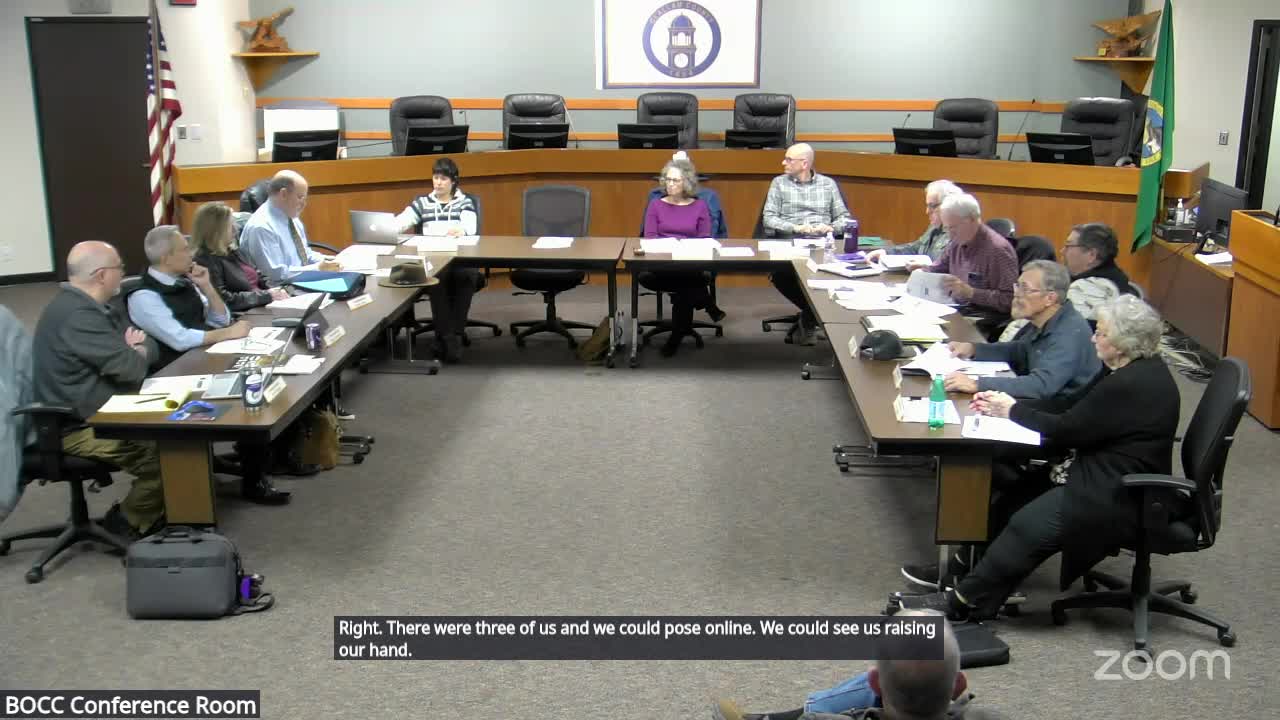
Commissioner Stofford moved to advance Richards’ amendment (to approve a final draft and schedule the proposal for public notice and the next formal vote). That motion received a second and prompted extended discussion about whether the change should be placed on the ballot and the timing of subsequent votes. During discussion, Commissioner Hodgson moved to lay the proposal on the table indefinitely. Bennett seconded the motion to table. The commission accepted the motion; the chair called for a voice vote. The motion to lay the amendment on the table indefinitely passed, with one recorded opposition from Commissioner John Pickett. The chair declared: “So that motion is, passes.”
Commissioners who spoke in favor of postponing or opposing the amendment said they wanted more legal review and public clarity before moving the amendment toward voters. Commissioners who supported moving it forward said the change would respond to public concerns voiced during candidate forums and town halls.
The commission did not adopt substantive language changes to the charter at this meeting; the tabling vote moved further consideration to a later date if the commission chooses to bring it back from the table.
Votes at a glance
- Motion to approve Commissioner Richards’ proposed amendment and move it to stage 3 (final draft for public notice): moved by Commissioner Stofford; second not specified; discussion held; not adopted at this meeting. - Motion to lay the amendment on the table indefinitely: moved by Commissioner Hodgson; seconded by Mister Bennett; outcome: passed (motion carried). Commissioner John Pickett was recorded as opposed.
Why this matters
The change would alter how interim vacancies are filled after county elections, and if placed on a ballot and approved, it would change appointment procedure that commissioners have followed informally in the past. Commissioners said they were concerned both with preserving public trust in appointment processes and with not inadvertently restricting future boards’ flexibility or running afoul of state law.
Next steps
Because the motion to table passed, the proposal will not move forward at this meeting. Commissioners and staff noted that tabling means the commission would have to vote to bring the matter back from the table at a later meeting if they wish to resume consideration. The transcript shows commissioners suggested further legal research and public outreach before any final action.