Get Full Government Meeting Transcripts, Videos, & Alerts Forever!
Get email alerts on the Rv Regulation topic
No spam. Unsubscribe anytime.
Clallam County planning commission debates limits on RVs, hookups and new RV parks
Summary
At a planning commission work session, staff and commissioners debated draft code changes to limit RV proliferation on private lots, require hookups for long-term stays, and encourage licensed RV parks; commissioners also approved two routine actions.
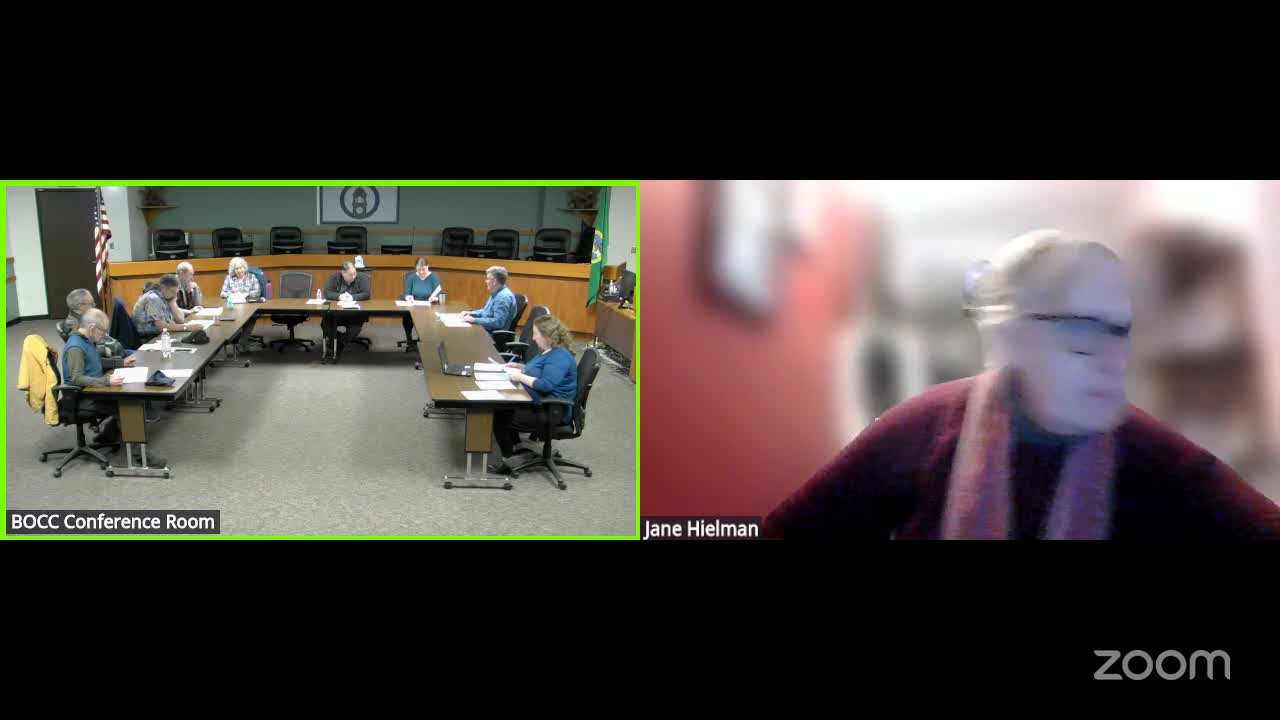
Clallam County Planning Commission members spent more than an hour Wednesday discussing draft changes to county code that would tighten rules on recreational vehicles (RVs) parked or used on private property while leaving some recreational uses intact.
The discussion focused on three policy areas: limiting how many RVs can be placed on a parcel, defining when an RV is being used as a residence (and what hookups would be required), and whether county zoning should allow more licensed RV parks in non-urban areas. The commission also approved two routine items on the agenda: the Feb. 19 minutes and a bylaws amendment to remove a confusing quorum provision.
County planning staff framed the issue as an attempt to balance competing public interests. Bruce (planning staff) said the county’s concern is both aesthetic and public-health related: "There are environmental health impacts. With the proliferation of RVs, it's much, much more difficult for environmental health to keep on top of it." He told commissioners that county code now has gaps and inconsistencies — for example, when a parcel contains an existing dwelling the rules differ from a vacant lot where an RV may be placed with little regulation.
Staff outlined several options the draft code could include: allow a single RV per lot for recreational use but restrict rental of RVs on residential lots (putting rental activity into licensed RV parks), treat some RVs used like tiny homes with a site-approved permit that requires hookups and no outdoor accumulation of goods, or allow a second RV on a lot only if it is stored in a fully enclosed garage. Another option discussed was an administrative hardship permit for temporary, family-care uses of an RV.
Commissioners and members of the public raised practical and enforcement concerns. Commissioner Jane Heilman said RV-park monthly rents in parts of the county can exceed $500, which she called "prohibitive" for many people seeking low-cost accommodations. Commissioner Bussey and others stressed the county’s limited enforcement resources and cautioned that any approach that effectively authorizes RVs as permanent dwellings would create legal and administrative obligations the county is ill-equipped to police.
Several speakers—including Bruce and Commissioner Ken Riondo—pointed out existing statutory and regulatory tools that already address many harms associated with derelict or unsafe RV use: the county’s junk-vehicle ordinance, the critical areas ordinance, environmental-health rules about septic and potable water, and state permitting regimes. Staff noted previous attempts to create a regional RV-dismantling facility stalled because of state-level permitting and landfill liability concerns.
Specific proposals mentioned during the discussion included: - A per-lot cap on RVs tied to lot size (modeled on the county’s junk-vehicle approach). - A duration or movement requirement (examples discussed included a 30-day threshold or a requirement that vehicles be moved periodically) to reduce dereliction and accumulation. - Requiring hookups (sewer/septic and potable water) for RVs used as residences beyond a stated duration; environmental-health staff would need to weigh in on acceptable alternatives such as permitted composting or permitted dump receipts. - Allowing licensed RV parks in more zones, combined with standards for hookups, screening and on-site sanitation to channel longer-term occupancy into facilities that can be inspected and regulated.
Cost and equity issues surfaced repeatedly. One commissioner noted that a full septic hookup can cost on the order of tens of thousands of dollars (a figure discussed in the meeting was roughly $30,000), and that many people living in RVs do so out of necessity rather than choice. Planning staff said that while the county is not proposing to require permits that would effectively legalize permanent residency in most recreational RVs, commissioners must weigh public health obligations against the practical reality that some people will live in RVs.
Staff also reported multiple pending RV park applications: a new RV park under construction outside Carlsburg, a phase-2 expansion at Island View, and a newly filed 10-lot RV-park application in the Port Angeles urban growth area. Commissioners suggested that where demand exists the county could consider targeted zoning changes and standards to permit and regulate more parks, which would shift many of the issues into licensed sites with infrastructure requirements.
Public comment included an unrelated critique of an open-space ordinance update. Ed Bowen of Clallam Bay said he was "appalled" that some work was being done in a work-session format and urged written public comment; his remarks were recorded during the meeting’s public-comment period.
Votes at the meeting were procedural. The commission unanimously approved the Feb. 19 minutes after a motion and second. Later the commission voted to adopt the proposed bylaw amendments with an exception: paragraph 12, number 6 (a quorum/decision-making provision) was removed at the prosecutor’s advice because it conflicted with other language. Both motions passed on voice votes with no roll-call tallies recorded.
Commissioners asked staff to prepare revised draft language that narrows the scope of changes the commission can implement administratively (for example, number-per-lot limits and aesthetic standards) while flagging health and long-term residency rules for further work and consultation with environmental health and the county prosecutor. Staff said it will return with a new draft and supporting packet that includes prior iterations for reference.
The planning commission closed the work session and moved to other agenda items.