Get Full Government Meeting Transcripts, Videos, & Alerts Forever!
Get email alerts on the Competency Restoration topic
No spam. Unsubscribe anytime.
Committee considers incentive-based plan to curb competency restoration backlog in Trueblood case
Summary
Representative Daria Farvar’s bill would create a county incentive program and procedural changes aimed at reducing referrals for inpatient competency restoration; stakeholders disagreed about feasibility and possible unintended consequences.
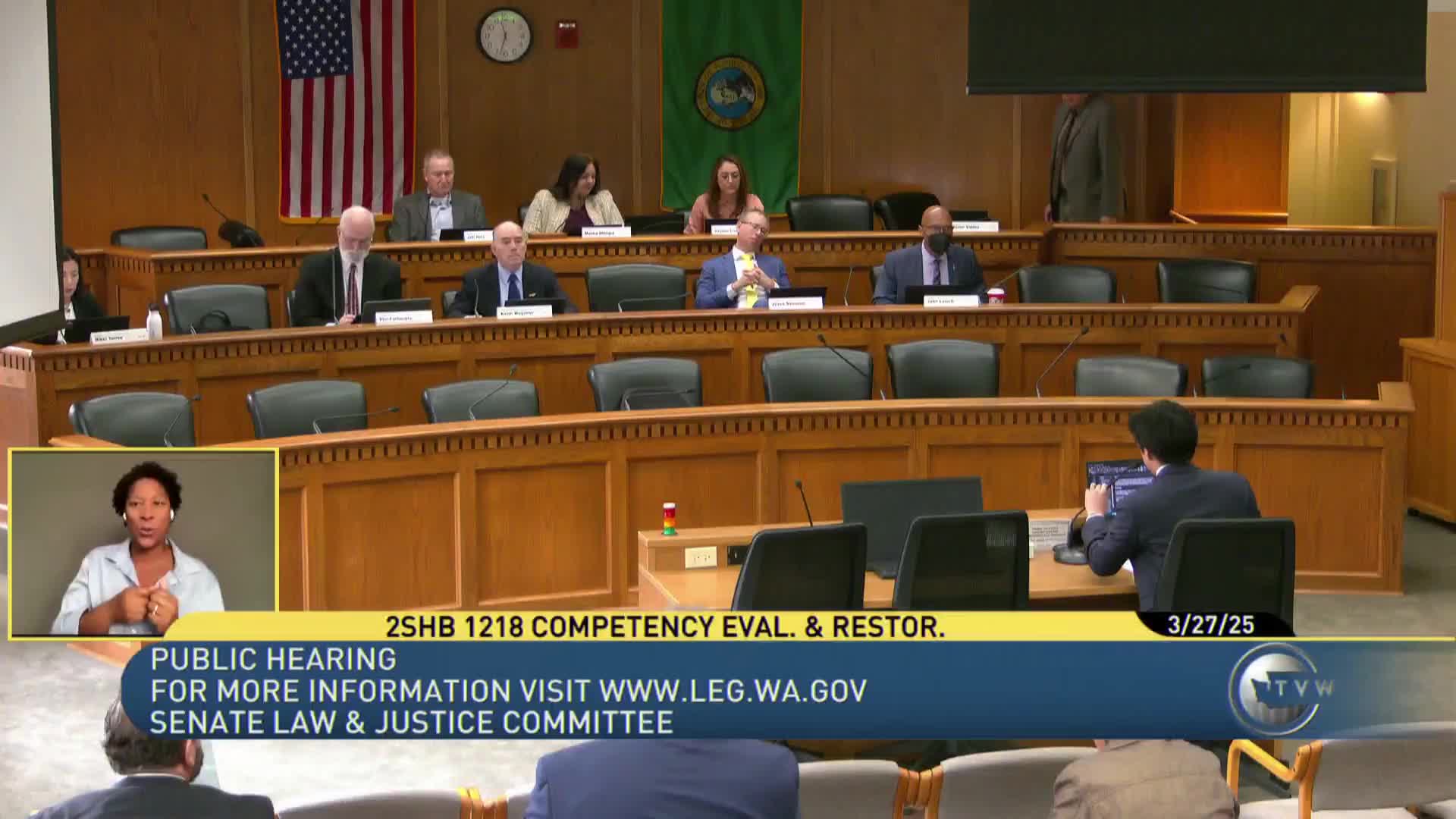
The Law & Justice Committee on March 27 heard extensive testimony on Engrossed Second Substitute House Bill 1218, legislation intended to reduce growth in competency restoration orders tied to the longstanding Trueblood court litigation.
The bill would: require clearer consideration of whether diversion or outpatient options exist before ordering inpatient restoration; expand the role and duties of forensic navigators; create an incentive and baseline system administered by DSHS that allows counties and cities that reduce inpatient referrals below baseline to request appropriations from a newly created behavioral health diversion fund; and establish procedures enabling transfer from inpatient to outpatient restoration in appropriate cases.
Sponsor and agency perspective
Representative Daria Farvar (prime sponsor) said the bill shifts some emphasis to local-state collaboration and seeks to reduce repeat cycling through the restoration system. DSHS witnesses—including Acting Secretary Cheryl Strange and Assistant Secretary Kevin Bowmancamp—said the state has made progress on timelines and bed capacity but faces sustained year‑over‑year growth in referrals (staff cited ~8.7–9 percent annual growth) that could outpace capacity without diversion and local engagement. DSHS said the bill, while imperfect in places, advances options to treat lower‑acuity individuals in their home communities and reserve state hospital capacity for those needing more intensive care.
Supporters and their arguments
Trueblood plaintiffs’ counsel Kimberly Mozoff testified in support, saying restoration is not treatment and that people cycle repeatedly through restoration without stability; she urged stronger efforts to reduce demand. County and city officials (Pierce County Council Chair Jani Hitchen, King County state relations director Jill McDermott) and association representatives (Association of Counties, Association of Washington Cities) expressed conditional support, emphasizing that incentives could help smaller jurisdictions if funding and local services were available.
Opposition and concerns
Prosecutors’ groups and many county prosecutors opposed or urged changes, saying the bill’s eligibility limits for certain felonies and procedural requirements could delay or block restoration even where treatment is appropriate or where public-safety concerns exist. Washington Association of Prosecuting Attorneys (Russell Brown), Snohomish County prosecutor Rebecca Vasquez, and King County prosecutor Gabrielle Charlton said (1) the language could push more defendants into the civil commitment pipeline, (2) many counties lack funded diversion or outpatient restoration programs, and (3) the bill’s evidentiary and timing requirements impose burdens that risk longer jail stays while litigation or record collection occurs.
Other stakeholders
The governor’s office (David Frocht) backed the need for policies to reduce demand and avoid the federal court imposing remedies; DSHS reiterated its support and said more local-state coordination is needed. Law‑enforcement representatives (James McMahon, Association of Sheriffs and Police Chiefs) cautioned that removing access to restoration without substituting services leaves people without needed care.
Committee next steps and sponsor note
Representative Farvar indicated continued stakeholder work and said a proposed substitute may be circulated; she asked for ongoing conversations about funding for local diversion, outpatient restoration capacity, and clarifying procedural safeguards. No committee vote was recorded on the bill at this hearing.
Provenance
Transcript briefing on HB 12 18 began with staff counsel Ryan Giannini and continued through public testimony and multiple agency panels; relevant excerpts include staff briefing beginning with "Before you now is engrossed second substitute house bill 12 18" and extended testimony from the sponsor and DSHS officials.